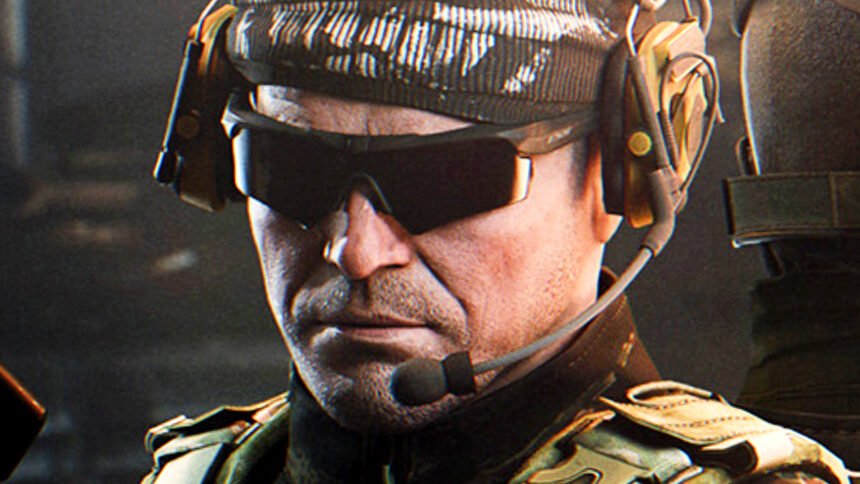
After nine years at Battlestate Games, Escape From Tarkov’s former Lead Game Designer Jean Tyulegenov has left to do something new. Joining other ex-Battlestate colleagues including Dmitry Ogorodnikov and German Terekhov, he’ll be implementing his expertise as Creative Director on Rush is Real, the debut title for Nomion Games. In a time where increasing player demands and rising development costs have pushed the game industry into a corner, Tyulegenov says he prefers taking a positive outlook – and sees this as an opportunity to capture an audience with something original.
We don’t know what Rush is Real actually is yet, although Ogorodnikov promised that it isn’t “another clone lost in a gray zone overloaded with noise,” nor “an amorphous game that can be confused with dozens of other tactical shooters, where realism is mistaken for cluttered interfaces and unnecessary elements.” Speaking exclusively to , he expressed the desire to build something simple and focused. Adding to that, Tyulegenov says Nomion wants to build Rush is Real “around a brand-new mechanic that isn’t copied from anywhere else.”
The big question will be how that ambition lands in a world where so many big games rely on tried and tested ideas, scared of the huge risks of failure. “The gaming industry is currently in a bit of a slump,” Tyulegenov remarks. “Players want increasingly higher graphical fidelity, constant content updates, and new, complex features. That’s normal. But it means that making games is quickly getting more expensive, the complexity requires longer development times, and as a result, investment risks go up.”
This means money shifts into “higher-margin, less risky ventures,” Tyulegenov notes. “Studios are downsizing, and fewer new studios are opening up.” The rise of AI has created even more competition as laid-off employees look for work among “a shrinking market.” It’s tough to put too cheerful a spin on such a situation, but Tyulegenov says he prefers “to look at the situation differently – and more positively.”
Lots of competitors means “a massive player base you can engage with an original idea,” he explains. Layoffs lead to “a higher chance of finding talented development for your team.” He even sees value in AI’s ability to “speed up and cheapen development by offloading routine tasks to it. It does excellent calculations and builds great visual interpretations,” he says. “What used to take me a couple of days now takes 20 minutes. The key is to not let AI do the thinking for you, but just use it as a tool to handle the routine. If you do that, everything will be fine.”
Tyulegenov studied as an optical physicist, but pursued a career in videogames because he considers the medium to be “the pinnacle of human thought, both technically and artistically.” He points to their creation being both technically advanced and demanding, offering a sense of fulfillment to people who find careers in the “ordinary world” to be lacking. “I could be working with telescopes, doing quality control, running calculations, but instead I make videogames. And that’s awesome.”
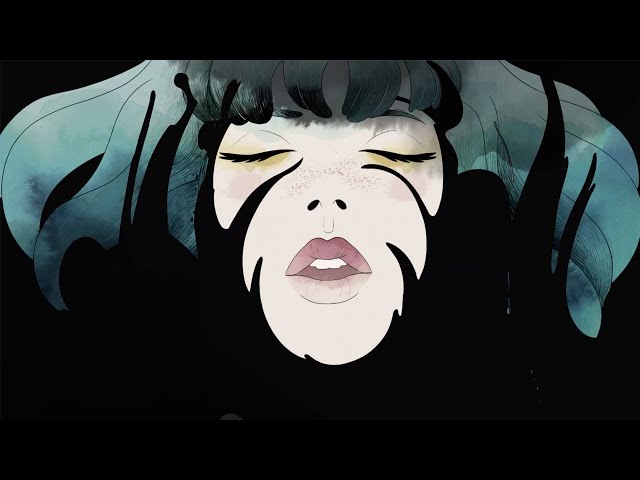
Asked for a game he considers a great example of this intersection of art and entertainment, Tyulegenov answers, “You could say that about most games I’ve played.” He highlights 2018 indie platformer Gris, from Nomada Studio. “I played through it a long time ago, back on release, but I still vividly remember the game’s visual style and the aftertaste it left.
“There’s this Spanish illustrator, Conrad Roset. He’s known for his watercolor drawings, worked at Zara, and collaborated with global brands. A truly talented artist, he created real fashion. And it just so happened that he became the art director at the studio that made Gris.” Tyulegenov says he doesn’t know whether Roset wanted to make a game first, or was invited to work on the project, but that, regardless of circumstance, “what came out in the end – it’s simply a visual masterpiece.”
Looking to the wider industry, Tyulegenov remarks, “Making games is always the result of hard work, talent and sheer power. These are the things that give birth to new forms, mesmerize with visuals, make you laugh or cry, challenge your motor skills, and deliver those exact endorphins.” Whatever Rush is Real ends up being, he says the main indicator of its success will be the emotions it evokes in its players. “Emotions are a huge and incredibly important part of our lives, let alone art.”