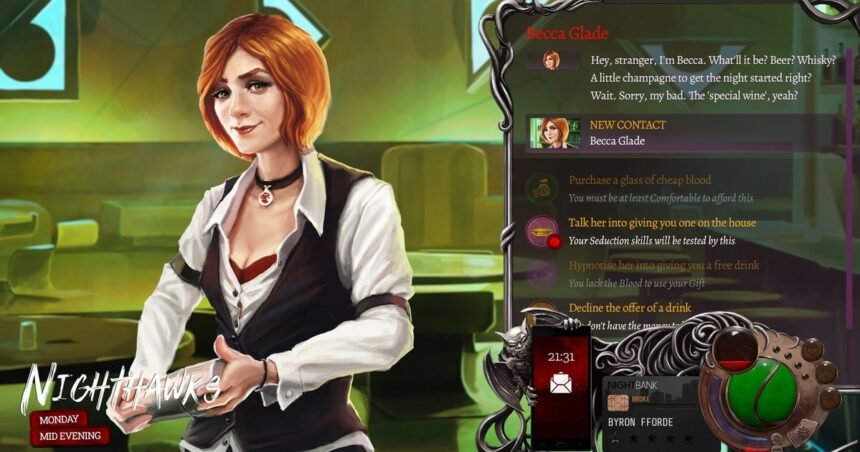
Nighthawks, the 1942 painting by Edward Hopper, is generally described as portraying loneliness. The four people at the diner counter are dwarfed by the empty, cold openness of the street. But the inside of the diner looks warm. One man sits apart, but the other two patrons might be a couple, their hands close. The worker seems to be watching them, perhaps thinking of somebody he’ll return to after his shift. Nighthawks, the 2026 vampire RPG, takes this same sensation, connection in the middle of isolation, and plays it much less subtly. When it works, it manages to tell sub-stories that will stick with me like the glow of a friendly building late at night.
But it doesn’t always work.
Watch on YouTube
Not so long ago, it was revealed to the world that vampires are real. You step into the shoes of a newly-made blood drinker, who quickly rises to being the most important person in the city via taking over the titular Nighthawks nightclub. Every evening, you’ll be able to explore locations across three neighbourhoods, the down-and-out Cradlebridge, the red light district Angelbreach, and the upper class area of Fountaincourt. There you’ll find dozens of miniature stories waiting for you to navigate using your levelable traits (like brawling and seduction) and special skills (mine was being able to get an echo of the past from a dead body).
Nighthawks lives and dies (and lives again) by its narrative. While the painterly backdrops, characterful portraits and occasional flavourful sound effect give the city some depth and flair, and the music is catchy, they aren’t what you are here for, and they don’t pretend to be. (Portraits, for example, are often reused to sketch the impression of generic tertiary characters, and the music is perhaps so catchy because it is so often the same.) That said, they do come together to give a memorable overall flavour of the city: acidic blood, grime tracked across floors by heavy boots, a tension that spills over every night.
But most of the narrative comes in the form of vignettes spread across five acts; even though the main story builds on itself, it still feels separated into individual slices. Some of these vignettes are outstanding. Two in particular come to mind, both of which involve freeing two very different women from restrictive obligations. They resonate because of how they weave this ancient theme into Nighthawks’ specific setting: one feels hundreds of years old because the vampire at its centre is exactly that aged, and has never been able to escape that old cultural hold – but it’s still relevant because of how those systems play out today. The other is skeweringly modern both in allegory and because in fiction it relies on the fact that vampires have only recently become known to the general public, so relations between night- and daywalkers are still being hashed out.
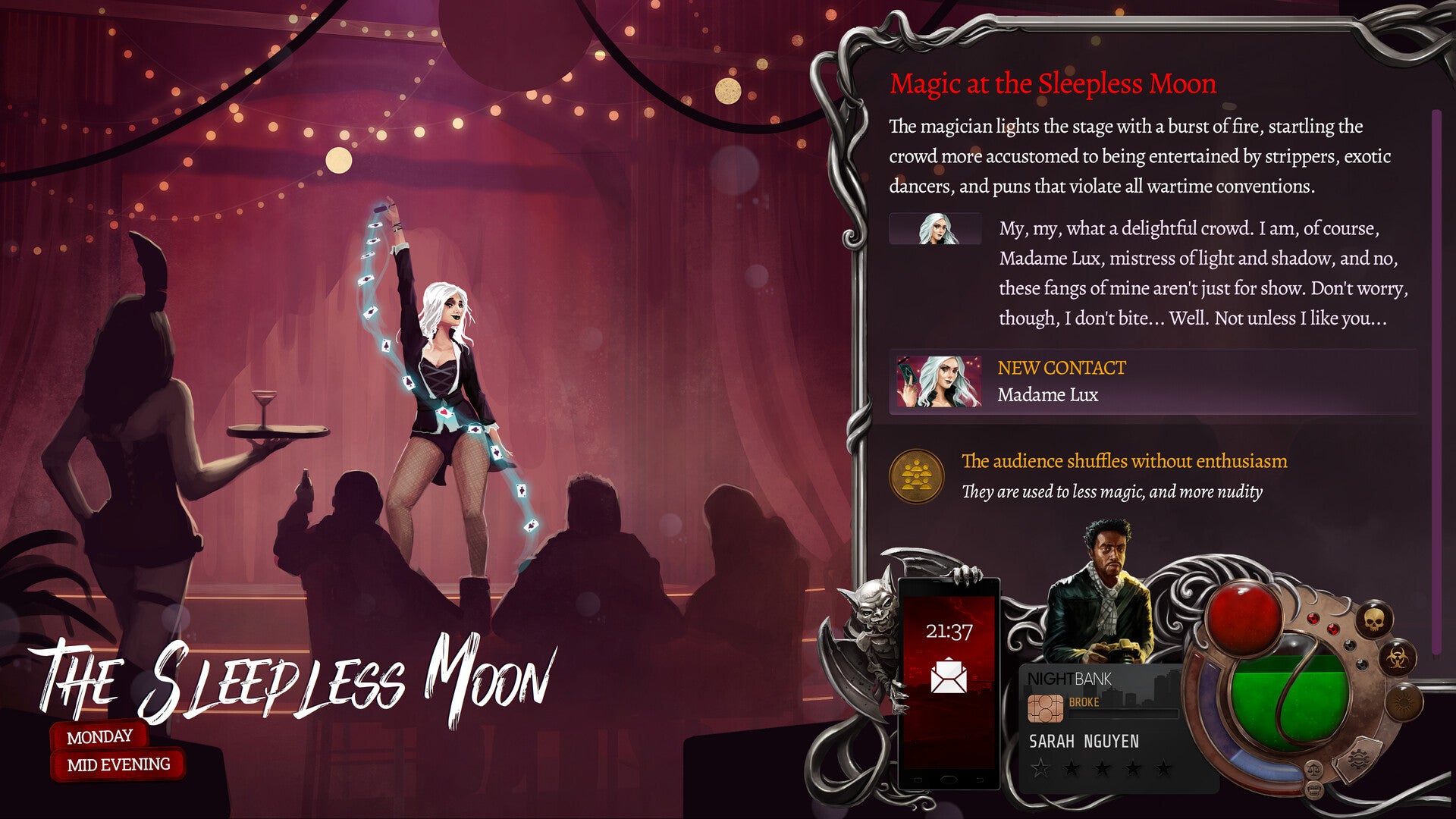
But where these two stories work, they also illustrate where Nighthawks as a whole falters. These stand out because they take an old oppression and make it interesting by examining it with the game’s new twist. The same can’t be said for anti-vampire sentiment, which is one of the few threads that tries to tie together the game’s overall arc. Although there are human supremacist groups and mobs wandering the streets and can randomly attack you, it doesn’t come across as especially convincing, especially because you yourself quickly become so powerful that they aren’t much of a concern. And this part of the narrative also struggles with a common issue when stories make up an oppressed group: vampires are dangerous.
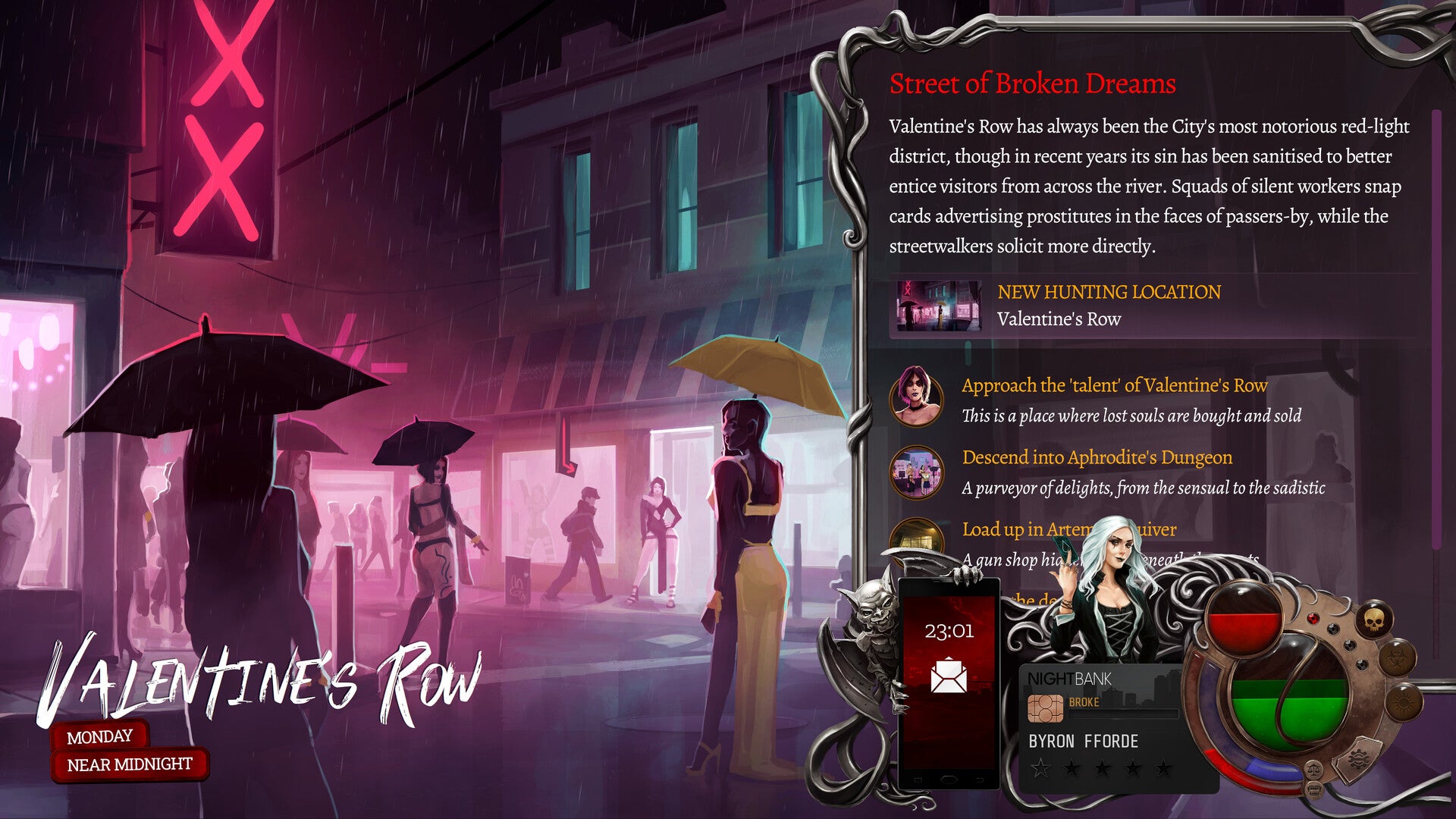
It also doesn’t help that the two standout quests I mentioned earlier come relatively close together, in the game’s broadly good middle. As well as never managing to pull these better subplots into a satisfying whole, the game takes a long time to get going. The first act is particularly dry, as Nighthawks depends on its companion and other major secondary characters for its meaningful moments, but doesn’t give them much of an onramp. Although almost every companion is happy to travel with you from the first moment they meet you, there are no hints as to their motivation or the problems you’ll be helping them with later, leaving the opening hours of the game with little intrigue. (Perhaps it’s unsurprising that the exception to this rule, Veronica, who specifically asks you to show her around the city and get her out of her comfort zone, ends up with one of those great personal quests.)
Act One also introduces pacing issues that never go away. Every act takes place over a single month, and you only have the nighttime hours to address quests that may be personal, companionable, and city-wide. But there’s no real time pressure here – every month I found myself at a loose end with nothing to do but twiddle my thumbs and wait for the next big thing to happen, and I know from the game’s comprehensive achievement system that I missed very few potential threads. You can skip ahead, so it’s not a grind, but it removes any kind of friction, strategy, or choice about how to approach the tasks you’ve been given. This also scales into not being encouraged to make any kind of roleplaying decisions; you might as well just do everything from feeding on the innocent to funding extravagant social programs, because you have the time and resources for it all and none of it is particularly punished or rewarded.
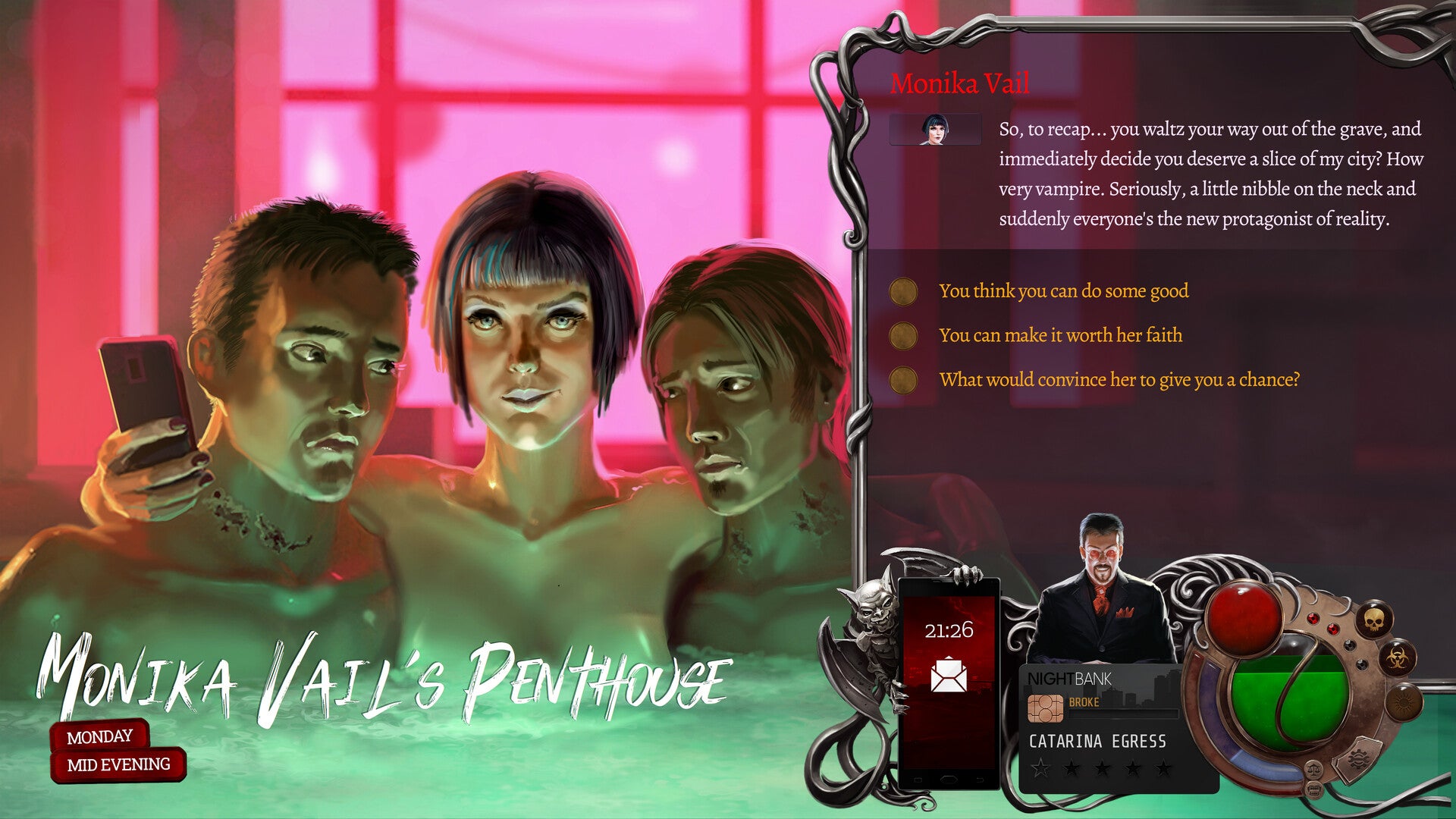
And the same can be said for the game’s RPG elements. It’s rare to be locked out of any outcome because you don’t have the skills. Although, for example, your lack of brawling prowess early on will lead to many trips to the doctor to patch up your wounds, it’s easy to have everything maxed out or near enough that it doesn’t matter by the later acts of the game. Companions, clothing, and special items, then, don’t make very much of a difference, especially ones that you have to work for – because by the time you’ve unlocked them you’ve also likely peaked at the skill they’d otherwise improve.
These problems spin together and mean Nighthawks as a whole never quite comes into focus. The couple at the counter are painted in exquisite detail, and at times I feel I’m inside the warm diner, perhaps even brushing hands with a loved one. But the rest of the picture doesn’t evoke the loneliness that casts these moments in sharp relief. Instead of deliberate emptiness, it feels like an uneven sketch.
Nighthawks’ principle developer is Richard Cobbett, who was a frequent contributor to RPS up until 2018.