When you play through the opening hours of Crimson Desert, the phrase, “This is just like ___” will probably come up at least once. “Oh, this grapple kind of manipulates objects, just like the Ultrahand from The Legend of Zelda: Tears of the Kingdom.” “These random events and Camp Greymane sure remind me of Red Dead Redemption 2.” “Hmm, this tracking brings back memories of The Witcher 3: Wild Hunt.” And so on with some dashes of Elden Ring and Middle-Earth: Shadow of War thrown in for good measure.
None of this is a secret – heck, even the marketing team outright said it would be “arrogant” to ignore all those influences. And besides, inspiration is one thing – using it to create a fun new experience is ultimately what’s important. Such is the cycle of video game design dating back decades. Is Crimson Desert actually in the same league as many of the previously mentioned greats? Well, no, but there is plenty to still like about it, depending on how you approach it.
Unfortunately, the story likely isn’t one of them. You control Kliff, a member and unofficial leader of the Greymanes, a mercenary faction in Pailune. At the start, the group is recovering from an ambush by the Black Bears, having seemingly been betrayed. Their brief respite is interrupted by yet another attack, and it’s all Kliff can do to try and help his allies – Oongka, Naira and Yann – before seemingly being taken out by Myurdin, the Black Bears’ leader.
“You would think that, among the plethora of side quests and an entire base-building system, we would have more ways to get to know the Greymanes better, or at least go beyond a snippet or two from their past. Alas, this isn’t to be, and it’s a shame…”
Except that’s not the end of his journey as he awakens in the mysterious Abyss to some unknown end. Jump cut to Kliff now being in Pywel – and yes, the transition is as awkward as it sounds – where he sets off for the Duchy of Hernand to gather news on his companions. Of course, that’s only the beginning, and by now, we know that his purpose inextricably ties into the Abyss, especially with many seeking to covet the power of its Artifacts, which have begun appearing everywhere in the continent.
Amid all this is an underlying theme about how humility and kindness pave the way to virtue and wisdom, and Kliff, in typical chosen one fashion, has both in spades. Initially, I vibed with this approach, especially as a means to justify helping out townsfolk, slowly unraveling all the connections and relationships that make Pywel tick. It also easily explained how he seemingly gets involved in all these conflicts and risky endeavors – he’s just trying to do the right thing.
The problem is that, more or less, that’s it when it comes to Kliff’s characterisation. Other characters fare somewhat better, whether it’s the prickly Naira, the hilarious-one-moment-downright-awful-another Yann, or solemn Oongka. Then you have the likes of Marius, who teeters between amicable one moment and passive-aggressive the next, or Damiane with her secretive past. It’s just that their overall development feels surface-level at times, and Kliff seems like little more than their gruff babysitter. The absolute worst of the writing manifests in a scene where he does little more than grunt through a conversation, and given the significance of everything that happened prior, I just couldn’t believe it.
You would think that, among the plethora of side quests and an entire base-building system, we would have more ways to get to know the Greymanes better, or at least go beyond a snippet or two from their past. Alas, this isn’t to be, and it’s a shame, especially when it comes to some of the bit characters, like Shakatu of the Goldleaf Merchants Guild. The voice acting is top-notch all around, and it’s saying something that it often makes you forget how bland the actual story can be.
It also doesn’t help that the plot takes a while to get going. I understand the first few hours in a game like this are purely for set-up – with so many systems in place, you need to take time to explain them. Such an opportunity is sort of used to explain the bonds between the Greymanes, though, once again, it never feels like it goes beyond mere scraps (except Oongka, which makes sense because he’s playable). Again, the early requests that revolve around finding the surviving Greymanes come to mind. They involve little more than simply going to a location, meeting said Greymanes, watching a cutscene, and then returning to Camp. I know they’re not exactly the biggest players in the story, but at least spice things up with some unique objectives.
“Pywel is packed with as many nooks, crannies, ruins, caves, and the odd boss or two that is none too happy to see you, as it is massive vistas with inviting towers in the distance.”
The fact that it takes about 20 hours – give or take a few due to open-world exploration – to really jump-start the core narrative, with the results being above average at best, that’s a problem. It’s serviceable storytelling, but for its exceptional visuals and top-tier voice acting talent, it could have been so much more.
With all that out of the way, let’s get to a few things that Crimson Desert actually does well: the world design. From the moment you’re left alone in Hernand, Kliff has the freedom to go wherever he wants. Yes, it would behove you to obtain elements like the Crow’s Wings, which are locked behind story progression (among other things), but if you want to trot through the territories without a care in the world from the get-go, have at it.
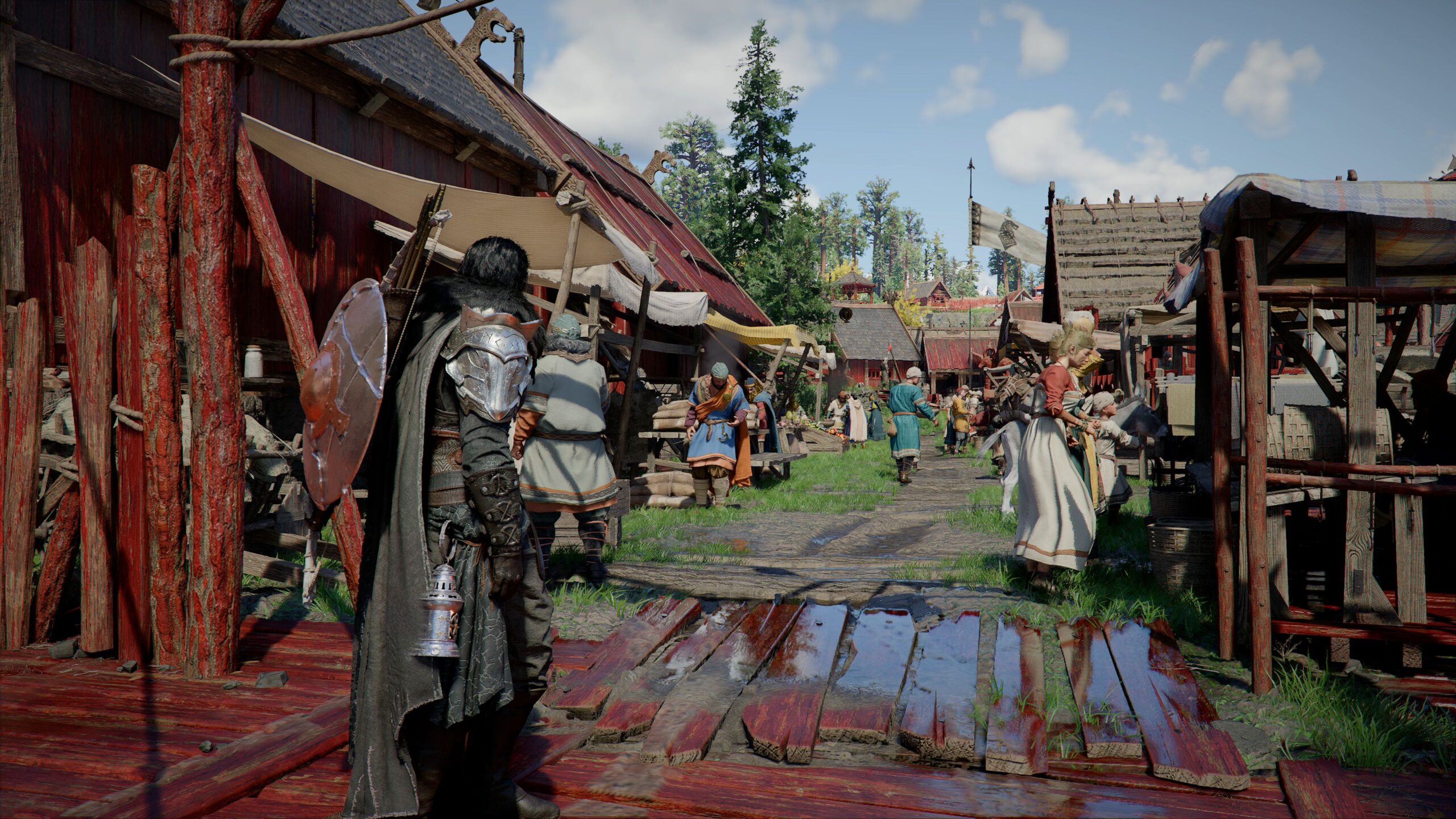
Pywel, to its credit, doesn’t immediately flood the player with waypoints and locations, aweing with its sheer majesty while simultaneously inviting you for a closer look. It’s to the developer’s credit that this isn’t just a collection of clean streets, as it embraces the dirt, grime and shady back alleys that define medieval fantasy.
As you navigate the cities, towns and smaller settlements, you’ll notice citizens conversing and going about their daily lives (though they don’t exactly have full-fledged schedules as one might hope). Soldiers may march through the streets as easily as they’d deny entry due to your attire. Bounty posters can be found on wooden poles, and you may even inadvertently bump into the target, who must be tackled to the ground and deposited at the constable’s. Yes, either on foot or horseback. No fast travel allowed, which isn’t as bad as it sounds when the reward amounts start scaling up. It was a bit disappointing to find the same mini-game across multiple major cities, but hey, familiarity when it comes to earning money isn’t the worst thing, especially given the wider world.
Because Pywel is packed with as many nooks, crannies, ruins, caves, and the odd boss or two that is none too happy to see you, as it is massive vistas with inviting towers in the distance. Giant question marks could point to Abyss Nexus plates for the aforementioned fast travel, and they might just as easily unearth a machination with tubes leading to an underground chamber where you need to move a giant pillar around. Another puzzle involved walking between a pair of tiles, which then expanded to three pairs as you carefully plot out routes without crossing the wires, so to speak. For all the times that I happened upon these and felt stumped, it was equally endearing to drop down into a massive, unexplored cave and find a sword with a blade reminiscent of the Abyss’s shifting blocks. Sometimes there would only be a chest with an underwhelming amount of Copper, but on other occasions, a wealth of resources awaited.
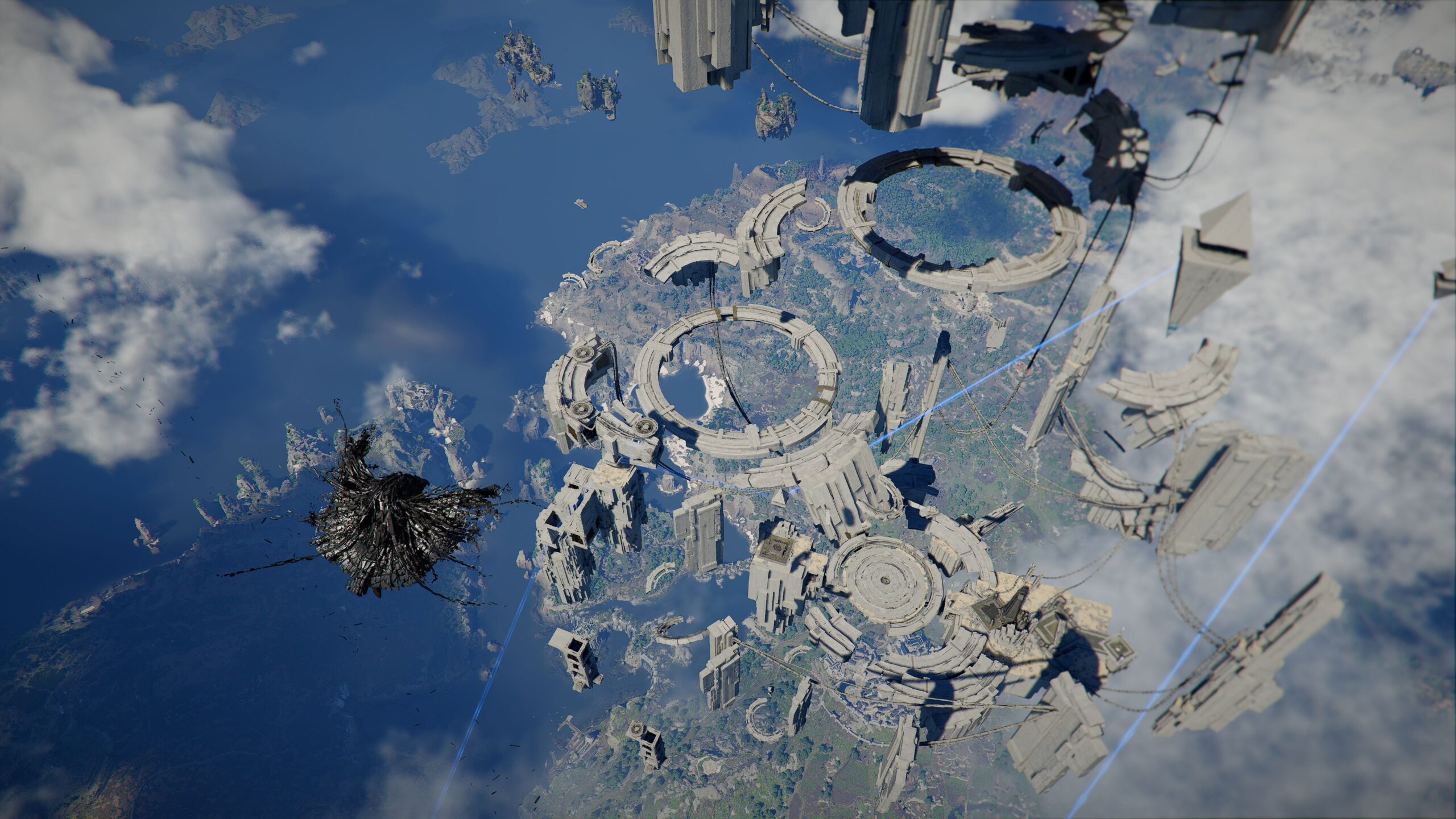
“Regardless, everything feeds back into Kliff’s own personal progression, in turn affecting combat (which we’ll discuss). It’s here that the MMO-lite options rear their head in some of the more…odd ways.”
Of course, that isn’t even the tip of the spear when it comes to open-world activities. You can find broken-down wagons and return them to a medieval-style chop shop. Tame wild horses or register them with the stable, perhaps taking them for a spin later or turn them into the local butcher for some coin. Maybe you’ll run into a quarry and take on dozens of enemies before going up against a giant drill-bearing boss who loves diving underground and popping back out to nearly kill you.
It’s just as possible to enter another where the crew is stalled because their crane operator pulled his back, which means part-time bounty hunter/farmer/trader/cat rescuer Kliff gets to fill in. And that’s not even getting into the Greymanes camp, which can transform into a venerable settlement in its own right with a farm, ranch, weapon shop, and so much more. I haven’t fully dived into the separate progression trees and research projects for some locations, or combed the Abyss, which presents some great platforming challenges (even if a few can be hit or miss because of the sheer amount of falling).
For as unique and intriguing as so many of these activities can be, there are also several which are a little too straightforward, and I’m not just talking about the requests that task you with gathering X number of materials or delivering an item or following an NPC to a place where enemies suddenly pop out. Faction quests that involve liberating multiple key locations are cool, and the fact that these open up new missions for your Greymanes to net additional resources creates this interconnected economy. The world feels more alive as a result, but the actual objectives for liberation aren’t nearly as imaginative, as you’ll run in, clear out enemies, and then take on a boss.
Occasionally, high-priority targets may also emerge with their own intriguing tales, but they follow much of the same pattern – go from A to B and eventually C to take on the boss. Which is, once again, a shame because some of these characters are cool and end up feeling like wasted potential. If I’m going to follow such a straightforward path, at least add some meatier narrative content.
Regardless, everything feeds back into Kliff’s own personal progression, in turn affecting combat (which we’ll discuss). It’s here that the MMO-lite options rear their head in some of the more…odd ways. I can deal with stores refreshing 24 hours – even mining ore, which appears to take even longer to regenerate, isn’t that much of a dealbreaker, since it can encourage exploration on the surface to discover new nodes. Besides, there are more than enough vendors as you get deeper into the continent that you’ll find enough ways to obtain Copper and Iron for upgrading that snazzy new gear piece or weapon.
Problems arise with the actual acquisition activities. Cutting down trees only to receive a few pieces of Timber at best? Splitting ores and watching pieces fly everywhere, only to obtain one Iron Ore, maybe two at best if you’re using the Drillarm? It may not be much of a problem dozens of hours later as more avenues open up, but it feels tedious in the early going when trying to upgrade gear (don’t even get me started on trying to collect plants).
“Even when you’re clashing against shields, there’s a responsiveness – a feeling of power, which is all the better when you finally break through and cut them down. The fact that each weapon type feels so different yet satisfying is also a plus, and I like how they alter some moves.”
Inventory space can also be a nagging issue – even when you’re completing requests for townsfolk and receiving multiple three-slot expansions or buying small bags for that precious extra slot, it just never feels enough. Blame it on the numerous resources, trading goods, armor sets, weapons, etc. Then add to the fact that Damiane and Oongka have their own separate gear (yes, all of this is a single shared inventory). Allocating Sealed Abyss Artifacts to a single slot helps, but the lack of any camp storage (outside of the production storage box, which only lets you remove loot obtained after liberation battles) is baffling. How can a game like this have such an extensive camp system with the ability to purchase furniture and decorate your own personal house, but not offer any kind of storage chest? A future update will allow players to store “certain content” via housing, but there’s currently no ETA on the same.
I’m also not a fan of Abyss Artifacts coming into play so early when upgrading gear. I can see the vision – when players have unlocked most of their desired skills, it creates some tension as you need to choose between upgrading stats or prioritizing upgrades. The problem is that the number of Abyss Artifacts isn’t exactly flowing by that point, and the presence of so much gear, even if you choose to focus on Kliff alone, stifles any experimentation. The fact that the upgrade paths are so straightforward, and you can’t roll back spent resources, is also annoying. You would also think that a game so focused on resource farming would at least let you tag them in question, thus highlighting their locations (even if it’s only the discovered points). But I digress.
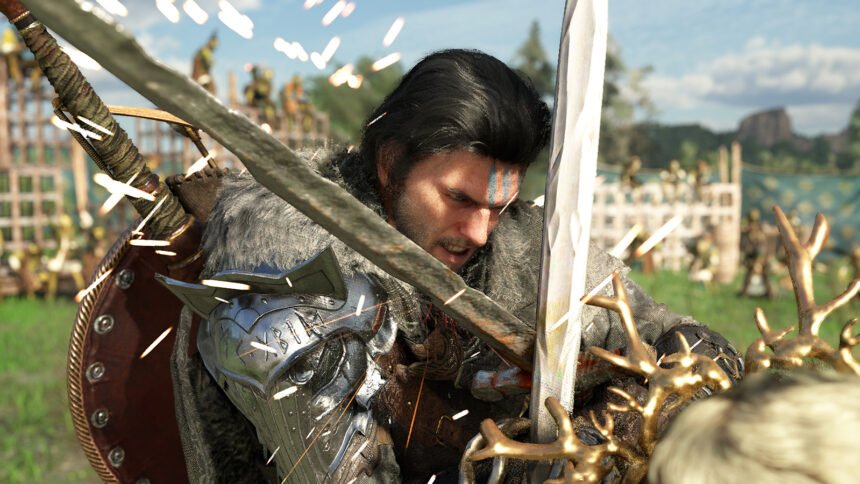
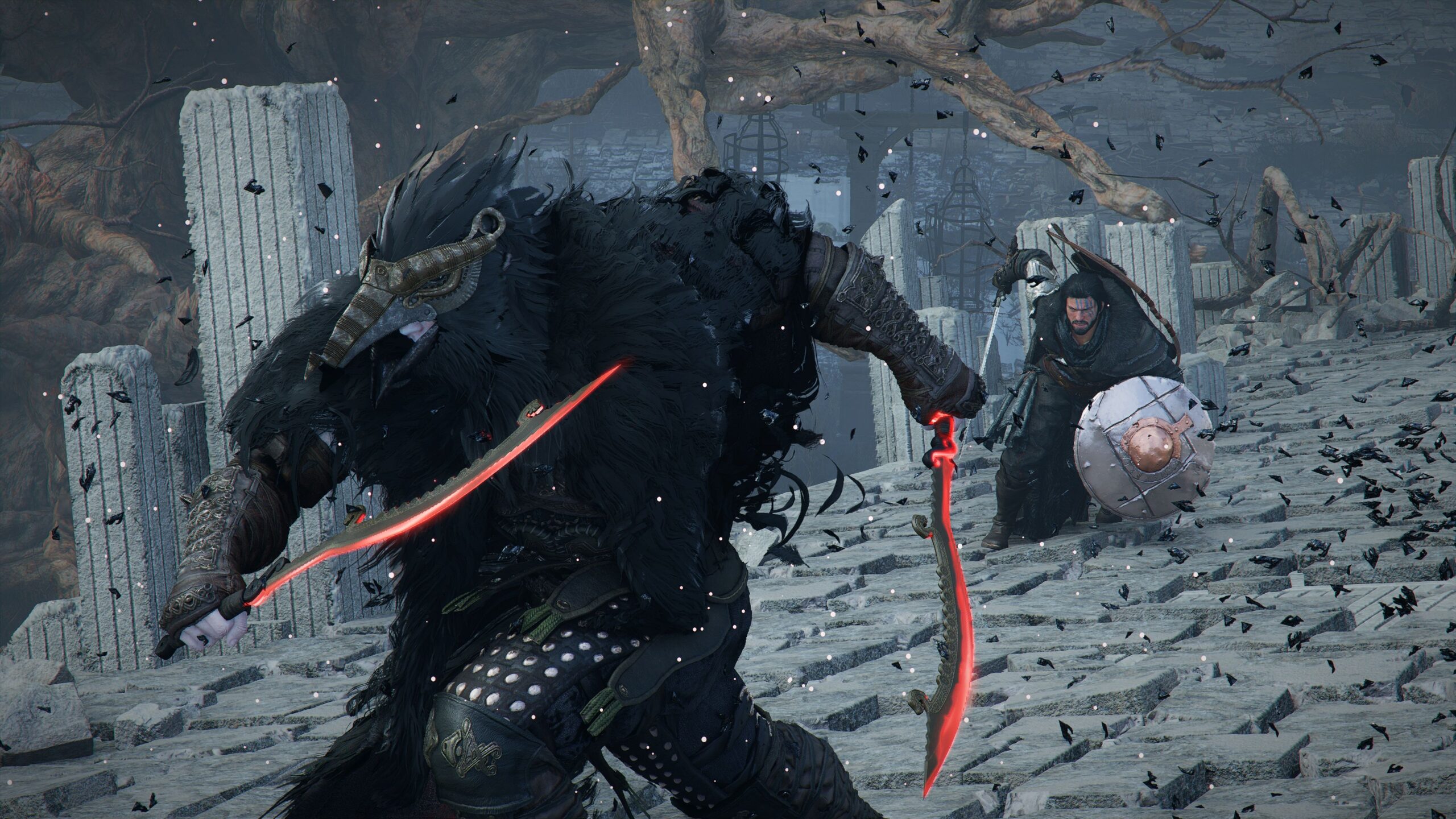
Thankfully, there’s another area in which Crimson Desert excels: Combat. I’d say that it starts simple enough, but Kliff is a seasoned mercenary who forgot the “just this once” part when it comes to going all out. There are the usual light attacks and heavy attacks, but you can also press both buttons into a powerful Turning Slash, or combine a light attack with dodge for an evasive slash. Vault over enemies. Smack someone with the shield, and then immediately transition into charging through them. Heck, charge through them all to begin with. Clothesline them, RKO them, German Suplex any fleeing fools. Pump kick fools into the water. Watch them drown, and if they climb back up, pump kick them again.
Even when you’re clashing against shields, there’s a responsiveness – a feeling of power, which is all the better when you finally break through and cut them down. The fact that each weapon type feels so different yet satisfying is also a plus, and I like how they alter some moves. Wielding a spear, for example, disables your Pump Kick but replaces it with a vaulting kick that more than suffices. Not that you should underestimate enemies, especially against multiple foes, since they have their own extensive combos and Spirit techniques. But chaining several heavy attacks into a Turning Slash, and then a stab, which causes an enemy to start bleeding, feels so seamless and satisfying.
“While we’re still talking about combat, I should mention Oongka and Damiane, the other unlockable characters. It was somewhat disappointing to see them share so many skills with Kliff, but there are enough standout options to make them feel distinct.”
As you gather more Abyss Artifacts and unlock new Skills, the sheer amount of options only increases, especially when factoring in elemental attacks or gear that activates specific perks when imbuing said elements. Don’t worry, though – there are plenty of perks that can augment existing techniques in more straightforward ways. I particularly liked the one-handed sword that unleashed slightly homing crows against enemies, augmenting my heavy slashes (which were already upgraded to have after-images that repeated the strikes). The shield that unleashes an explosion, either when smacking a foe or parrying despite its requirements? Another great addition.
Unlocking new skills through learning is also fun, even if they won’t always suit your purpose (like picking up the Evasive Roll from a boss in a fight that doesn’t require me to glide). The fact that elements are such a late addition irks me, but the combat system has enough going on to keep it feeling fresh throughout, and not having to invest in stats to unlock skills is a great decision. It makes the stats themselves feel more meaningful – and make no mistake, some techniques will feel better if you have more Spirit or Stamina – while still keeping options open. However, it did seem like the bow needed some help in the early to mid-game with damage, though, especially compared to the firearms.
Where Crimson Desert’s combat shines – and also occasionally baffles me – is with the boss fights. Some of these are knockdown, drag-out fights where the slightest mistake feels costly. Baiting out attacks and knowing when to back off, especially when they unleash their super moves, results in encounters that feel more like brutal dances. Except when the camera occasionally causes issues, such as breaking targeting or lagging behind a target, even when you’re hard-locked. The fact that so many bosses have invincibility phases – which is different from super armor – is also annoying. You could be reading an attack after the boss’s long combo, only for them to activate their invincibility, effectively negating your strikes. Better hope you weren’t close enough to, say, get electrocuted.
There was also a boss with an attached gimmick that was simply infuriating due to the confusing instructions. The fact that it activated after a puzzle and dying meant having to complete the latter again also didn’t help. Nevertheless, that was only one example – the boss fights are otherwise a highlight and easily elevate some of the narratively lackluster circumstances.
While we’re still talking about combat, I should mention Oongka and Damiane, the other unlockable characters. It was somewhat disappointing to see them share so many skills with Kliff, but there are enough standout options to make them feel distinct. Oongka is definitely clunkier when using two-handed weapon attacks, which is his bread and butter, so take that as you will, but at least Damiane offers a range of options (who can say no to a shield throw that bounces between enemies?).
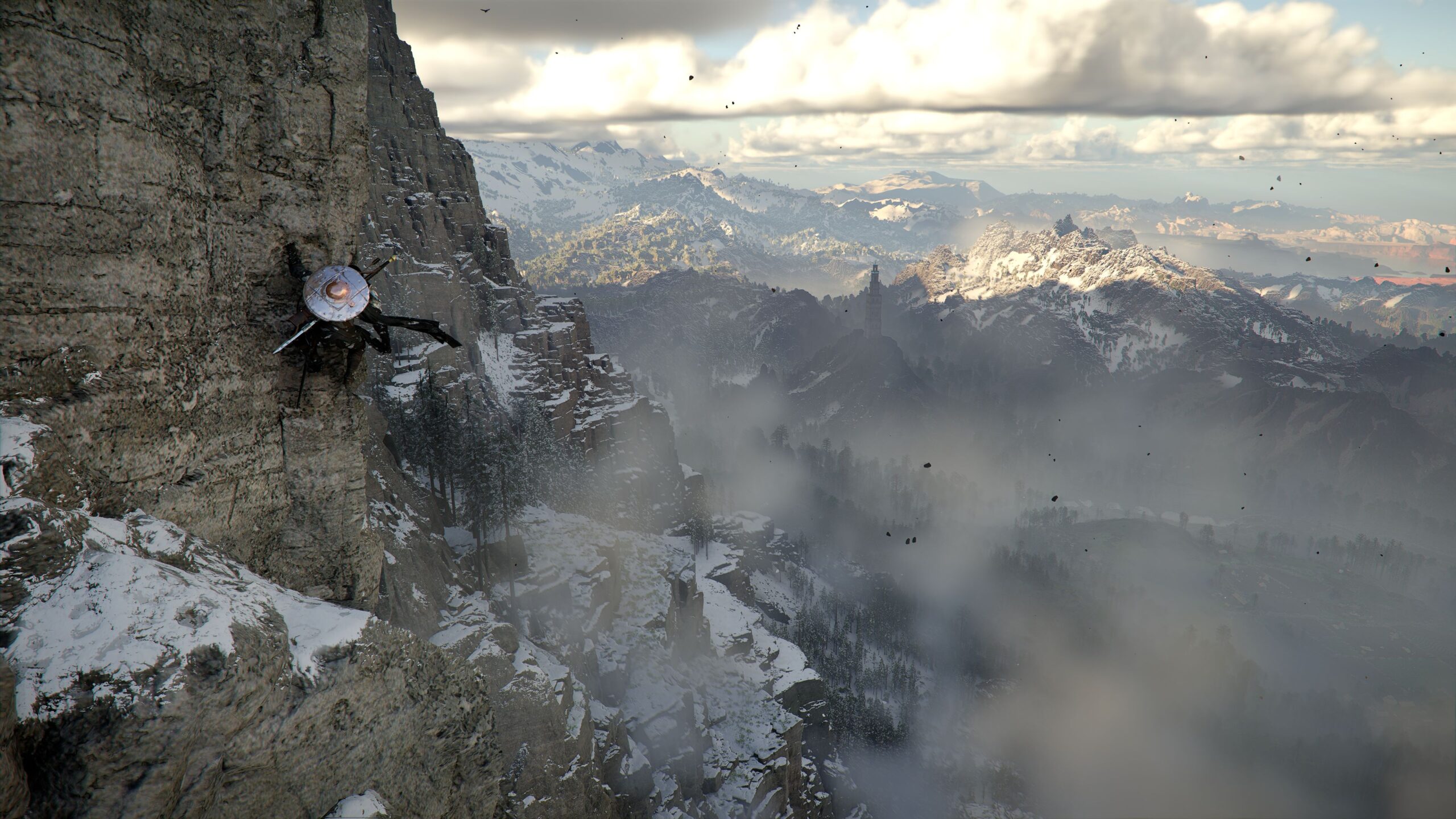
“If there’s one thing that I can’t really fault Crimson Desert for, it’s the visuals. I touched on it briefly, but the attention to detail is simply sumptuous, especially when wandering around in the wild.”
Switching to them feels seamless, especially when hopping into whatever scenario they’re embroiled in (having dedicated missions to further flesh out their stories is also a plus). But why, pray tell, do they also require separate Abyss Artifacts to unlock several skills? Maybe the idea was that players would respec after investing so much into Kliff, but that just made me less interested in spending time with either until I fully kitted out our main man. There are also occasional bugs, like Kliff sometimes not attacking despite pressing the corresponding button and having stamina, which seemed more common as I ventured deeper into the story. I’m not sure what causes it, but as you can probably imagine, it’s not ideal.
Otherwise, perhaps the only real “problem” per se is the controls. Not that they’re overtly complex, but just the sheer amount of them, and more importantly, remembering their various contextual situations. Hold down L3 to activate your grapple, but be careful not to do it near a ledge (like, say, in the Abyss) because then Kliff will either sit down or hang from the same.
Activating Blinding Flash with L1 + R1, which can then transition into Focused Light with L1 for either igniting weeds or solving puzzles, often feels easier when your weapon is sheathed as opposed to when it’s out, because the game prioritizes attacking for the latter instead. Perhaps my only other nitpick is how Kliff doesn’t immediately transition into a glide when using three Focused Palms to lift off the ground, wasting that precious altitude gained. I also don’t know why using Focused Palm usually knocks him back (both on the ground and when on a wall). Or why gliding consumes so much stamina when you’re not in the Abyss. Okay, that’s three nitpicks, but still.
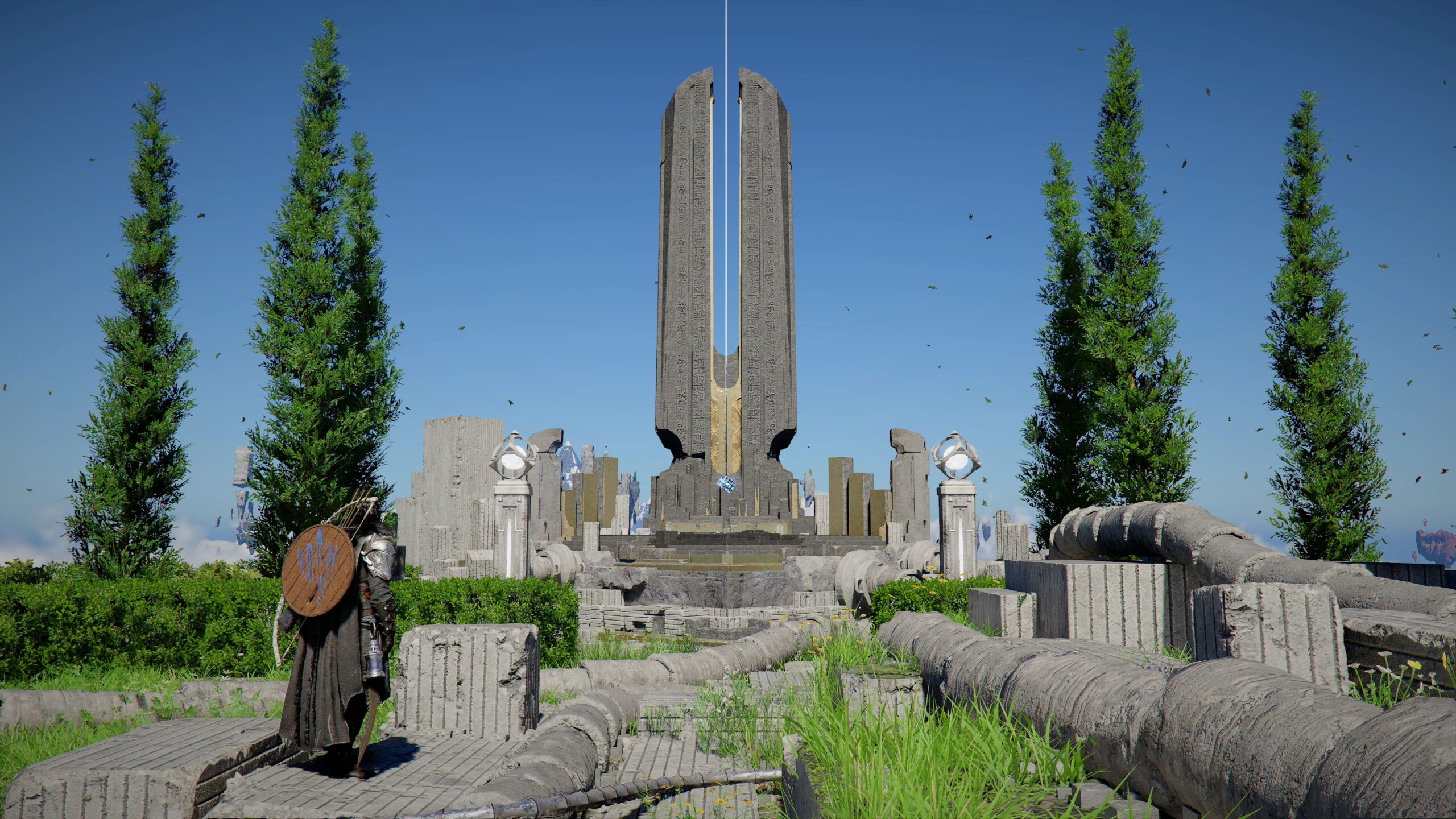
If there’s one thing that I can’t really fault Crimson Desert for, it’s the visuals. I touched on it briefly, but the attention to detail is simply sumptuous, especially when wandering around in the wild. Seeing smaller woodland creatures running underfoot, the winds rustling against foliage and trees, shadows naturally lengthening and deepening as dusk draws near – it’s enough to make you want to slow down, and just take in all the beauty. The fact that the development team pulled all of this off while implementing ray tracing, that too with such incredible draw distances and level of detail, is yet another feather in its cap. Best of all, it runs exceptionally well.
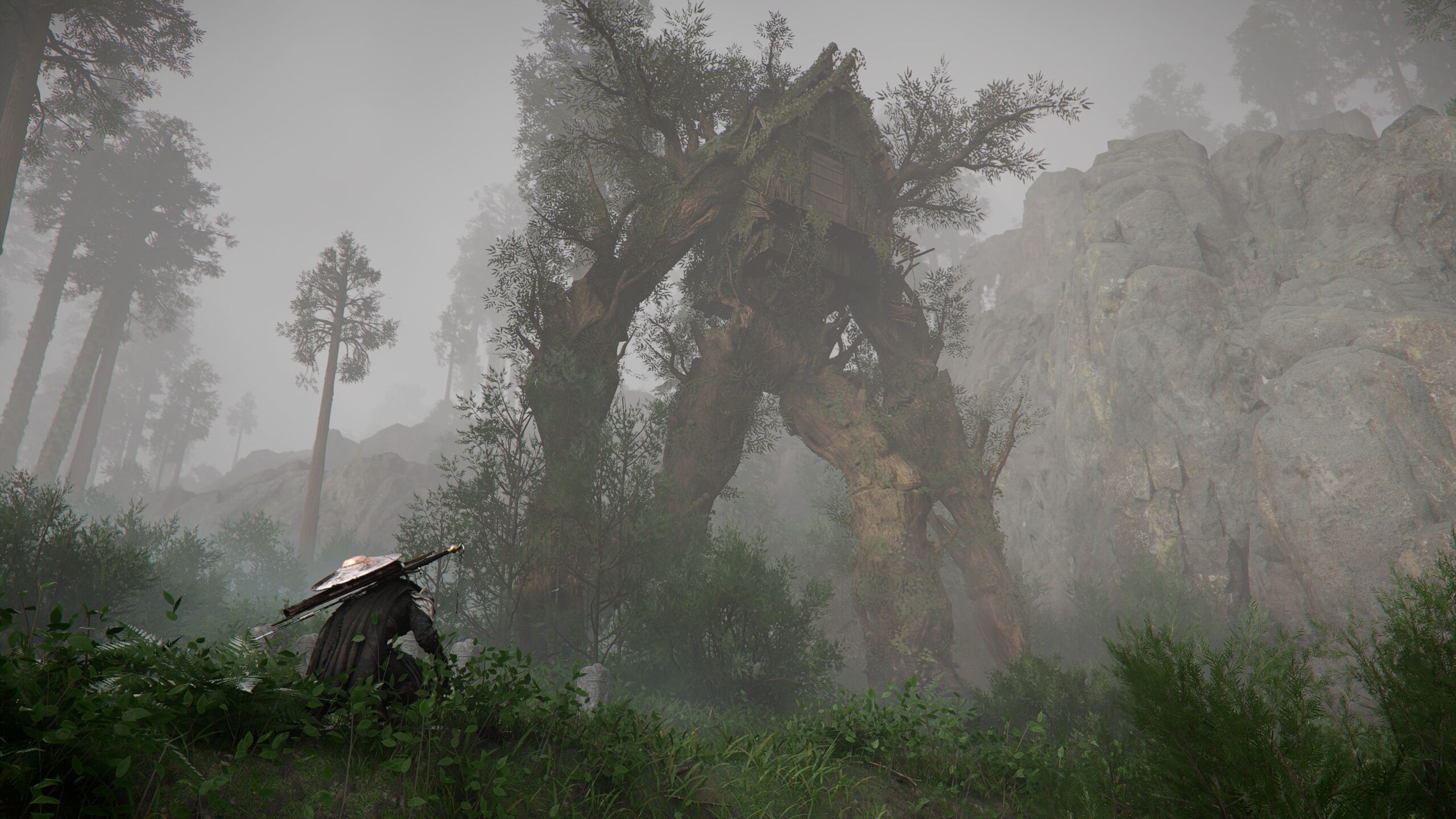
“For all the times that it weighs on you with its bizarre design choices, Crimson Desert can also leave you awestruck by its world and sheer beauty. It’s only going to get better with time, but for now, if you can deal with its various quirks, Pywel is calling.”
I played the game on an Intel Core i5-11400 2.6 GHz, 32 GB of RAM and an RTX 4060 with 8 GB VRAM. Performance remained very consistent at 1440p with most settings set to High and DLSS 4.5L, and DLAA enabled, with Advanced Weather off and Volumetric Fog quality set to Medium. The frame rate would definitely fall below 60 in much busier scenarios, like at night with multiple light sources, rain and NPCs around, but it never felt unplayable or like a stuttering mess. Perhaps the only downside – and this is probably more of a consequence of running in DLSS 4.5L – is the distant pop-in (not to mention some finer details materializing up close) when speeding quickly through terrain. Again, not a dealbreaker and considering it achieves all this while still providing steady performance, it should be good news for those with higher-end set-ups.
For all the criticisms, both minor and otherwise, that I have with Crimson Desert, it ultimately depends on the kind of experience that you’re after. If it’s a top-classic narrative, then sadly, you won’t find it here. If it’s an incredible open world, then you’ll find enough of it to keep you hooked, even when clearing the umpteenth bandit camp. A diverse range of skills and combat options await, but the path to getting them is fraught with some annoying early game stinginess, tiresome inventory management and questionable resource requirements. So when it’s trying to do as much as it’s doing, these issues can creep up more often than not.
Nevertheless, I can’t deny that I’ve had fun. All the moments when I veer off the beaten path to see what Pywel has to offer, even if means climbing cliffs for roughly half an hour in the Ancient Rift; all those times that I was absolutely devastated by a boss, only to slowly learn their patterns and overcome them through sheer grit (and plenty of food); entering the titular Crimson Desert for the first time and being awestruck by its machinations and impressive dust storms before being shot dead when trying to unga bunga the first blockaded location; heck, even that time that I gathered almost 240 Dried Fish since they made for great health recovery.
For all the times that it weighs on you with its bizarre design choices, Crimson Desert can also leave you awestruck by its world and sheer beauty. It’s only going to get better with time, but for now, if you can deal with its various quirks, Pywel is calling.
This game was reviewed on PC.