Once a fictional town in Maine, Silent Hill has broken containment and become a transferable oral history mechanism, offered to videogame developers worldwide as a way of investigating, even celebrating local culture. I’m still in two minds about whether this licensing outreach project, begun with Silent Hill f, is more inspired than it is vampiric. I picture Konami’s invitation being pushed under the door of potential collaborators like Mary’s letter to James in Silent Hill 2: “in our restless dreams, we see that town… let’s touch base there sometime, expand our concepts further.”
There’s opportunity and peril for any studio who answers the letter: opportunity, because Silent Hill is an uncommonly rich way of thinking about the past, with its parallel realities, monster metaphors, and woozy grounding in both mysticism and psychoanalysis. And peril, because licenses have a way of engulfing licensees, forcing them into a straitjacket of tropes: fog, sirens, antagonists with geometric heads. Thankfully, Silent Hill: Townfall’s creators Screen Burn (previously No Code) haven’t gotten lost in the murk, though I don’t think Townfall is their finest creation, not least because it’s overreliant on stealth. Like the makers of Silent Hill f, they’ve taken what they need from Silent Hill to tell a story of their own.
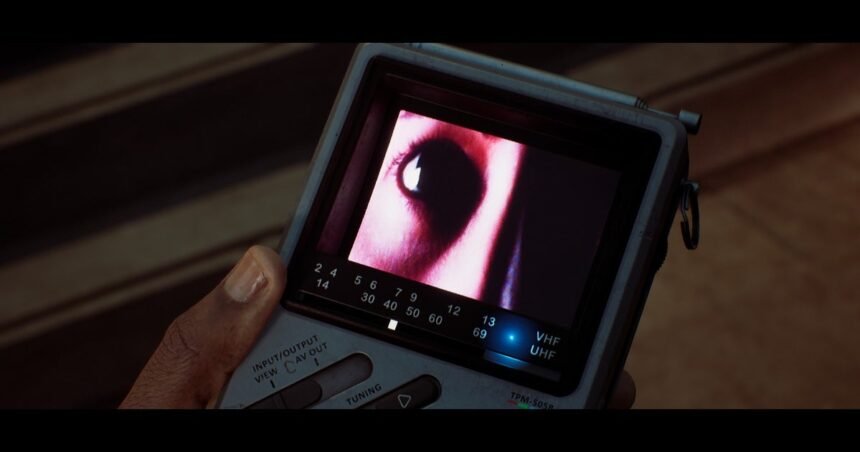
Townfall is the tale of the fictional late 90s Scottish island community of St Ameila, explored through the intersecting lives of three people. The first of these is Simon, a bespectacled and bemused Black American with a cannula of gritty fluid wrapped around one arm, who hauls himself onto the pier at the start of the game. Simon is here to do something for Richard, a grave and insistent white American who sends instructions by way of a chunky pocket TV that appears capable of two-way communication. Simon is also embroiled in a search for Zoe, a local white English nurse who is carrying a world of hurt on her shoulders.
It soon becomes clear that St Amelia has weathered a disaster. The roads are blockaded and deserted. The old stone memorial in the market square is covered in pictures of the missing. Access to the mainland has been cut off, and the shops have been emptied out. There are remnants of mass protests – fliers for rallies, and hand-made signs reading “our grief is their failure”. Monstrous concrete walls block the routes inland, towering over the stuccoed housefronts. And then there are the “Others”, as they’re named in player stat screens: creatures of bound, boiled, divided flesh. They gabble and gesticulate among the aisles of gutted pharmacies, or run from corner to corner, furious and lost. They breathe brokenly on the pavement, and scuttle between the cubicles of open plan offices.
The nature and origin of Townfall’s catastrophe remains opaque throughout. The cast do not entirely remember, or are afraid to. They move as though half-asleep, trying to escape each other’s dreams. They fight or avoid the Others without ever quite assigning them a literal reality, or seeking to explain them. They are, in other words, consummate Silent Hill characters, beings of interwoven trauma. Their wincing efforts at recognising or resolving the things that haunt them spawn temporal ruptures and reversals, some of which take the form of Silent Hill’s famous plane-shifts, which here replace St Amelia’s salt-soaked streets with a radiant blue and scarlet labyrinth of pipes and concrete.
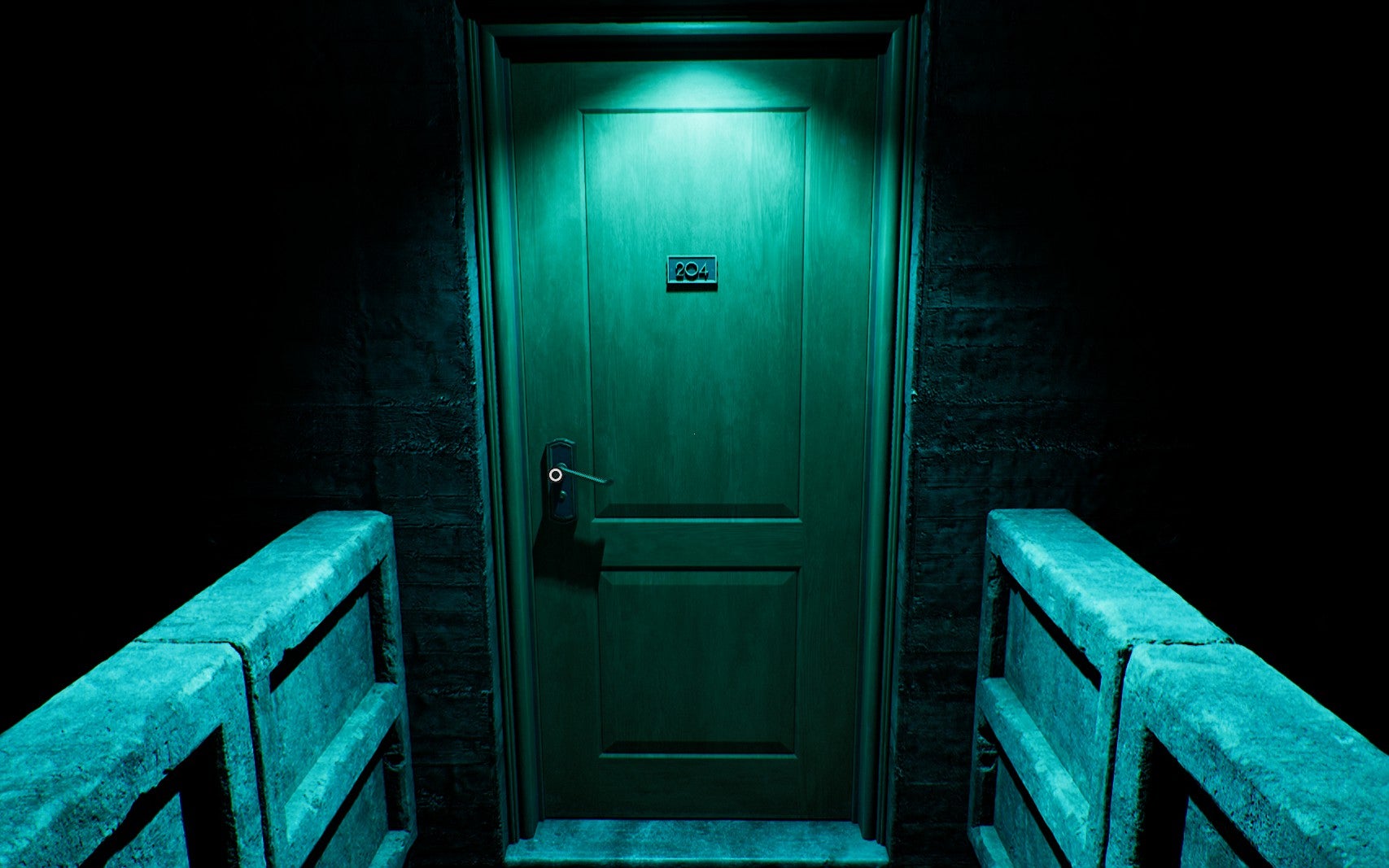
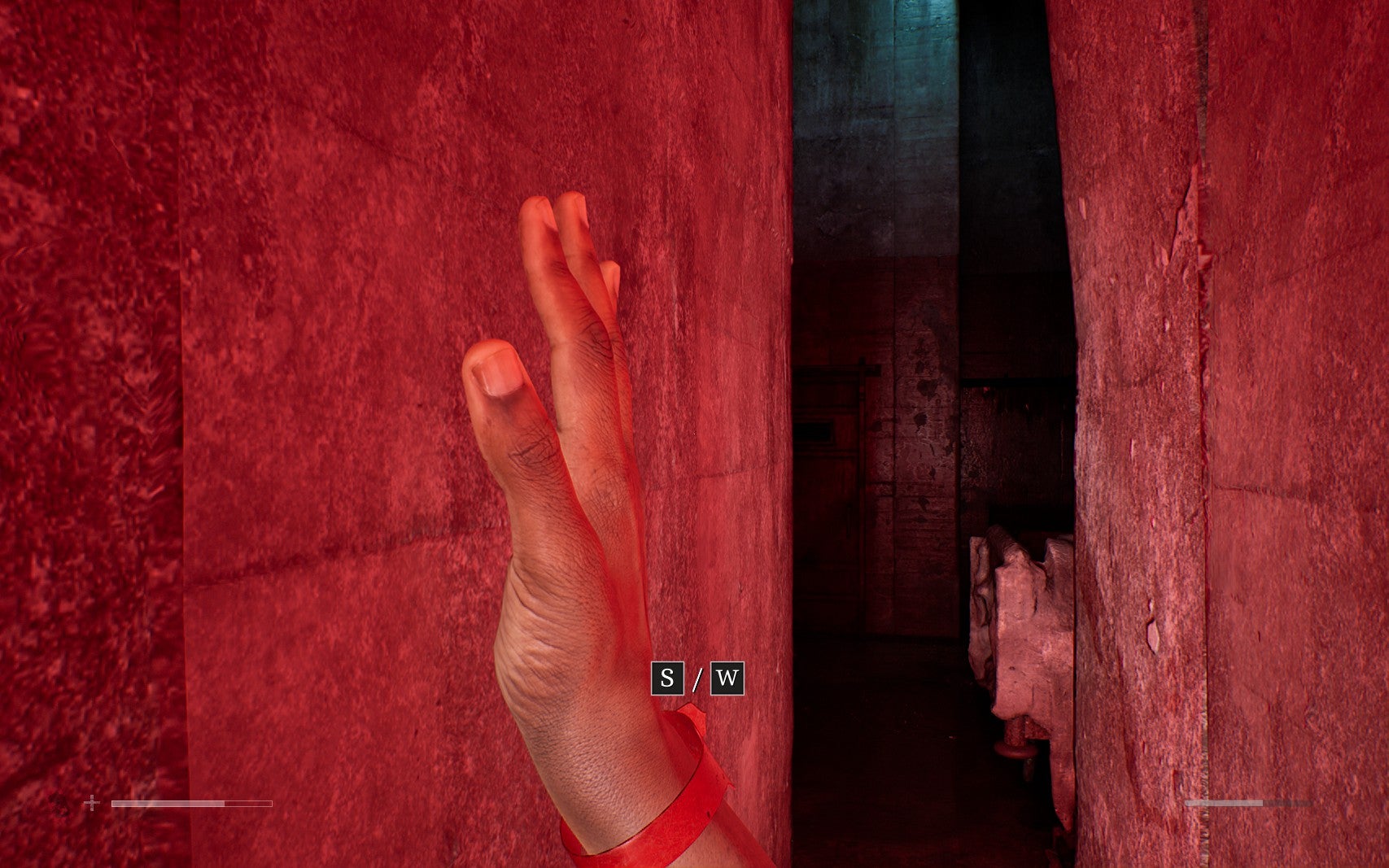
Simon keeps orbiting between that pier and a certain hotel room. Zoe is a prisoner of the people she couldn’t save, always on the point of entering the operating theatre. Richard can never quite reach the tenth floor of a certain office, pillaging himself over and over in a quest for redemption. The temporal mechanics of trauma – the inability to stop reliving, without quite grasping what is being relived – extend into the game’s puzzle and location design, which often consists of rites of suffering and abortive or, at best, incremental catharsis. There’s a house in which the days have become tabulated bodycounts, captured on cassette for endless replay. In Zoe’s worst nightmares, Simon searches for blood donors among patients cast in concrete: tombs for the agony of those kept alive by her inability to save them.
Townfall’s puzzles are often more compelling than they have any right to be, given that a sizeable chunk consist of finding or figuring out 3 or 4 digit keycode puzzles. The best of them aren’t just believable extensions of the location and story themes, but deviously facilitated by the world’s period technology. Amongst other things, you will fire up beautifully beige, alt-historical desktop computers in order to comb a primitive email system, and call obscure numbers at meticulously recreated payphones, with a patina of scratches I found instantly familiar as a 90s kid (these also let you save the game, together with automatic checkpoints after story beats). Screen Burn remain adepts at both recreating older pieces of hardware, and at infusing that hardware with menace, though I think they’ve pulled their punches here in comparison to their more focussed, reputation-making Stories Untold.
The most sinister of the game’s devices are generally medical instruments. During its opening half, Townfall often feels like a meditation upon the early months of the Covid pandemic, with Zoe’s part of the narrative exploring the brutalising of British NHS staff, tackling an evolving plague with minimal resources, sometimes in toxic and unsupportive workplaces. Among her demons is an overworked senior male doctor whose contempt assumes supernatural dimensions, fed and distorted by her self-recrimination. One of Townfall’s most distressing scenes has you carrying out an emergency procedure, alone in a room of confusing and diabolical machines, trying to make sense of readouts while Dr Glenn snarls orders through a speaker.
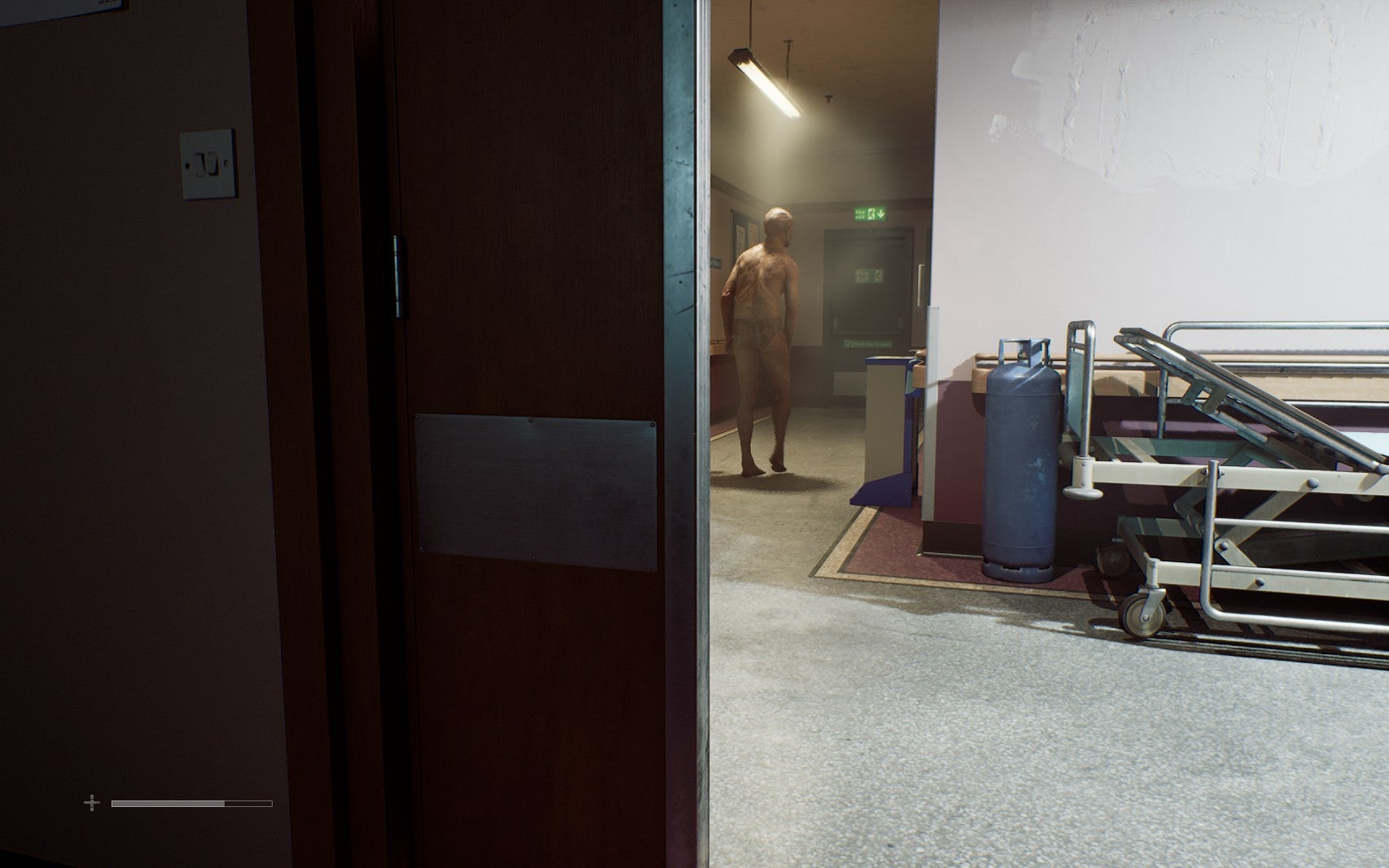
It’s a nasty, compressed portrayal of structural misogyny, a useful contrast to James Sunderland’s fevered fantasies about female nurses in Silent Hill 2. Your tormentor’s superior expertise is roaring static in your ears. He mixes in the odd moment of cordiality as though slackening a leash, only to yank it tight. Eventually, you must leave the theatre to recover medications from other, darkened wards, which are full of wandering Others; it’s saying something that I found this a relief, after trying to keep up with Dr Glenn, though it also meant revisiting my own memories of British hospital wards during the pandemic.
Later on, Townfall evolves into a tale of banal corporate arrogance and neglect specific to the late 90s timeframe, at the peak of North Sea oil production and prior to the spread of broadband internet. It’s surprisingly fresh territory for Silent Hill. The game includes a kind of playable cross-section of a big company’s callous attempts at reputation management, with players moving between layers of damage control, lifting the paperwork to disclose the spoiling flesh. You trace evidence of greenwashing in wrecked media departments, and read memos about using company-wide “restructuring” to get rid of troublemakers: at times, I was reminded of certain employer practises in the videogames industry.
If all of this is generally fascinating to dig into, the price you must pay is having to spend a lot of time lurking behind cover. All of Townhall’s major objectives involve a journey across town, with locked doors, blockages and objectives written on a paper map that often feels like your greatest adversary. Along the way, you will definitely meet a few Others. You can fight and kill the majority using a salvaged plank or pipe, but it’s not advisable on normal difficulty (and besides, you might come to regard the creatures with sympathy). Melee weapons break after a couple of KOs, and even one foe can butcher you in seconds if you fail to block their swings – easily done when flailing around in dark rooms. There are also guns to acquire in the course of the story, but ammo is scarce, so it’s better to stay low and take advantage of strategically positioned closets and storerooms. You can lob bricks and bottles to distract or, in a pinch, stun enemies while making your escape.
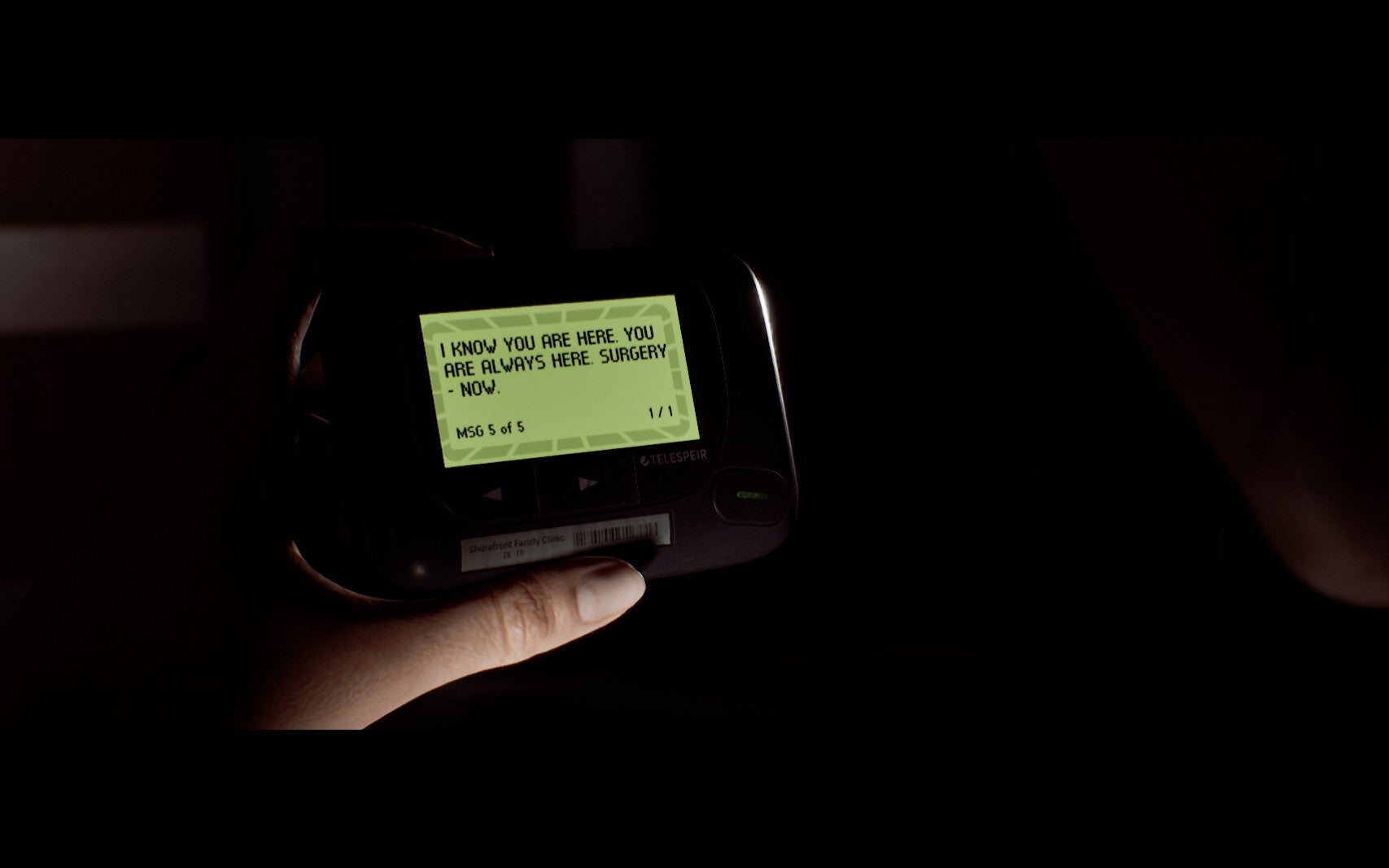
The stealth is easier if you’re Simon. His magic pocket TV can be tuned to track an individual Other using simple horizontal indicators, snapping between stored signals using the D-pad. When you’re aiming the device right at your adversary, you’ll see a fizzy little video image, revealing distance and orientation. Zoe, meanwhile, gets an LCD pager with bars that work like a compass, tracking several enemies at once but indicating little else. I found being able to pin down one foe’s proximity and orientation more helpful than keeping tabs on several: the game’s voicework does a fair job of letting you know when something’s wobbling down the corridor behind you.
All this can be thrilling, given the right layout. At one point, Simon has to make his way through an apartment warren of scaffolds and soiled bathtubs, tracking creatures above and below. Later, there’s a section where Zoe has to explore an open plan ward, with nothing but cubicle curtains between you and the resident abominations. Still, the stealth is often quite robotic and plodding. Enemies appear capable of noticing that a door has been closed, but they generally march up and down like they’re on parade. The monotony of the patrolling is emphasised by the dynamic score, which is perhaps too militant about signposting awareness states. This staves off a certain amount of ‘bad’ frustration – I was always thankful for the soft thunderclap that indicates when it’s time to leg it – but the overattentive sound design reinforces the sense of playing Frogger with viewcones.
Townfall introduces a few new dangers as it goes that change the tune. The least fun is a roaring, stamping, unkillable tower of buboes who lords over an area where you need to collect objects from initially inaccessible rooms. The beast follows you between parts of the layout according to a loose script. This Other is a little more spontaneous in their patrolling, but all the same, I found dealing with them to be a massive chore. I must have spent the best part of an hour in a cupboard, waiting for the posturing smeghead to piss off around the corner.
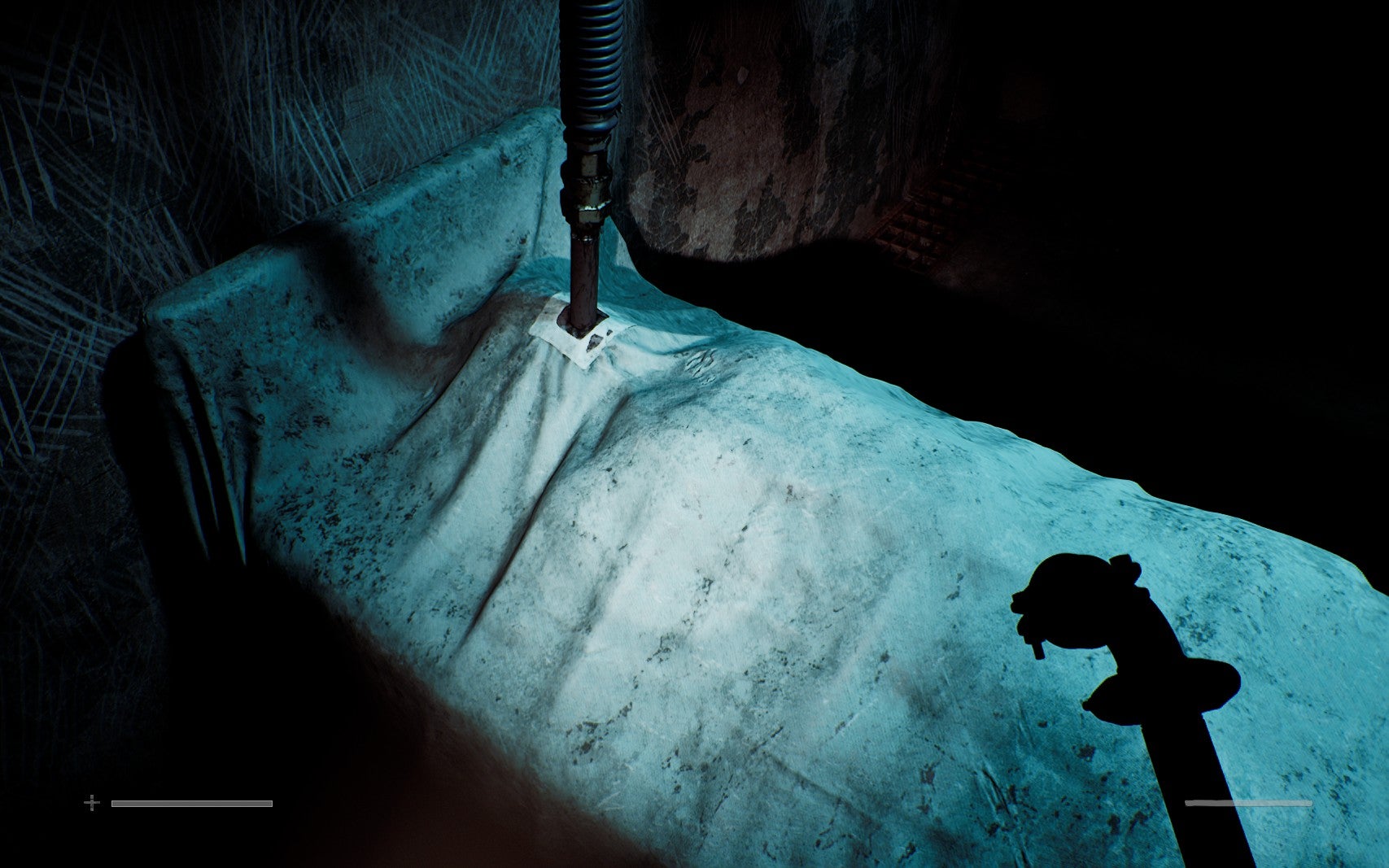
More successfully, Townfall introduces enemies who play dead, adding hideous warning layers to the soundscape, and altering the stakes during regular exploration. Sometimes, they come to life out of shot and rush gibbering towards you. There’s another late-game Other who plays hide-and-seek in a way reminiscent of Left 4 Dead’s Special Infected – fortunately, this is when you lay hands on a shotgun. These latter additions are decisive for Townfall, pumping fresh blood into the veins just when I’d lost all interest, though you could argue that they’re enjoyable mostly because the preceding shamblers get so tedious.
If you have any kind of tolerance for extended, somewhat formulaic stealth, I recommend giving Townhall a go. As grating as the sneaky pattern recognition can be, I was always curious to delve deeper into the mystery of St Amelia, which gets more and more engrossing in the second half, once Screen Burn have gotten the initial shows of fidelity to expected Hillian devices out of their system. You could argue that Bloober’s Silent Hill 2 remake is the more accomplished game, but this one is much more interesting, because it’s a battle to assert the developer’s cultural specificity and choice of period narratives over the imported Konami code. I guess that’s what any locally grown Silent Hill should be: a fight to put Silent Hill back in the grave.