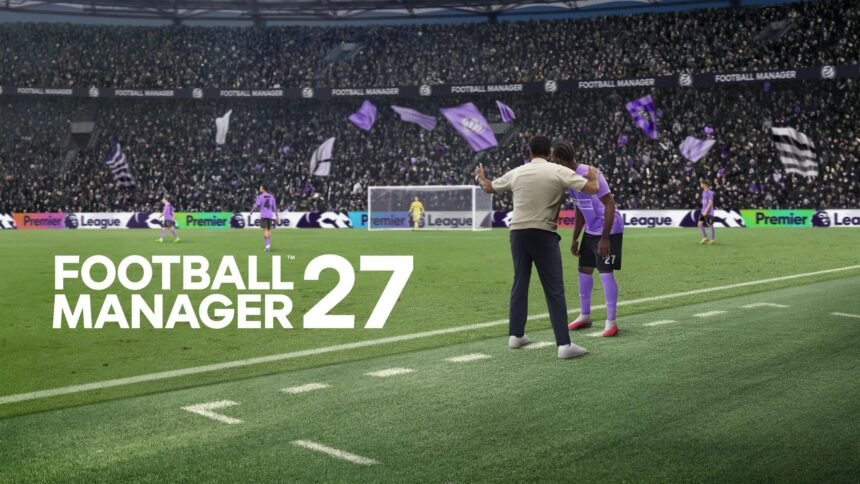
Football Manager 27 had to be great to make up for the letdown that was FM26. Thankfully, this year’s entry in the long-running series is a clear step in the right direction. Sports Interactive doesn’t try to reinvent the formula from scratch, instead improving on several aspects that were lacking in last year’s effort that made the daily tasks of managing a football club feel like chores.
The improvements to things like tactics, training, and recruitment make FM27 feel like a more cohesive experience overall. It is far from being a perfect game, but if you can look past its various shortcomings, buried beneath is a game that understands the fundamentals of what made so many football fans fall in love with this franchise in the first place all those years ago.
One of the most important additions to FM27 is Tactical Effectiveness, which is a system that connects tactical philosophy to aspects like recruitment, training and the players available to you. It takes into account everything from player ability, tactical prowess, how much the team buys into your personal philosophy, and preparation for upcoming opponents.
“One of the most important additions to FM27 is Tactical Effectiveness”
It adds far more depth than just allowing you to choose a formation and expect everyone to execute it perfectly without question. This in turn, gives extra significance to the decisions that you make off the pitch. Managing to get a deal over the line to bring in a talented player isn’t always enough if they lack the attributes or understanding required to fit the system that you have put in place.
Tactical Tweaks is another interesting addition, as it allows you to make immediate responsive adjustments from the touchline in real-time, without having to constantly open up the main tactics menu. You can instruct your squad to do things like exploit the full width of the pitch, increase passing urgency or alter the intensity of the press. These calls make in-game management feel more involved.
Considering that the vast majority of your time in Football Manager is spent looking at menus, having a visually appealing and functional interface is obviously paramount to the game’s enjoyment. Thankfully, FM27 delivers in this area. The interface looks great, with a cleaner navigation system that places the primary sections of management, – including Squad, Tactics, Recruitment, Training and Club, – within easier reach. Information that is worth prioritising is also conveniently highlighted, which means important developments can be dealt with efficiently without constantly jumping between screens.
In a Football Manager game, tactics are king, and FM27 does a good job of making your decisions feel consequential. Experimenting with different formations, player roles and instructions is a tenuous process, particularly when you begin to realise that what you thought was just a small adjustment can directly influence the outcome of a match. The Tactical Effectiveness system adds another extra layer, forcing you to consider whether your squad is genuinely suited to the playstyle you are aiming for.
“In a Football Manager game, tactics are king, and FM27 does a good job of making your decisions feel consequential.”
I chose to manage Celtic, settling on an attacking 4-2-4 gegenpress, building an aggressive side designed to put opponents under sustained pressure. This approach has been pretty effective across my opening competitive fixtures, which followed on from an unbeaten pre-season.
Training has also received an overhaul, with a new interface that feels more accessible, improved scheduling options and an increased emphasis on preparing for upcoming matches. The ability to replicate training schedules is also useful, reducing the amount of repetition required from the player.
The manager creation system is sadly super disappointing. It feels extraordinarily antiquated and limited, offering little of the flexibility compared to the extreme detail and care put into the rest of the game’s countless systems.
Unfortunately, on matchdays the visual presentation is also pretty poor. The player models look extremely primitive, with footballers bearing very little resemblance to their real-life counterparts. Stadiums lack any sense of individuality regarding the atmosphere or look, sounding the same in terms of crowd noise and appearing almost identical apart from changes to their seating and tunnel colours. Speaking of the crowd, they look even worse than they sound, resembling the sort of crowds you would see in a PS2 era sports game.
Technical performance could also be a lot better. My laptop has an Intel Core i9-13900H processor and Nvidia GeForce RTX 4060 graphics card in it. Playing FM27 using the default graphics settings, I experienced several instances of noticeable visual stuttering during matches. It isn’t bad enough to make the game feel unplayable, but it is disappointing given the seemingly modest graphical demands.

“The manager creation system is sadly super disappointing.”
The actual football simulation is thankfully a lot better than the ugly visuals would suggest. Players often make intelligent runs, position themselves well depending on the circumstances of play and respond dynamically to tactical instructions. Watching my Celtic side play attacking football with that 4-2-4 formation is thrilling, if only the team could pull that off in real life!
During my first transfer window in charge of Celtic, I brought in Solly March, Miguel Morro, Oleksandr Zinchenko, Carlos Nieto, Raheem Sterling, Sergio Ramos and Will Ferry. I also sold Joseph Haney, Hayden Borland and Lucas Clearie as I reshaped the squad. You can utilise scouting recommendations if you choose, but I chose to ignore those and just identified the players I wanted, then sent scouts to assess them and made my decision using the scouting information provided.
The addition of Tactical Effectiveness encourages you to consider more than just a player’s ability when browsing the transfer market and consider whether they would actually suit your established style of play. Building a squad around your specific footballing philosophy feels more rewarding as a result.
Just like in real life, managing a squad in FM27 involves a lot more than just picking your starting eleven before each game. Things like individual training add depth, as it provides an opportunity to develop specific players who you want to focus on, while the wider schedule can also be adapted to however you see fit. As much as aspects like this were appreciated, backroom management was less engaging and I often delegated those decisions to my assistant manager.

“The matchday presentation feels dated due to the ugly graphics and the visual stuttering I witnessed was disappointing.”
Overall, Football Manager 27 is a significant step forward for the series, delivering a more engaging and comprehensive management experience that felt like it was lacking in FM26. Its greatest strength is not only the sheer number of different features of the beautiful game that it allows you to tweak to your own taste, but how it makes all of these seemingly separate, in-depth aspects click together and feel connected.
Tactical decisions influence recruitment choices, specific training regimes support your chosen approach to football on the park, and seeing all of this come together to produce results that you and your team can be proud of is hugely satisfying and it is also what makes the experience as a whole feel so addictive. Once it all clicks into place, it feels extremely satisfying and makes it easy to just fall into that trap of “I’ll just play one more game.”
With that being said, there are areas that are clearly lacking. The matchday presentation feels dated due to the ugly graphics and the visual stuttering I witnessed was disappointing too. However, frustrations like a limited manager creation mode are outweighed by the quality of what is involved in the actual management itself, as well as the satisfaction of building your dream team around your own philosophy.
FM27 didn’t need to reinvent Football Manager, FM26 tried to do that and failed. This year’s entry just had to get the fundamentals right and ensure that it captured that magic feeling that made all of us fall in love with Football Manager in the first place all those years ago. If you are a long-time fan, you will be glad to hear that this is a return to form for the series, and if you are a newcomer, then this is not a bad first experience of this franchise.
This game was reviewed on PC.