Crimson Desert has amassed an eager following thanks to the developer’s tireless string of post-launch fixes, updates, and content drops. Its players – some of whom have spent 100s of hours exploring the continent of Pywel – are waiting with baited breath for the game’s first paid-for DLC. That receptive playerbase gives Charting the Unknown a credible route toward becoming one of 2026’s biggest releases, even if it runs primarily through an existing audience rather than enticing a new one.
See, the upcoming expansion doesn’t necessarily need to persuade millions of people to start an unfamiliar open-world RPG from scratch, but it does need to give existing players a compelling-enough reason to return – that is, if they even left in the first place. So, while we can assume the pool of newcomers is relatively small compared to Crimson Desert’s current players, there is another, arguably bigger challenge facing Charting the Unknown beyond convincing players new and old that there’s more to see in Pywel. And, that challenge is the competition for players’ time.
Right now, we’re smack-bang in the middle of a packed release calendar. Launching on October 29, Charting the Unknown arrives alongside the hotly anticipated Phantom Blade Zero. Then, World of Warcraft: Forever and Ocarina of Time’s remake follow in November. And, with the irresistible atom bomb that is Grand Theft Auto VI looming later on in the month, you have plenty of options for where your time and money goes.
This puts Crimson Desert’s upcoming expansion in an interesting predicament; it might just find success by bringing existing players back into the fold, with any potential for introducing players who missed it the first time around of less significance. This DLC can absolutely compete for attention alongside the gamut of other releases, but the appeal is concentrated among those who have already invested in the base game. And, to be fair, this appeal is shared across the upcoming titles just mentioned, the all-new Phantom Blade Zero notwithstanding.
World of Warcraft has millions of active players, while Ocarina of Time is arguably Link’s greatest adventure with decades of goodwill behind it. You’d be hard-pressed to find someone who hasn’t played a Grand Theft Auto title, and while the hype for GTA 6 might not be resonating with everyone, Rockstar reportedly aren’t having any trouble convincing players to pre-order. Charting the Unknown, then, must lean on its existing audience as the competition already has audiences of their own.
But, an established audience can only provide a headstart. It is by no means a guarantee. Yet, for Crimson Desert, there is, at least on paper, a substantial playerbase to draw from. The developer confirmed back in June that the game has sold six million copies worldwide, following the two million launch-day sales. Those numbers are undeniably impressive for a new IP.
However, sales figures only tell part of the story. The more pertinent question for Charting the Unknown is how many of those players remain invested in Pywel, and how many can be persuaded to return.
Steam’s concurrent player figures offer an indication of how the game’s audience has changed since launch, although this, of course, shouldn’t be mistaken for the entire picture given total sales are reportedly split down the middle between PC and console. That said, Crimson Desert peaked at more than 276,000 concurrent players on the platform, while its most-recent activity has tapered gradually. This decline, however, doesn’t indicate anything beyond players moving on after launch, but it does support the notion that Charting the Unknown might need to do more than simply exist if lapsed players are to come back.
Interestingly, and sticking with Steam data, the game’s completion figures suggest there could be scope for players to re-engage. According to the Steam achievement percentages in SteamDB, 76.9% of players have completed Chapter 1, but only 28.9% have reached the end of Chapter 7. Just 10.7% have completed all the main quests, demonstrating that owning Crimson Desert and finishing its main story are two different things.
This information is noteworthy because Charting the Unknown doesn’t make all of its content available immediately. According to the developer’s breakdown of the expansion’s prerequisites, the sea-faring storylines become available after completing the Howling Hill quest, while the individual narratives for Kliff, Oongka, and Damiane require the main story to be finished. In other words, you can access some of the expansion’s content without completing the campaign.
And, anecdotally, given the community chatter across services like Reddit, there are plenty of you who have invested hundreds of hours into Crimson Desert’s diversions instead of focusing solely on the main quest. If understood in earnest, there’s a potential upside which contradicts our earlier point. See, for Crimson Desert’s already captured players, Charting the Unknown’s existence could well prove enough incentive to finish the main story before diving into the DLC.
If you have spent time away, leaving before the Enhanced Edition brought new mechanics, gameplay, abilities, and so on, a new learning curve might just establish itself. But, this isn’t a new multiplayer season; Pywel is vast, and can be unhurried if you like. There’s no deadline on remembering everything apart from the one you impose on yourself. Any hesitation, it seems, skews squarely onto new players.
See, the game, in some ways, is morphing into a life sim. The sheer scale of activity could put newcomers off. There’s plenty of things to ‘manage’, for instance; farming, harvesting, building, trading. Away from combat and exploration, these tasks could feel like a full-time job. While the game’s breadth is inarguably its selling point, it’s also a barrier to entry. And if you are put off by Pywel’s many commitments but you want a swashbuckling open-ocean adventure… well, there are alternatives for that. Likewise if you want to play a medieval open-worlder. So, in summary of our original argument – that Charting the Unknown’s appeal is concentrated among existing players – its ringing truer.
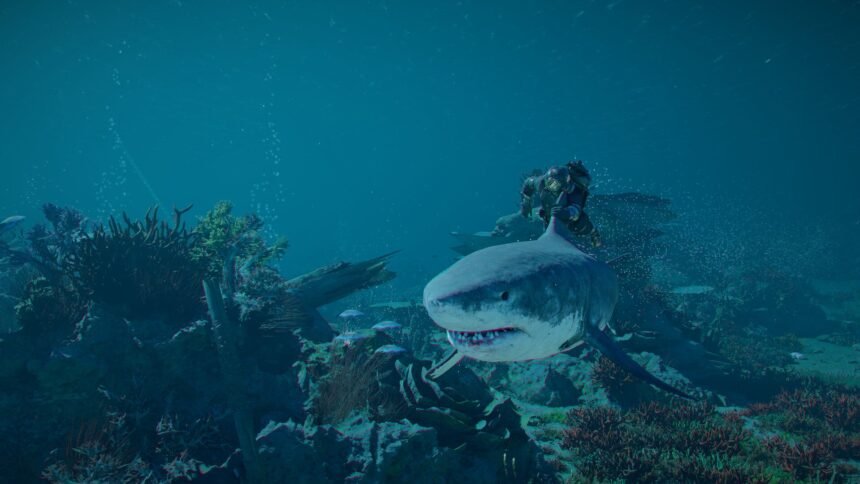
That said, no matter which demographic picks up Charting the Unknown, the expansion has potential to maintain interest beyond launch day if players find enough unexpected experiences to share. New storylines, oceanic exploration, customisable housing, castle ownership; there are plenty of avenues to anticipate and discover. And here, instead, is where the developer has an advantage over competing titles: the already established community provides the foundation for conversation to spread, sustaining its visibility.
There is a conversation on price we could be having here, too, and this could be another one of Charting the Unknown’s advantages during the crowded release calendar given expansions typically ask for less cash than a brand-new game. Again, newcomers face a different calculation as they’ll need to purchase Crimson Desert itself before buying the additional content. While the combined cost could prove attractive compared to buying multiple new releases, affordability alone isn’t a guarantee of interest. Circling back to time, players must still decide whether they’re willing to commit what Crimson Desert demands, whether the game is filled with meaningful substance or not.
So, all in all, Charting the Unknown could well end the year as one of its biggest releases, but that success hinges on how effectively its existing audience engages. There are, however, countless reasons to believe current and returning players will find something worthwhile, while newcomers not put off by the odyssey ahead of them will be tempted to experience the complete package. There’s no denying though: that same substantial time commitment together with competition elsewhere could limit Charting the Unknown’s reach – at least, initially.