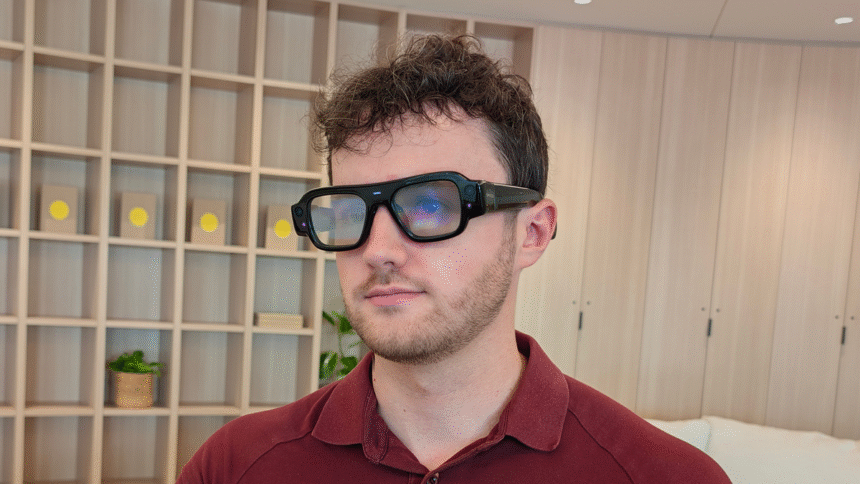
I briefly went hands-on with Snap’s Specs at the “launch” event in Los Angeles. Here’s what I thought.
If you’re unfamiliar: Snap Specs are standalone true AR glasses, meaning they have physically transparent see-through optics and can position virtual objects and interfaces in real space, while having no tether or external computing hardware. Revealed back in June, when the company opened preorders, the $2195 Specs are set to be the first fully standalone true AR glasses outside China, and the most advanced on the planet that you can actually buy, beating companies like Meta and Apple to market.
For disclosure, Snap paid for my flights and accommodation for its “launch” event, which I put in scare quotes because it didn’t actually launch the glasses. It did announce that Specs will have a built-in cross-platform agentic AI assistant, and an optional cellular case for on-the-go connectivity. CEO Evan Spiegel also demoed the glasses live on stage, a welcome respite compared to the usual prerecorded tech launches.
But while Spiegel’s demo was inarguably impressive, the problem with Specs is that, through the lenses, it simply doesn’t actually look like the casted and recorded views.
Watch Snap’s CEO Demo Specs True AR Glasses Live On Stage
Snap’s CEO demoed the soon-to-launch Specs standalone true AR glasses live on stage, including an official Harry Potter experience from HBO.
As soon as you put on Specs, you’ll notice a number of optical artifacts. There is a rainbow pattern over the display area, which has poor color uniformity in general. You’ll also see blue streaks from reflections of real-world light around the edges of the lens. This is not the crisp image you’ll be used to in a VR headset, nor is it even anywhere near as clear and uniform as the Meta Ray-Ban Display HUD.
The bigger problem though, as with every optically transparent AR device to ever ship, is the field of view. At 51 degrees diagonal, it’s roughly the same as HoloLens 2. What’s strange (and misleading) is that Specs renders and records a larger field of view than what it can actually display, so what you see in Snap’s promotional videos, and any recorded Specs content shared on social media, is very different to what you see in the device.
(For comparison, passthrough VR-style headsets like Quest 3 and Apple Vision Pro have a diagonal field of view over 100°.)
In practice, what you see as you look around is a rectangular slice of the virtual content that should be surrounding you. As I’ve written about many times before, this breaks object permanence, and leaves you constantly searching for where each virtual object went.
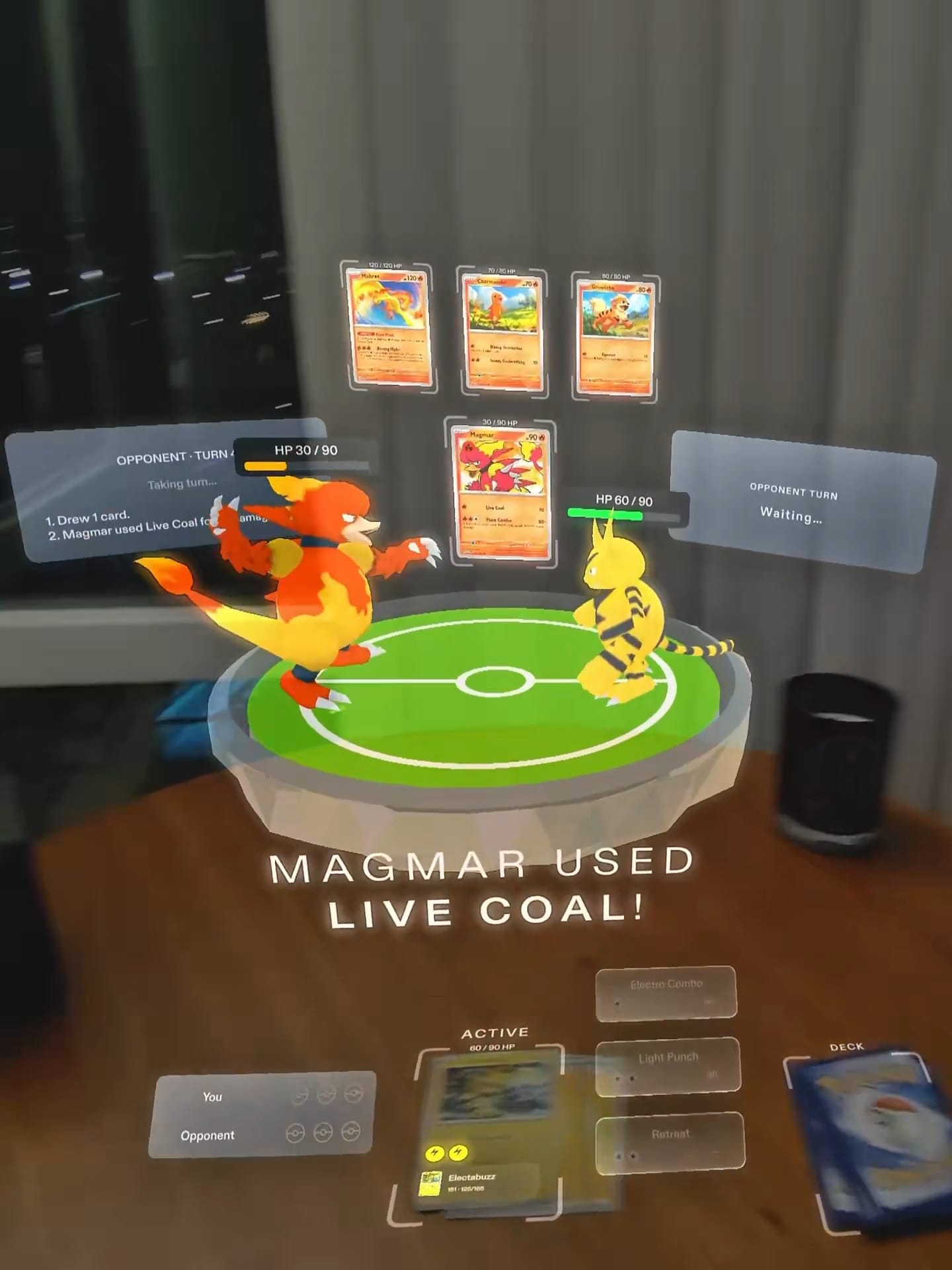
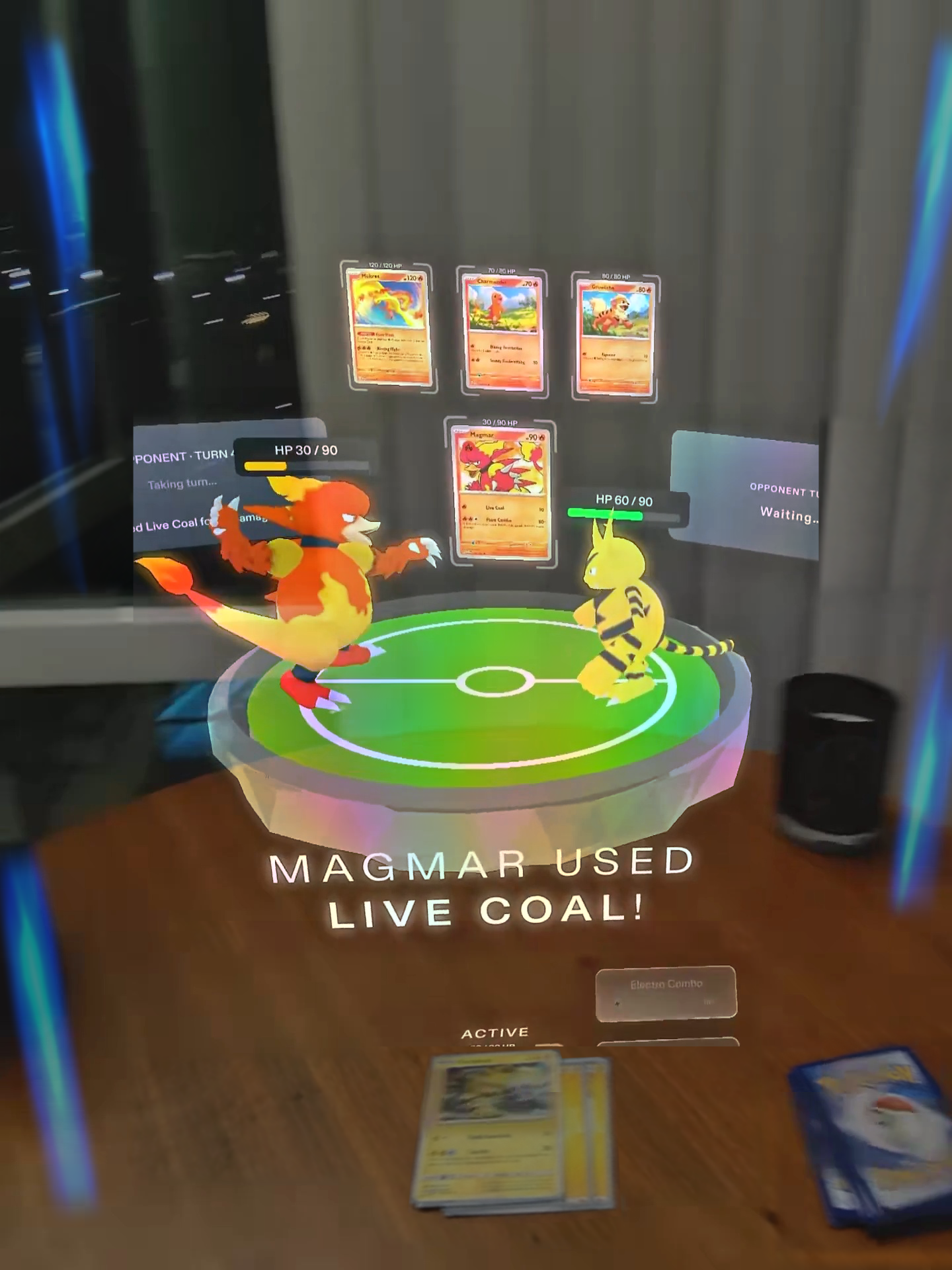
Specs recording vs UploadVR mockup of what Specs really looks like.

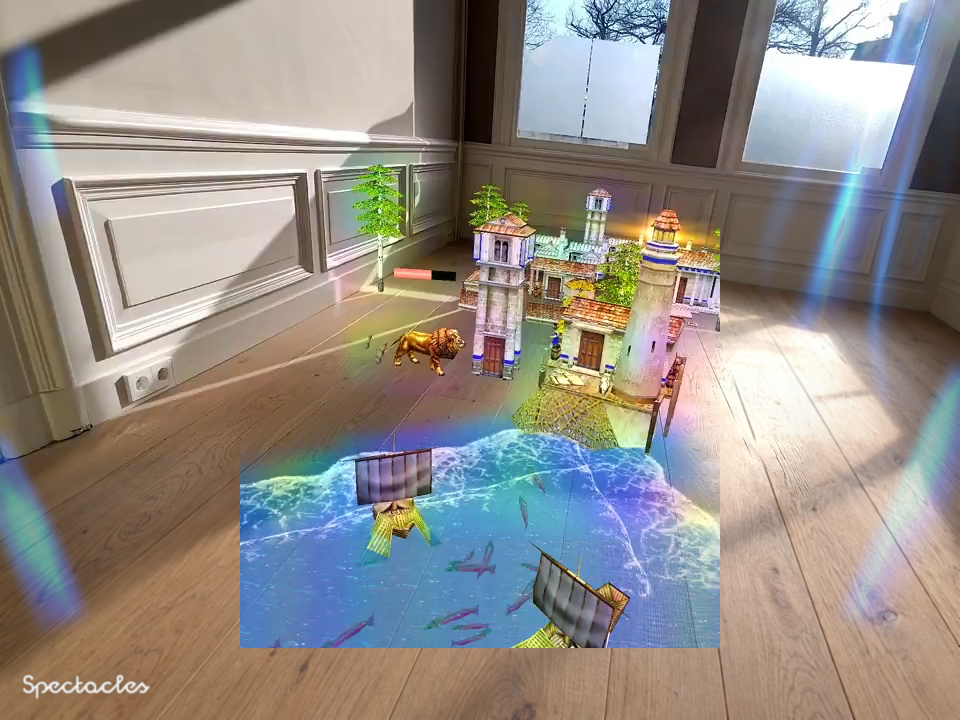
Spectacles recording vs UploadVR mockup of what Specs really looks like.
This is not a dealbreaker for all use cases. And it’s not Snap’s fault – it’s essentially impossible today to build a glasses-size transparent AR device with a field of view much larger than this. Meta’s Orion prototype famously used an exotic expensive material with no existing non-military supply chain to achieve 70 degrees, for example. But it’s something I sorely wish that companies building transparent AR devices had been more honest about for the past decade of this industry. Because the inevitable result is that people are disappointed when they put the thing on their face and see only a sliver of the content.
Some experiences cleverly design around the field of view, and for others it doesn’t matter at all. This is where Specs shines. But many experiences seem to ignore it, to the detriment of usability, as if building for a future device that doesn’t yet exist.
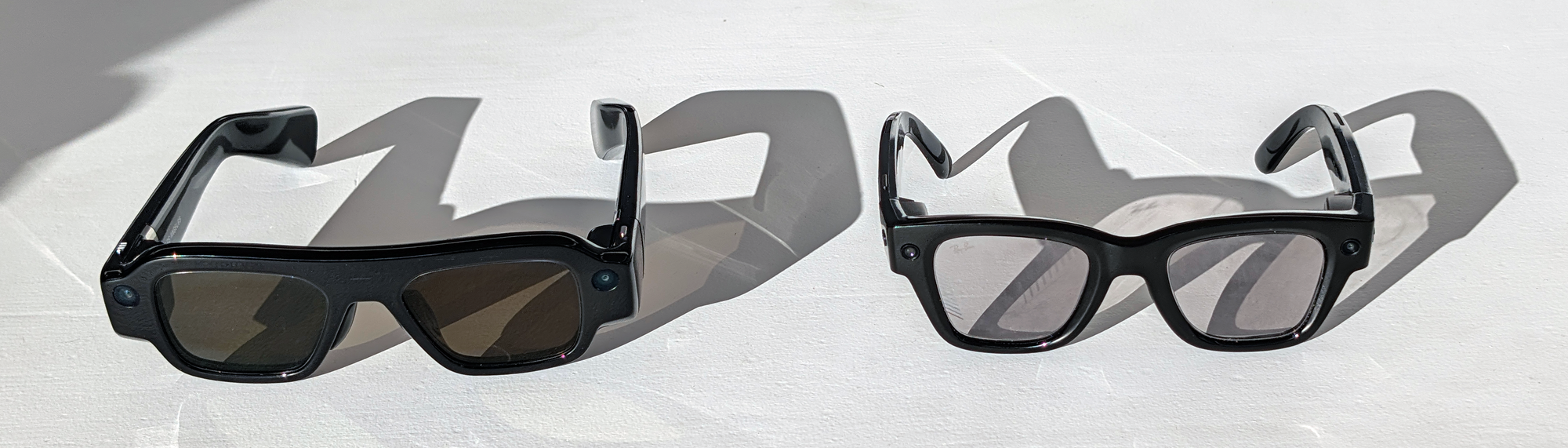
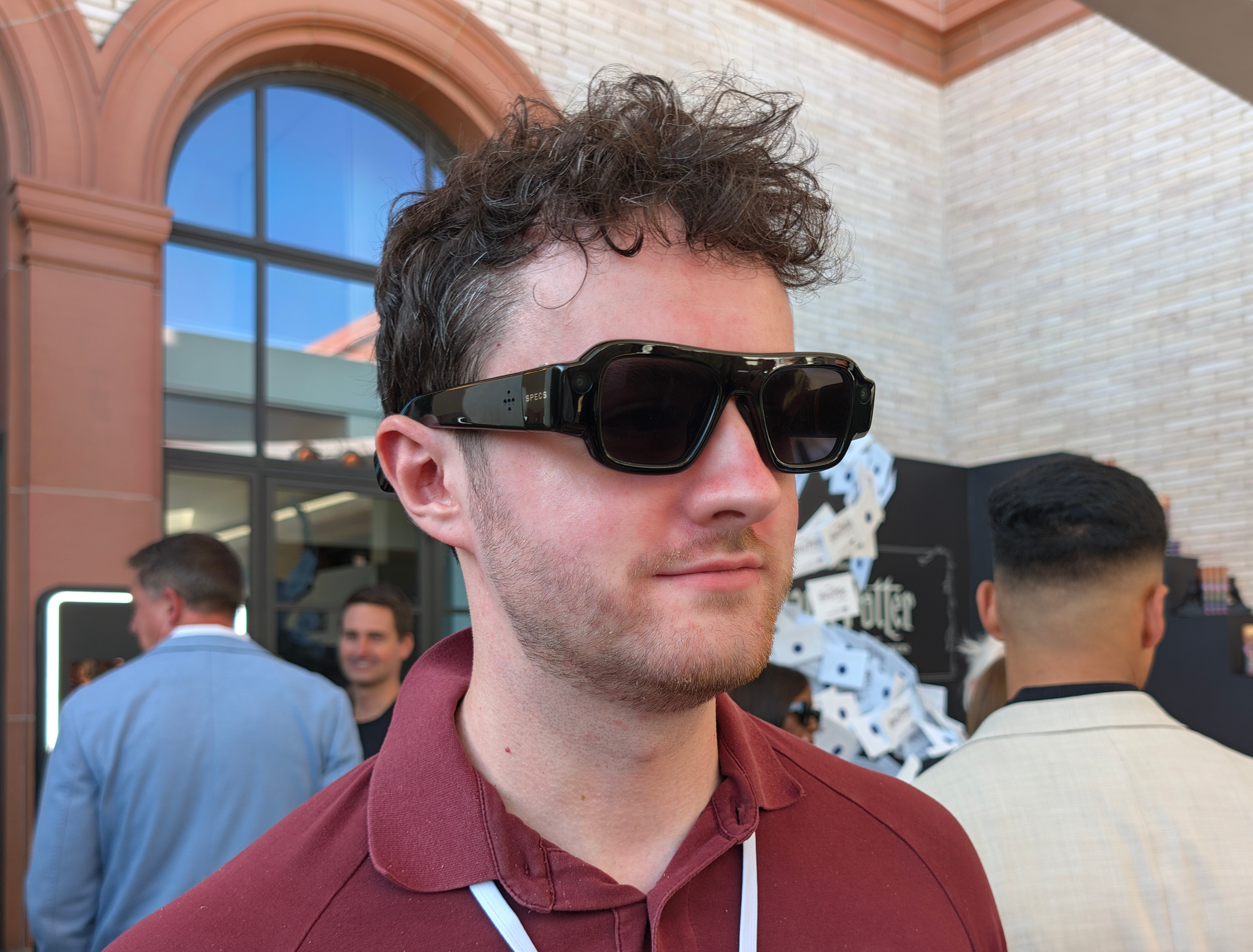
And while it’s impressive that Specs is able to be a fully standalone device in glasses form factor, no pucks or tethers required, this feat does not come without tradeoffs. While I do describe Specs as glasses form factor, at 134 grams it sits right at the very boundary of earning that description. It is comfortable, thanks to its outwards-flexing arms (an ergonomic feature of all good recent smart glasses), but the bulk looks somewhat comical to regular bystanders. Even Spiegel admitted as much by acknowledging the memes around the form factor.
Specs also seems to render at a far lower frame rate compared to other VR devices. While Snap wouldn’t say the exact rate, rendering in many experiences felt to be nowhere near the 72FPS minimum of other XR systems. Fitting a higher-performance spatial computer into a glasses arm is simply beyond the technology of 2026.
The lack of eye tracking on Specs is also a major miss, as it quickly became tiring to raise my hand to point-and-pinch. Apple Vision Pro has established eye tracking as absolutely essential for any serious XR device interaction other than active gaming. I am convinced that Specs will be one of the last major devices in this space without eye tracking.
My description of Specs so far has been rather negative, but what I’ve really been trying to do is just establish a realistic picture of what to expect, beyond the hype and expectations that have built up around true AR glasses and Snap’s marketing. But that’s not to say that Specs isn’t a viable first-generation product for early adopters.
What’s most impressive about Specs is its computer vision tech. Even in low light when the sun went down, with dozens of people walking nearby, Specs’ positional tracking and hand tracking remained rock solid. It even features real-time continuous scene meshing with occlusion, so real-world geometry will block virtual content. To do this at such a low power envelope, in the arm of glasses, is groundbreaking. Not even Quest 3 does this!
I was also struck by how much better having 6DoF augmented reality makes key use cases I already use on Meta Ray-Ban Display feel, such as translation and navigation. It’s significantly more comfortable to have translated captions anchored to the person speaking to you rather than awkwardly on a fixed display in the lower-right of your view, and to have a huge map at chest height in front of you rather than a tiny one to the right.
Specs’ core software is also well-made, with relatively fast loading times for both interfaces and apps. While it’s not high frame rate, it never feels sluggish. This is thanks to Snap’s years of work on a highly optimized software stack that runs from the OS to the “Lenses” (apps) built in the highly managed Lens Studio development software on PC. This is a mature well-crafted software stack, not some lazy Android fork.
The Snap OS real-world navigation Lens.

Snap OS real-time translation Lens.
Snap is also pushing Specs as a computer for virtual monitors and browser interfaces. While I can definitely see a device like Specs being a highly portable way to privately watch YouTube on a bus, train, or plane without holding up your phone, the display artifacts and limited field of view make me highly skeptical of its use for serious productivity. The coming wave of ultralight passthrough VR headsets will likely be strongly preferable for this, and even prism optic devices like Xreal Aura will offer a wider field of view and clearer image.
Snap Specs is exactly what I expected from first-generation standalone true AR glasses in 2026. It’s as if a company tried to make an iPhone in the late 90s. The idea is there, and for what tech it has to work with, Snap’s implementation of the idea is actually excellent. But the fundamental display tech is the problem. Even with well-designed software, an iPhone in 1999 just wouldn’t be the iPhone of 2007. If you’re a tech enthusiast who understands that, and can temper your expectations, Specs is like nothing else out there, and delivers an experience absolutely no other device can match. But if you’re a general consumer hoping for a highly refined consumer true AR experience, you’ll need to wait for the 2030s like everyone else.