Watching a movie or chilling out with a meditative VR experience can meaningfully expand the use case and the amount of time someone might be willing to spend in a headset.
Unfortunately there are many factors that push against this trend. Most notably the soft cloth head straps that ship with the Quest 3 and 3S (and the Quest 2 previously) are not comfortable for many people, especially for longer sessions.
The dream of a personal theater to view movies and other entertainment is not new, born out of the Oculus revolution. But early VR was developed mainly for gaming, with head straps prioritizing stability on the head for movement rather than comfort lying down.
The lying down use case is now being served by many more consumer choices than ever before. I’ve been testing these options to bring them to light for others like me, who are seeking a comfortable solution.
Apexinno A3 Ultra-Light Head Strap
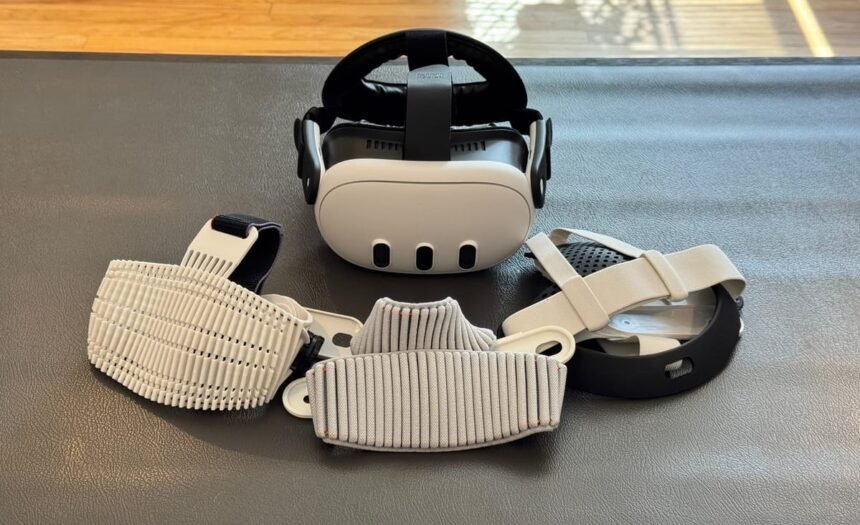
Apexinno has introduced a new lightweight head strap that uses a silicone accordion rear strap, reminiscent of the Apple knit straps for Vision Pro. The top strap is a fabric and Velcro piece that sits front-to-back to provide lift on the headset to reduce pressure on the face and cheekbones.
The A3 successfully replicates much of the satisfying gathering, cupping sensation that the Apple knit straps provide on the back of the head. It makes for a comfortable and lightweight solution that essentially disappears once you’re lying down. There is a scroll wheel on the right hand side that tightens the rear strap. To loosen you pull outward on the knob and the rear strap relaxes.
For someone looking for a solution similar to the Apple Vision Pro Knit strap but for far less money, and without having to go with 3rd party adapters, the Apexinno A3 is a compelling choice. You can find the A3 available for $29.99 on the Apexinno website or Amazon.com
Editor’s Note: Apexinno provided a review unit of the A3 head strap for this article.
Kiwi Design K4 Flex Comfort Elite Head Strap
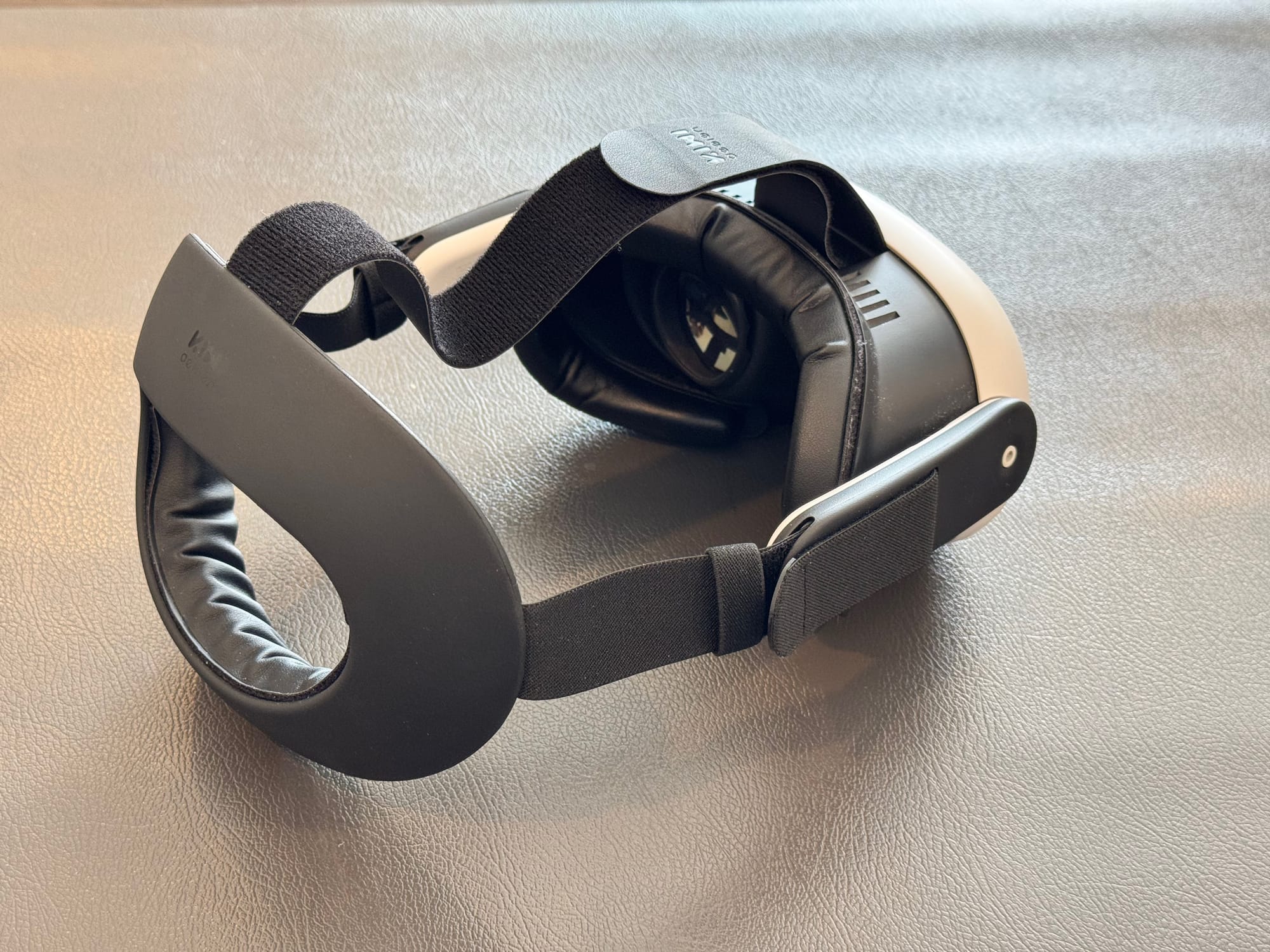
Kiwi Design’s K4 Flex takes a different approach. It combines a rigid yet flexible rear pad and elastic side straps to create a secure yet very comfortable experience for the user. The rear is well cushioned with a synthetic leather pad and a front-to-rear top strap is also present to provide lift for the headset off the face. Also noticeable is the high level of fit and finish and attention to detail in the design and construction of the K4 Flex. It feels and behaves like a high-quality product.
In practice this is one of the most comfortable head straps I’ve used on my Quest. During lying down sessions the rear pad is more apparent than the Apexinno, and some people might find it not as suited to full horizontal VR. However, it is well padded and flexible enough that it was never uncomfortable for me, just noticeable.
My impression of the K4 Flex is that it neatly falls between a true lying down solution and a capable elite-style head strap, with some valuable qualities of both types. And in the end might be the most compelling for all-around use.
The K4 Flex is available on the Kiwi Design website for $34.99 or Amazon.com.
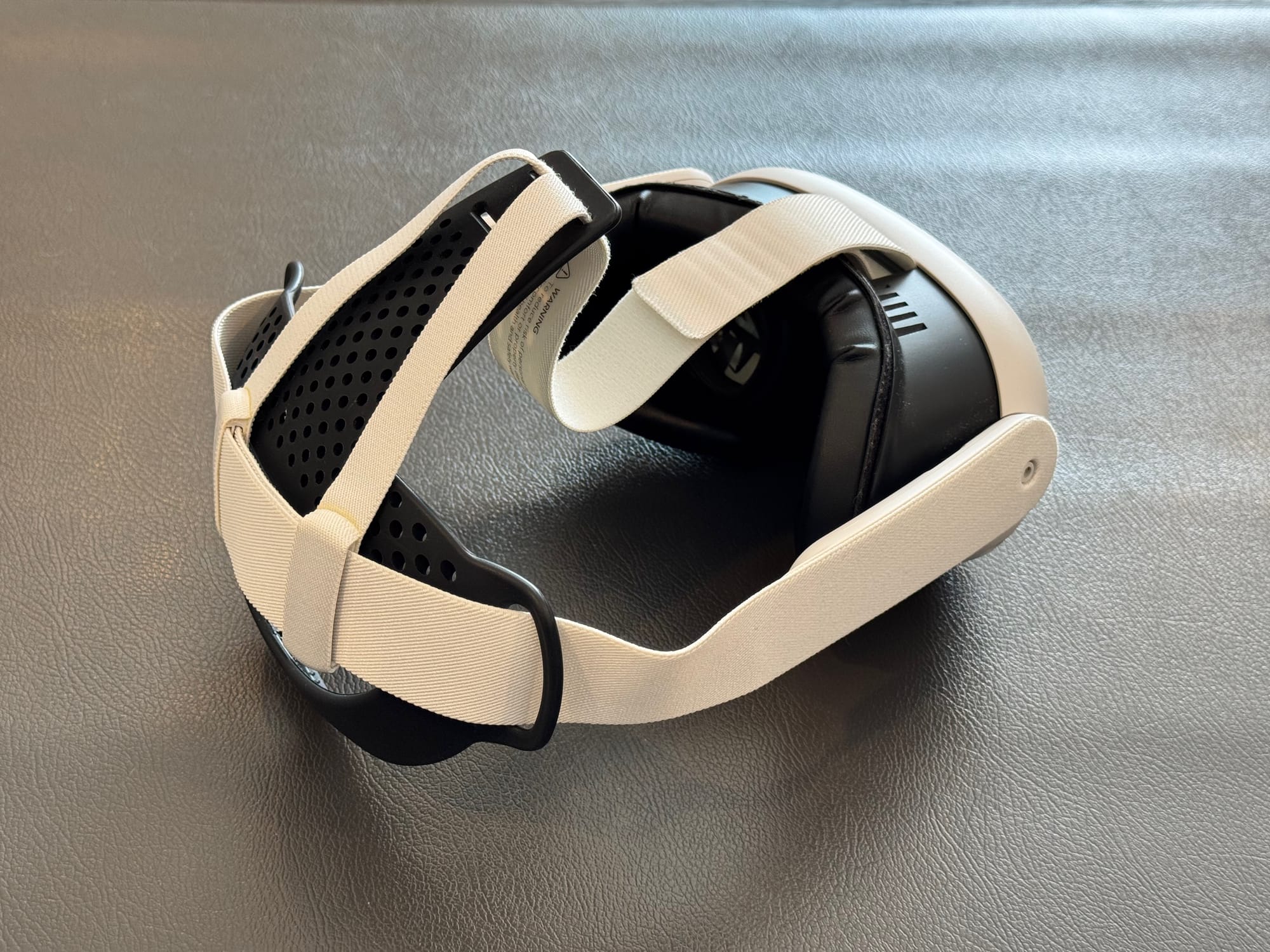
A low cost solution I found that greatly improved the comfort of the stock Meta Quest head strap is the addition of a rear head pad. This spreads the pressure of the strap more widely and evenly across the back of the head and reduces the “hot spots” where I would get sore using the stock strap alone.
These are commonly available on Amazon and other online marketplaces. Apexinno features one on their website. I purchased mine from AliExpress for less than $10.
Apple Vision Pro Dual Knit Band With 3rd Party Adapters
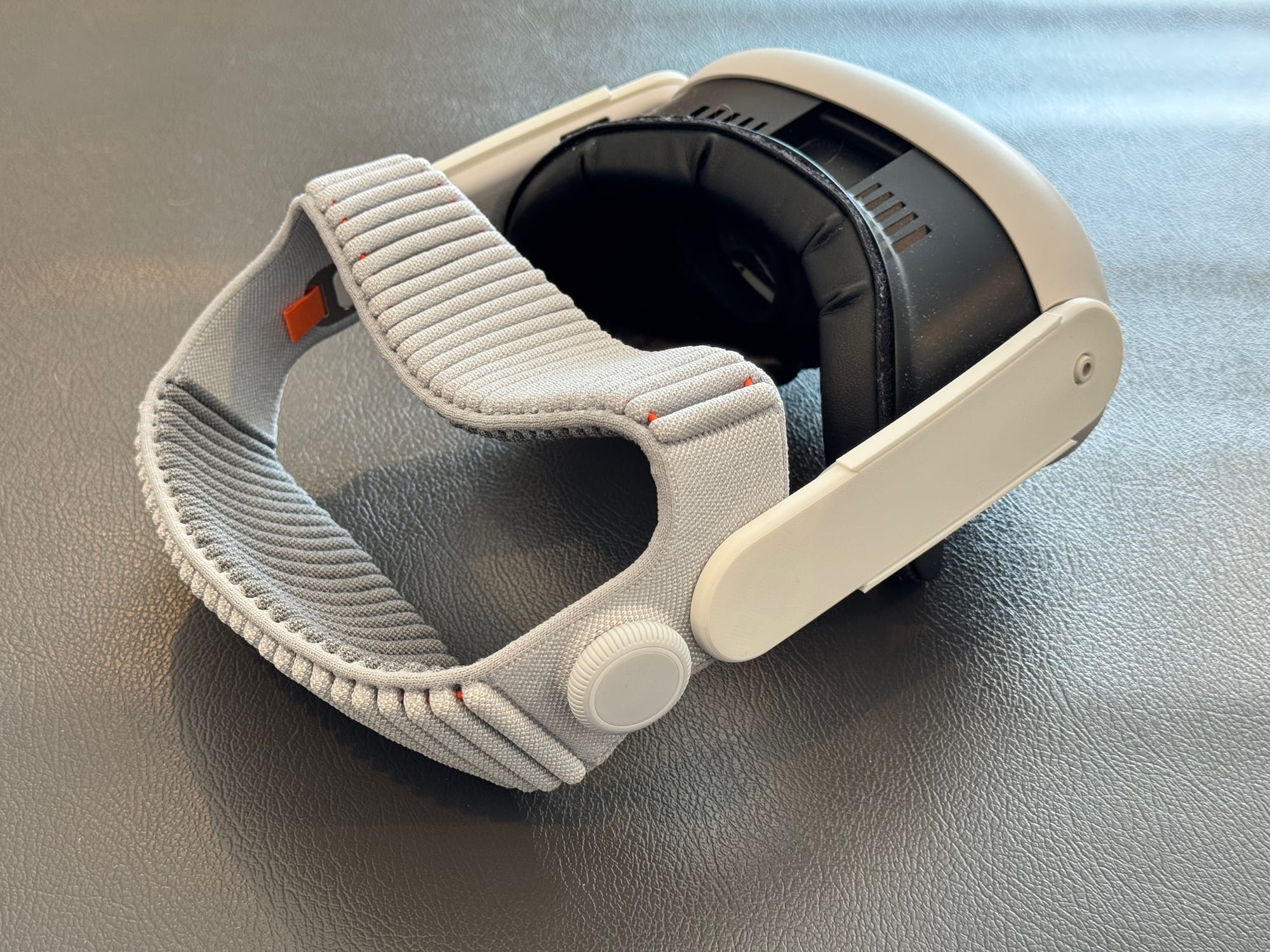
I previously wrote about my experience adapting an Apple Dual Knit band to my Meta Quest 3, using 3rd party adapters from an Etsy vendor. While this is easily the most expensive solution here, it also has some unique advantages.
The Dual Knit strap is exceptionally well made and designed, no surprise given its Apple design and lofty price tag. The woven material is soft and luxurious to the touch. The adjustment knob serves a dual function, and does so with a feeling of quality and precision. The tungsten weights built into the rear strap and the cross-head design instead of a front-to-back design means that weight is managed differently. Given the Quest 3’s lighter weight than the Vision Pro, this makes for a very balanced and comfortable solution that offers terrific adjustability.
The comfort of Apple’s design demonstrates that the Vision Pro was designed with the reclined or lying down use case in mind. Quest owners can now experience Apple’s design choices for themselves.
Thoughts On Comfort & Convenience
One added benefit of these soft straps is the convenience afforded when traveling with your Quest. I was able to simply roll the entire thing up, headset and strap, into a sweatshirt and stick it in my bag – no special travel case required. As someone who travels for work frequently, it’s not a small thing to have that option. Convenience is king when making decisions about what to bring along.
What all of these options really highlight is an acknowledgment of the broader spectrum of how many people actually use VR. For years, head strap design decisions were built around the assumption that users would be standing, moving, and playing. But a lot of us also want to lean back, watch a movie, or spend some quiet time in a headset. Comfort for those moments looks different than it does for active gaming, and the industry is finally starting to recognize that.