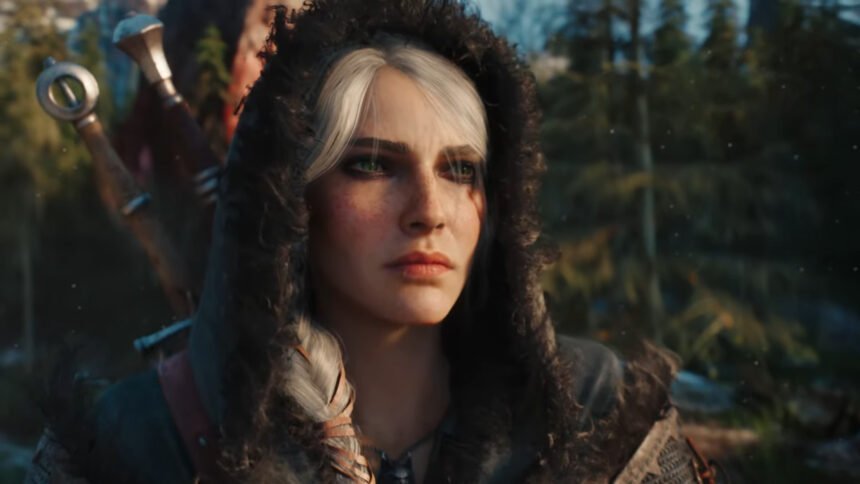
If there was any way to deflate someone before The Game Awards, it’s with the words, “No new Witcher 4 content.” Sad but true. After last year’s surprise trailer, CD Projekt RED will be content to sit back and enjoy the show (and maybe even net that Most Anticipated Game award).
That doesn’t mean we don’t have plenty of other details to keep us busy, like the fact that The Witcher 4 isn’t launching next year, according to studio co-CEO Michał Nowakowski. Was it that obvious, especially after the company said we wouldn’t see it until 2027 at the earliest? Probably not, but development is proceeding as planned since it entered full production last year.
Since then, we’ve had some great new reveals, from the Unreal Engine 5 tech showcase to the potential inclusion of plot elements from the upcoming Crossroads of Ravens prequel novel. CD Projekt RED recently confirmed that the development team consists of 447 members, a whopping increase of three developers over the previous quarter. It may not seem like much, but it likely includes Karel Kolmann, game designer on Kingdom Come: Deliverance 2, who’s joined as a senior quest designer, and that’s great news.
But the most interesting bit to emerge from a post-financials conference for the CD Projekt Group is that the team will still deliver the new Witcher trilogy within the promised six-year period. Remember when it was still called Project Polaris? That promise, which seemed borderline unbelievable at the time.
Nowakowski talked about how happy the team has been with Unreal Engine 5, how it’s evolving, and “how we are learning how to make it work within a huge open-world game, as The Witcher 4 is meant to be.” And when prompted about whether this meant a “shorter and more predictable cadence” for the sequels, he responded, “In a way, yes, I do believe that further games should be delivered in a shorter period of time – as we had stated before, our plan still is to launch the whole trilogy within a six-year period, so yes, that would mean we would plan to have a shorter development time between The Witcher 4 and The Witcher 5, between The Witcher 5 and The Witcher 6 and so on.”
So there you go, The Witcher 5 and The Witcher 6, officially named and confirmed. All joking aside, it still feels like a near-impossible proposition, especially with CD Projekt RED planning to allocate more resources and development team members to Cyberpunk 2077’s sequel, Project Orion (aka, the tentatively named Cyberpunk 2). After all, The Witcher was released in 2007, followed by The Witcher 2: Assassins of Kings in 2011 and The Witcher 3: Wild Hunt in 2015 – an eight-year journey, that too one where crunch became increasingly common at the studio.
The big difference is that the first game utilized a completely different engine (BioWare’s Aurora, funnily enough) from the others, which were built on the studio’s own REDengine. And one look at The Witcher 2 and 3 will tell you that a lot of work went into raising the bar for the latter, so probably not the best comparison.
Instead, we can actually look at a completely different trilogy – Mass Effect. BioWare utilized Unreal Engine 3 for all three titles – Mass Effect 1 in 2007, Mass Effect 2 in 2010 and Mass Effect 3 in 2012. They all released within the same console generation, though it’s obvious that the third game built on much of the second’s groundwork.
But once again, BioWare had to essentially rush to complete the third game within two years – a process that left everyone at the studio fried. Worst of all, they didn’t even get much chance to rest, as they had to shift to Dragon Age: Inquisition and crunch once more. Still, three titles in five years, all Game of the Year contenders – ending controversies notwithstanding – is still impressive.
So in a way, it is possible, but the biggest worry is whether CD Projekt RED will have to crunch to achieve this for the new Witcher trilogy. One possibility is that it’s already building out much of what it will require to develop subsequent titles. After all, Polaris was announced in 2022, and the studio has been working with Unreal Engine 5 for over four years, meaning development began even sooner. If The Witcher 4 arrives by late 2027 or early 2028, is it all that unreasonable to assume that all those years would have been enough time to deliver one full-fledged Witcher title, the biggest yet, and to lay the groundwork for its sequels?
“But what about Cyberpunk 2?” is the obvious question, especially how it would impact development. Wouldn’t expanding its development studios over the next two years negatively impact the new Witcher trilogy? I actually have a theory on that.
CD Projekt RED has said plenty about building up its new Boston studio, so it’s more likely to hire new developers to increase its numbers. A job listing from last September for a Lead Network Engineer also hints that there will be multiplayer. That means post-launch content (aside from a potential expansion or two), and for that, a dedicated studio would be necessary.
And even if that doesn’t happen, it’s more evident than ever that the IP is a long-term franchise for CD Projekt RED. Cyberpunk 2077 is currently their biggest revenue earner, reaching 35 million sold faster than The Witcher 3. It’s essentially their Grand Theft Auto (The Witcher being Red Dead Redemption in this case). If all the tie-ups and collaborations, including the upcoming Edgerunners 2, are any indication, this is essentially a different revenue stream for the company. While it’s still possible that it would shift developers between projects, it’s unlikely that the majority of The Witcher 4’s team would shift to Cyberpunk 2. Keeping the team together to deliver this trilogy makes far more sense (see Final Fantasy 7 Remake).
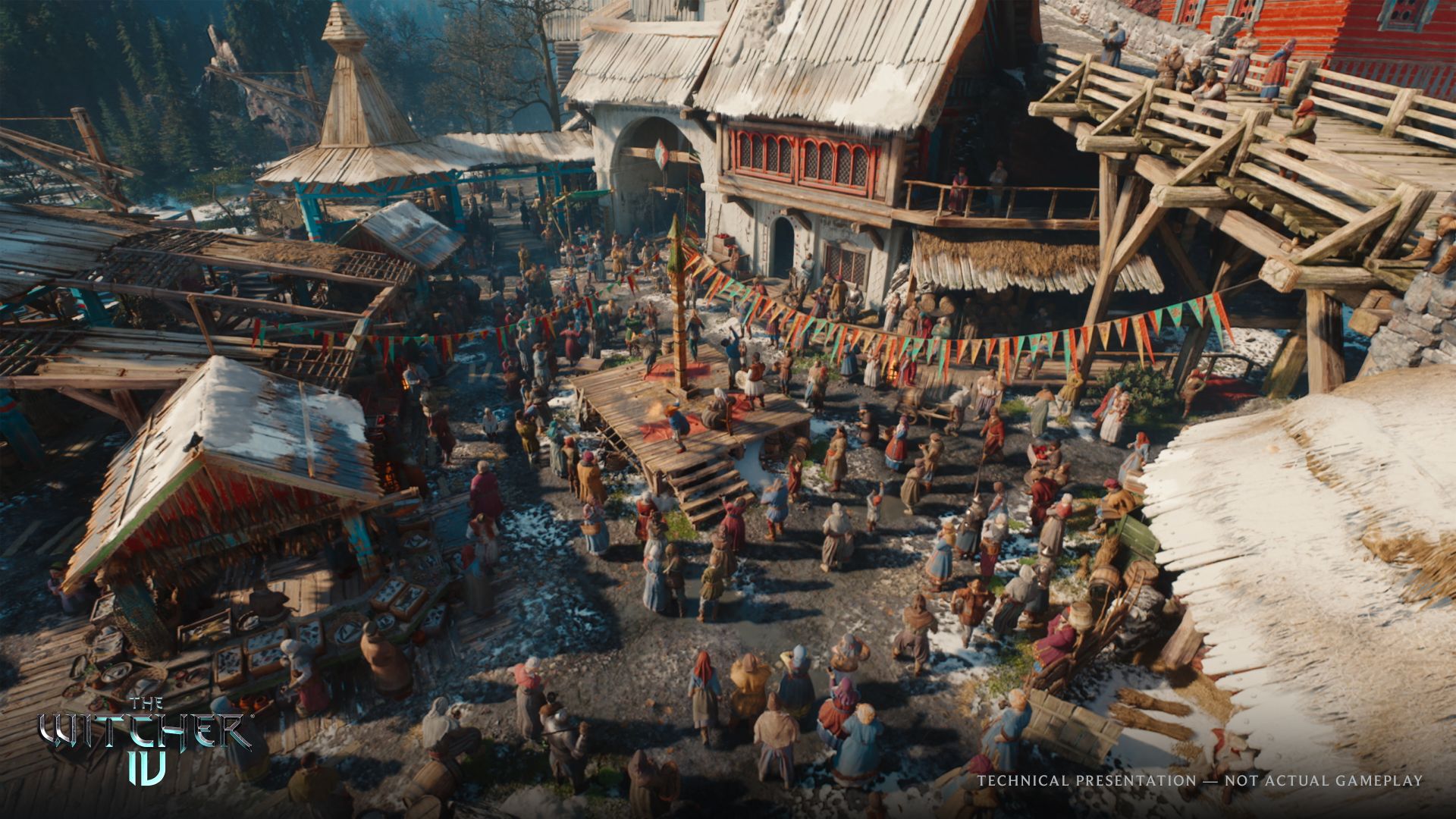
Of course, this is assuming that CD Projekt RED is committed to its vision for both games and that there are no hiccups. One benefit of this promised timeline is that it all hinges on when The Witcher 4 will release. And while I doubt the higher-ups want a GTA 6-style delay, there is definitely some breathing room for their developers. If Phantom Liberty is any indication (over 10 million sold and counting), the company is probably realizing the benefits of avoiding crunch or massive overhauls in the end stretch.
Too long, didn’t watch, the answer is: Yes, we could very well see The Witcher 4, 5 and 6 release within six years of each other. Would it be too much of an oversaturation? Unlikely – The Witcher 4 is guaranteed to be a best-seller, simply on name value alone. If The Witcher 5 arrives about two or three years later and sets up a major hook for The Witcher 6 to deliver an incredible finale, then it could end up as one of the best video game trilogies of all time (if not the best).
CD Projekt RED has all the time in the world to knock it out of the park, but either way, even with all the preparation in the world, it’s going to be a mad sprint for home base.
Note: The views expressed in this article are those of the author and do not necessarily represent the views of, and should not be attributed to, GamingBolt as an organization.