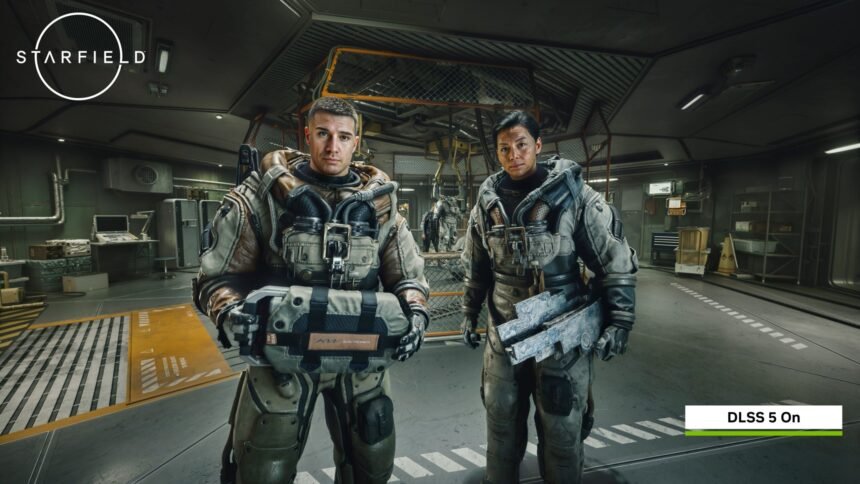
We were spellbound by Starfield when it first came out back in 2023, giving it a full score in our review of the game. Our PS5 score was a point lower, not because of any issues per se, but rather because some of the problems that plagued the original game were still a part of the experience despite nigh on three years of fixes stemming from feedback from a community of players that seems split down the middle in terms of opinions about it.
You might think that a bunch of people who liked the game as much as we did would obviously be okay with its problems. But that’s far from it. It’s just that we think that love it or hate it, Starfield doubles down on the kind of experience it wants to be, for better or worse. It’s a divisive title not because it falls into the binary viewpoint of good or bad, but because it chooses to be strong in ways that come with specific trade-offs.
Its very strengths are a double-edged sword, the magic of what it truly is clashing with the frustrations that its formula brings to the table. Wondering how that could be? Join us on a trip through Starfield’s star-studded landscape and find out why it has been praised and belittled for just being itself.
The Grand Scheme of Things
Let’s start with Starfield’s size and scope. Its “world” is a literal galaxy just waiting for you to engage with it. As a sci-fi adventure aimed at letting you carve out your own name in the stars, it’s astoundingly large, and deliciously grandiose. Its ambitions rival its size, and perhaps even help define it with the magic of hopping between systems as you engage with the many factions you come across, their quest lines and other distractions making your time with it an adventure that even you can’t really predict from moment-to-moment.
There’s also its emphasis on player agency, with the world at your fingertips and a ton of things for you to do at any given moment. There are factions to choose between, ships to build, planets to scan and learn more about before you visit them, smuggling, mining, and, of course, the RPG side of things to allow you to truly make your character feel like an extension of yourself, a small but shining speck among the stars. It’s a fantasy that truly puts you at the center of it all while still impressing upon you that you’re only a part of a larger universe.
That’s all well and good but we can see where players who didn’t resonate with these strengths are coming from. The game’s scale should have felt seamless, but its systems dictated that the massive universe you’re let loose in was fragmented into menus that got in the way of hopping between planets, loading screens pulling you out of the spell that it cast on you. Its universe felt like a collection of different maps, none of which fed into each other for players who were unable to find their footing.
The very freedom that we loved so much could feel like the game refusing to connect with its spacefarers. Players diving into it around the time of its release were used to their games easing them into whatever the experience was selling, instead of leaving them to discover it all on their own terms. Where other titles provided carefully curated journeys, Starfield was about the journey itself, a distinction that would take time many of its players did not really have at their disposal to make.
The game’s size, meant to inspire a sense of awe and wonder, felt like it was deliberately placing walls that its players had to get past. The freedom that was meant to allow players to craft their own adventure felt like they were left adrift among the stars, without a clear path to the destiny they knew was waiting for them in the blackness of space.
It was a game that asked for time that many of its players could not, or would not, choose to give it.
Learning To Love It
We’ll be honest, we’re pretty clear on why so many of you didn’t click with Starfield right off the bat. Its systems can get overwhelming at first glance, and it does take a bit of time to settle into a routine that works for you. But once you get there, the game opens up into something you might have even adored. The faction questlines we mentioned earlier? We couldn’t get enough of them. The same goes for the slow burn of building our characters from the ground up, engaging with the side content, and the sense of just existing in a world outside of the real one, but just as diverse and unpredictable.
Of course, all of this must factor in the knowledge that Starfield was a game from Bethesda, whose track record of great titles meant that all of these factors were a given. But it also meant that this was a game that needed patience, and a willingness to endure its learning curve. You could even say that we stuck with the game for the sake of a thorough review, and you would have a valid point. But the fact that all of us continued to play it long after we put down our thoughts should speak to that argument.
But as we looked deeper, we began to see a few split seams in the experience, with Bethesda’s usual quirks coming into play. There was a definite stiffness to some parts of our time in the Constellation, and a lack of polish in certain areas. Conversations in which the person we were talking to lacked enough expressions to make it feels real immediately come to mind, along with a bunch of systems that could feel outdated when games like Red Dead Redemption 2 and Baldur’s Gate 3 were already out there.
But again, this was a game from Bethesda, a studio that was known for the eccentricities that its games had in play. Did we think that the fact that Starfield had them felt oddly reassuring in a way? Sure. But did we also think that their presence in a game as ambitious as this one felt like the studio was clinging to its old ways in a world of video games that were rapidly evolving? Also yes.
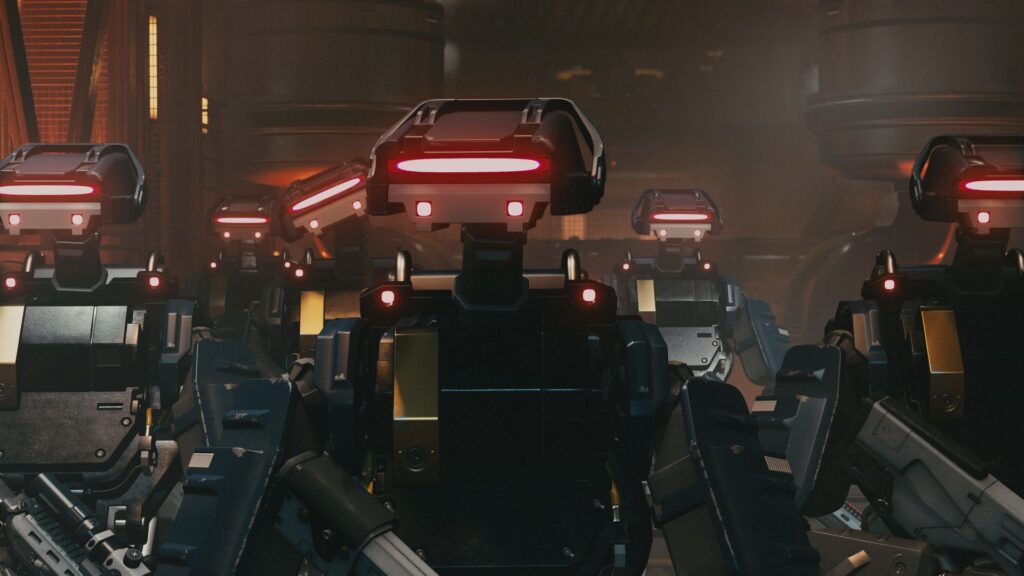
That’s because to the average gamer, who in all probability has a limited amount of time to engage with a game, first impressions can be hard to shake off. Starfield does take too long to reveal its depth, and it’s very likely that for many gamers, it asked too much of them too early. It demanded patience from a modern audience that was quite unwilling to wait when there were other games that came out with far more accessibility than this one. Understandable, of course, but it was also sad to see so many potential fans miss out on all the fun.
But what exactly were they missing?
Living In The Moment
To us, Starfield was clearly better enjoyed as an RPG sandbox, despite it coming across as a game that was all about getting lost in space. We found joy in engaging with its many factions, navigating the complexities that arose from such interactions along with choosing between all the possibilities for our characters that were laid out in front of us like a very enticing buffet. We bought homes and ships, choosing to express ourselves on the ground while our forays into space were designed to serve specific goals that we had in mind.
But we can see how people who expected to be flying off into the unknown could have felt let down by a lack of organic discovery in the early hours of the game, and in how its moment-to-moment gameplay seemed geared towards keeping their metaphorical boots firmly on the ground. To those players, the pull of gravity on the planets they were exploring might have felt too strong for them to shake off, and rightly so. It was a matter of mismatched expectations that was a major source of the backlash it received.
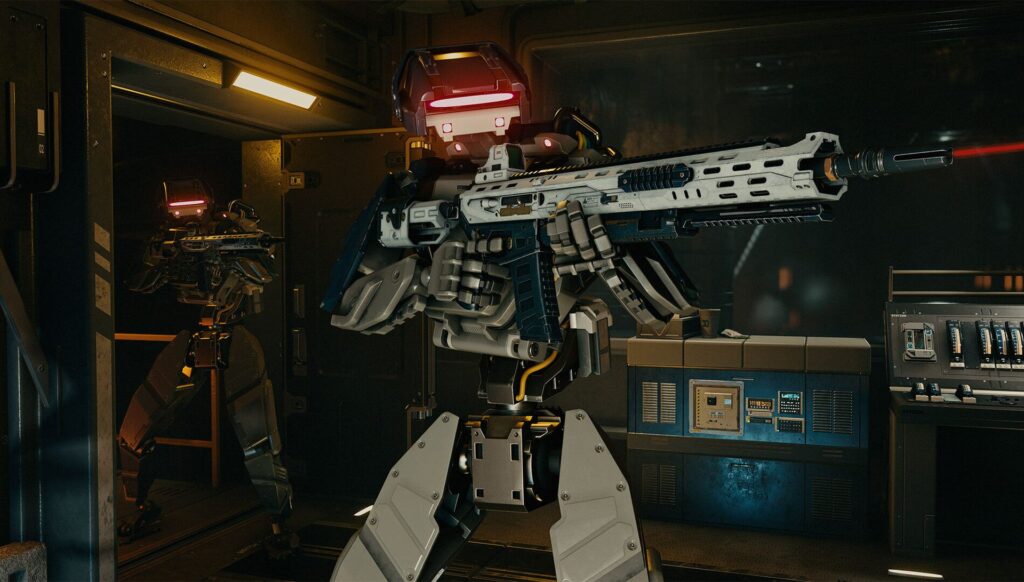
And with the game finally dropping on the PS5, we expect that the same old arguments are going to be hashed out between all of the newcomers diving into the adventure for the first time. It’s a situation that’s oddly similar to Crimson Desert, another title that doubles down on its identity and dared to take an approach that earned it some backlash even as others have been unable to put it down.
The divisive discourse around Starfield isn’t going to fade because it’s baked into the game’s very foundations, and not from temporary chatter. It may not be the universally loved RPG that many of you might be wanting it to be, but that very divisiveness points to a game that’s special in its own right thanks to how committed it is to a specific vision. The way in which the very facets of its experience that appeal to its fans can be reasons for its others to train their guns on it has made it a fascinating source of conversations around games that make demands of their players, instead of the other way round.
But for those of you who meet it on its terms and tune it to its wavelength, you’re in for a romp through space that’s going to stay with you long after you move on to other titles. And for that, we’re glad that Starfield exists.
Note: The views expressed in this article are those of the author and do not necessarily represent the views of, and should not be attributed to, GamingBolt as an organization.