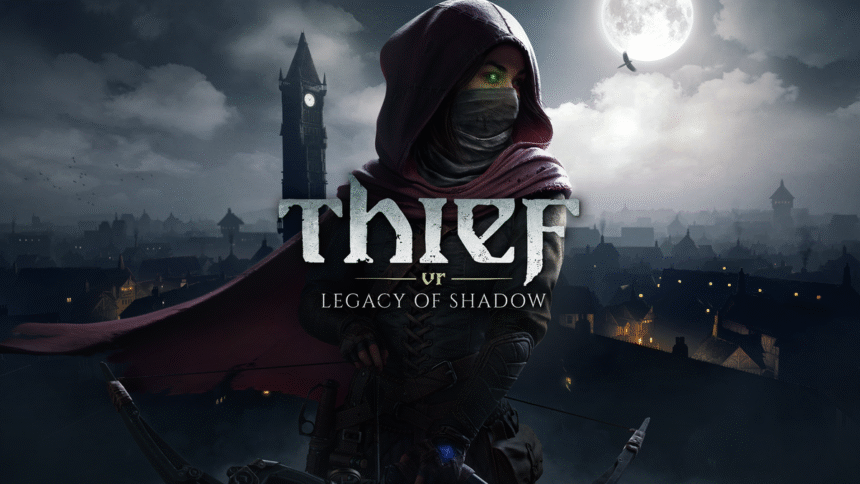
As series go, Thief boasts quite the checkered history. Originally born of Looking Glass Studios, the first two entries are celebrated as helping pioneer the Immersive Sim genre. The latter was also Looking Glass’ swansong. Then the next two entries were the fairly divisive Thief: Deadly Shadows (also Ion Storm’s swansong) and Eidos Montreal’s THIEF (2014), which left things uncertain if we’d ever see a return to Garrett’s gloomy, snarkily charming world of steampunk thievery. Yet here we are with Maze Theory’s Thief VR: Legacy of Shadow.
And incredibly – they pulled it off! Mostly. It wouldn’t be a Thief game without some jank, and we’ll get to that shortly. Regardless, I’m truly astonished at how well Legacy of Shadow weaves the old world with the new. Whether this is your first time with the series or you’ve been following along since the Y2K days, there’s reason to strap your headset on for this one.
What is it?: A single-player VR stealth game with puzzle elements
Platforms: Quest, Steam, PS VR2 (reviewed on Quest 3)
Release Date: Out now
Developer: Maze Theory
Publisher: Vertigo Games
Price: $29.99
Now a little additional context is in order. You see, it was always hinted that THIEF (2014) wasn’t actually a hard reboot. There are nods to the world of the first three games as ancient history. If anything, there are some hints to suggest that Garrett’s hometown possibly operates on Legend of Zelda reincarnation rules. And without getting into spoilers… I like the way Maze Theory finally addresses this. Set in the centuries between the third and fourth games, there’s just enough connective tissue to make things work.
I believe Maze Theory knew they were dealing with a fanbase that pays attention to these details. The nods made here aren’t simply for show, but elaborate on the early years of the Northcrest family’s dogmatic, tyrannical reign over The City. In turn, the dialogue between new protagonist Magpie and Garrett (voiced perfectly as always by Stephen Russell from the original trilogy), is sharply written. There’s no profound takeaways here, but what’s delivered is satisfying.
That’s well and good, but all the loving appreciation for a setting wouldn’t be worth a guard’s coin purse if the game played poorly. Fortunately, Legacy of Shadow is superb – when it’s working properly. The goal is simple: grab everything not nailed down worth any coin, accomplish whatever primary objectives are set before you, and maybe tackle a few secondary goals if you’re up for more of a challenge. It feels far more like free-form puzzle solving than an archery game, which is a relief because that’s how Thief should feel.
Seeing as Magpie is still a rather young thief, she stumbles more often and has far fewer resources. She has to skulk around in the shadows carefully. Direct confrontations are best avoided entirely, as even in a best-case scenario, you’ll take more hits than it’s worth. Instead, to ensure they stay hidden, you can whip out a bow with a limited arsenal of arrows, a nightstick for knocking out most (but not all types of) enemies, activate a special vision mode that highlights tactically advantageous things, and surprisingly… you can wield your voice.
I was dubious at first of that final option, remembering how ill-fated other attempts in gaming’s past have failed at incorporating voice input. And yet, Legacy of Shadow makes great use of it. You can limit it to just being able to blow, which lets you summon a friendly bird for some extra coin or lure guards, and blow out candles. With the fully immersive setting on, any talking is translated into a noise in-game that can tip enemies off to your presence. Cursing under your breath can actually lead to you jumping when someone suddenly and audibly responds to it – a welcome inclusion. That said, it’s probably best to turn it off if you’ve got family talking in the background.
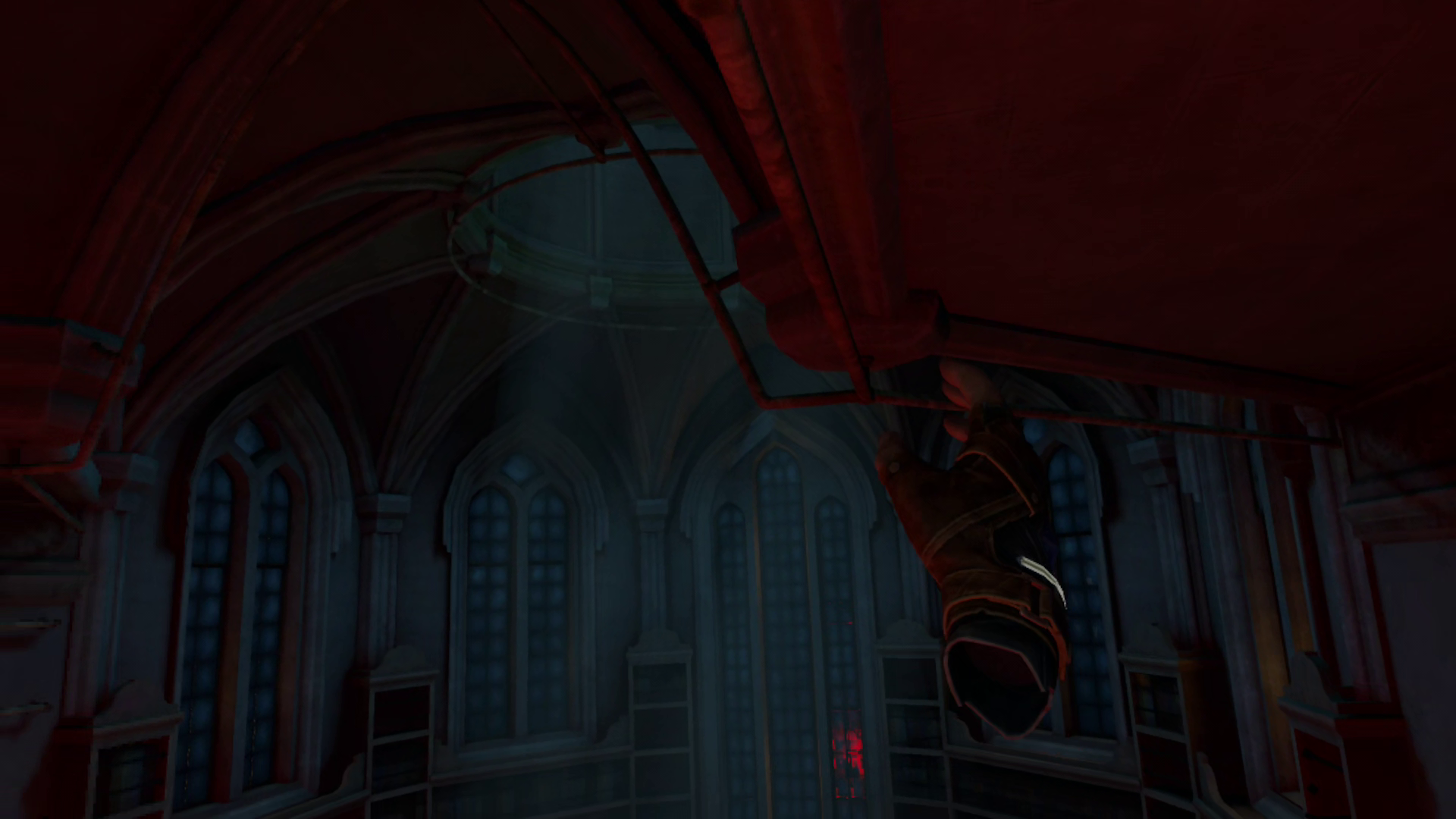
Thief VR: Legacy of Shadow is certainly one of the more involved VR games on the market. Full body motion is a requirement, including climbing sections that if failed can lead to Magpie’s death. The bow has to be manually strung and aimed with precision, wobbling easily. Almost all abilities require reaching around to your head, shoulders, and waist.
This is not a game for players who want to sit back and relax. While there are accessibility options, including customizable snap turning, they only ease things to a certain extent. Expect a lot of stretching, reaching, and waving around. Don’t have anything fragile nearby. There is a limited automatic ducking function and a crouch button, but further crouching in real life is advisable to avoid detection. This is not for those with weak stomachs or easily strained joints.
There is, at least currently, one small exploit though, if nothing else. If you crouch in real life, go into settings, and reset your height calibration, it can make you taller. This makes you more easily spotted, but those struggling to reach certain handholds or items may find this useful. This is still present after patches as of this writing.
The special vision mode is a returning feature from THIEF (2014), though in a very different form. In the prior game, it’s essentially a super-thief mode moderated by a limited use meter that has to be refilled manually. It could also be upgraded. That’s not how it works in Legacy of Shadow. Here it’s infinitely usable, but overheats if used for too long, and is demonstrably less powerful. It’s most effective at identifying lootable items you may have missed and tracing electrical circuits to disable some security tech. No super speed pick-pocketing. Sometimes it can reveal hints left by a mysterious new organization reminiscent of the Keepers of the original Thief trilogy.
Magpie’s bow is a bit more of a mixed bag. The biggest issue is it starts off so limited that you’ll barely use it. Unlike in most Thief games, you can’t use your coin from prior missions to buy what you need – instead, you have to complete Reward Objectives, which grant you a choice of one of three perks. Some of these perks are absolutely useless, like having slightly more health in a game where combat is the last thing you should engage in. Others are darn near necessities, like starting every mission with three rope arrows in your quiver, minimized fall damage, and moving unconscious bodies faster. As such, the bow is something you’re likely to only use for key objectives and replaying missions.
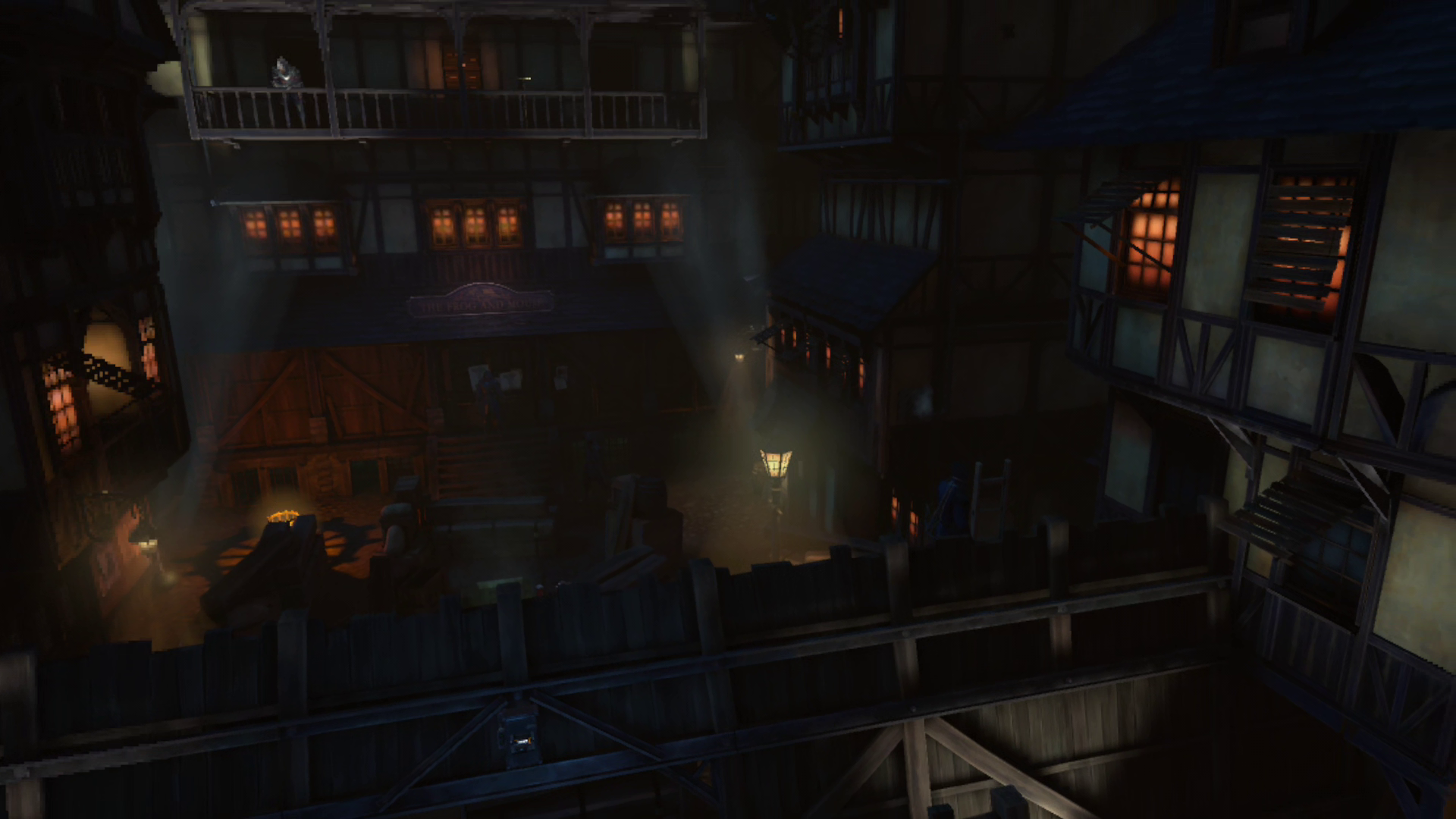
What doesn’t help matters while playing is how the two perks relating to health would always appear first. It’s like they were impatiently waiting for me to pick them, so I’m being drip-fed one worthwhile upgrade each time I earn a reward. It’d be better if the perks offered each time were randomized. At least it gives you something to work for when replaying missions, since you can vary your approach with every perk. Still, for most players, the nightstick and ghosting about should be their go-to. Swipe a guard’s legs, then conk them on the head to be dragged off out of sight. Easy, relatively reliable, and it guarantees you’ll get the pacifist stat every single mission.
The real highlights are the thrill of grabbing everything in sight without getting caught. At one point, I’m weaving between writing desks, plucking items from out of view while a guard was looming overhead. It’s not even a setpiece, and completely optional, but it has me engaged like it’s some key moment in a heist movie. A little white dot appears when there’s loot to grab, an effective stand-in for a sense of touch, though there’s also some nice kinetic feedback from your controllers. Even patting your other palm with your nightstick elicits a slight sensation. Thief VR’s attention to detail is quite welcome.
That same tactile approach is taken when keying hidden compartments behind bookshelves and paintings, as well as rotating your controllers to pick locks. It’s all well integrated and flows smoothly. There’s a few key moments that require environmental observation as well, with the potential to either alarm guards or feel like the smartest person in the world if you pull off a heist properly.
On a personal note, I love how versatile guards’ helmets are. You can find them strewn about levels, and they’re actually quite useful. You can wear them, toss them as a distraction, or even knock some guards out with them! Is the game at Immersive Sim levels of depth? No, but it is marvelously fun sneaking around, using every tool in your arsenal.
The only aspect that makes things less exciting is how your opponents are not clever. Most guards are easily fooled, and checkpoint resets are generously well placed for when the guards are actually a threat, particularly the nightstick-invulnerable heavy guards. From what I can discern, it’s only possible to eliminate them by going lethal, which costs precious fire arrows.
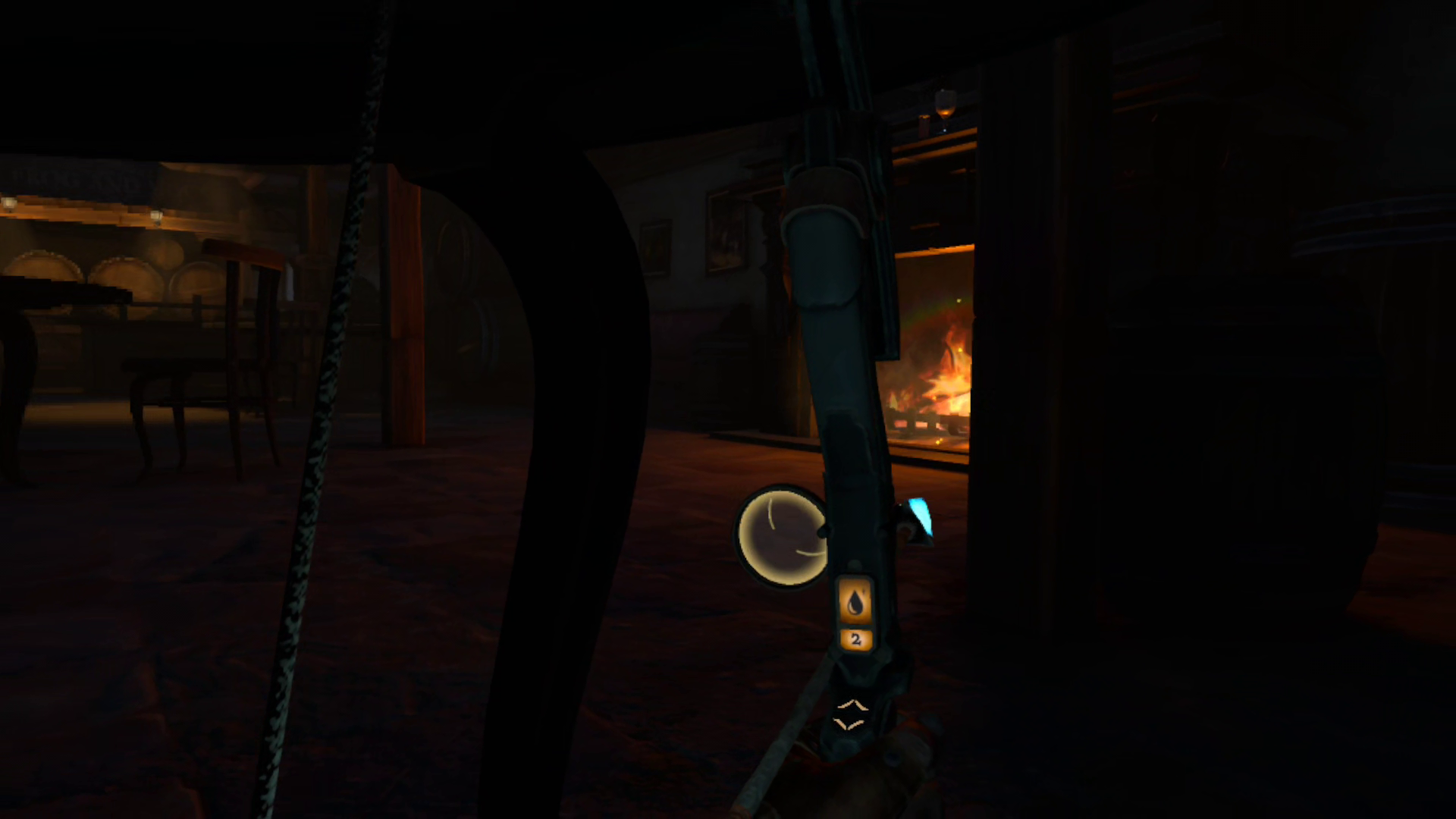
Speaking of disappointments, let’s rip off the band-aid: In my time with the game, there have been some peculiar issues. Sometimes objects fail to load in properly, like a treasure chest going transparent whenever I face it from the front – or an entire basement visually deloading momentarily if I walk too close to an adjoining wall. Nothing that breaks gameplay, but obviously has a negative impact on immersion. You can pick the lock of an invisible chest as easily as a visible one, but it’s less than ideal for maintaining atmosphere.
That said, the ragdoll physics for unconscious enemies can be peculiar as well. The most astonishing instance of this was when, while dragging a guard who curled over himself unconscious, his ragdoll somehow sent me up through the floor to the second story of Northcrest Manor. If you’re reading this after a few more patches – we’ve seen two already – you might be getting something a little more stable and immersive.
While I’m also not one to be too flummoxed by graphical limitations, there certainly are clear compromises on Quest 3. It’s nothing horrendous and still looks good, though Thief VR’s resolution and texture quality take an understandable hit on Quest systems. PC VR offers a notable visual upgrade, though I can’t personally speak for how the PlayStation VR2 edition compares.
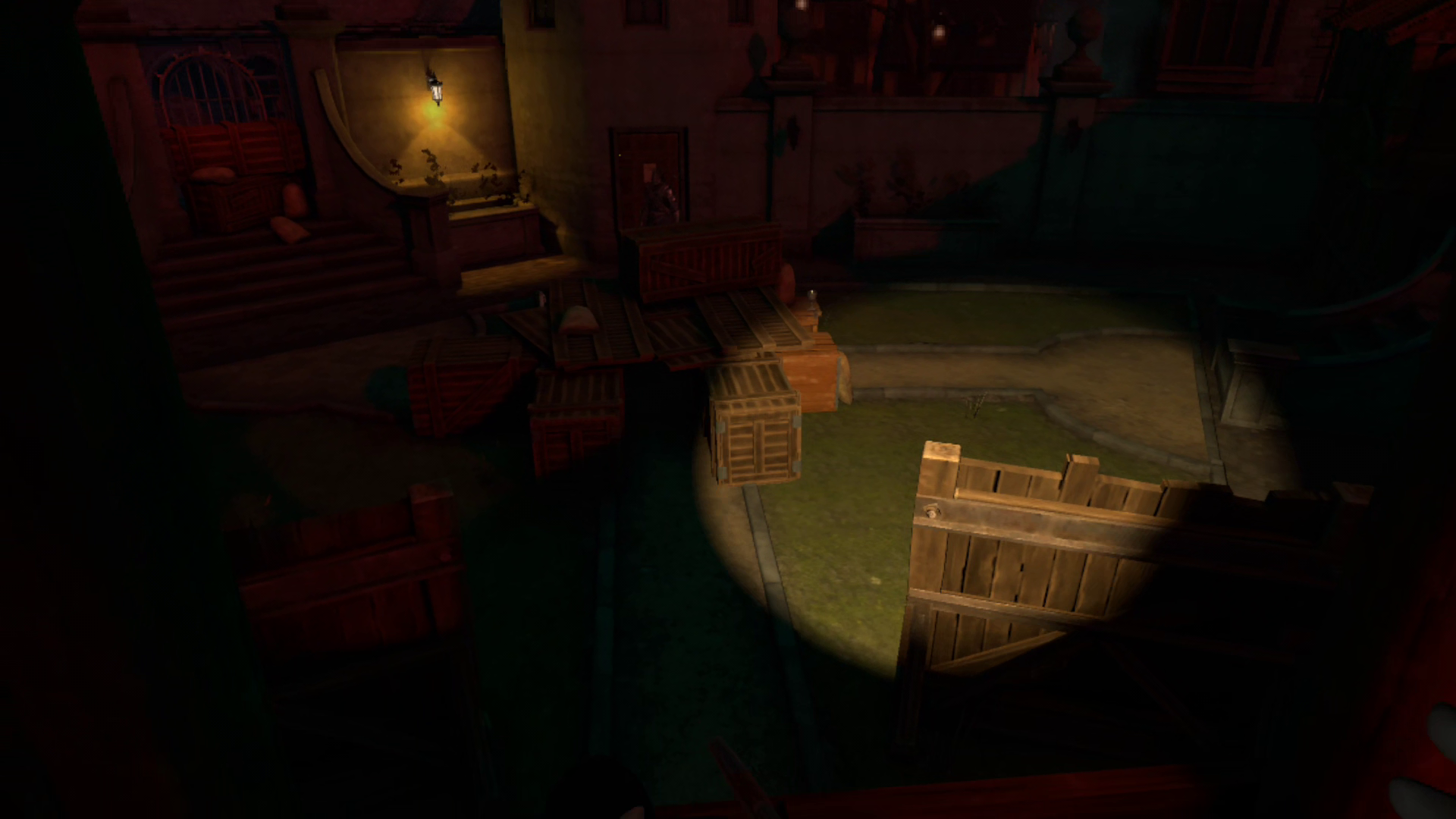
I cleared Thief VR: Legacy of Shadow in roughly five and a half hours and that’s with thorough exploration. A few levels are repeated, though with updated layouts and objectives in each that help them stand out enough to feel distinct. There’s novelty to be found in the remixed locations. Your prior knowledge is an asset, rather than a frustration. I can absolutely see someone blazing through Legacy of Shadow in a weekend. Replaying levels to either ghost or blitz through can be enjoyable, though some additional difficulty modifiers or a challenge mode map like in THIEF (2014) would be welcome.
Thief VR Review – Final Verdict
Crucially, Legacy of Shadow is all about encouraging the player to try for a little bit more. Between secondary objectives, bonus markers like completing a mission without alerts or finding every bit of gold lying around, and reward objectives that grant new perks? There’s some meat on the bone, even if it’s still lean meat. I’ll always take good but short instead of longer but worse. These levels are wonderfully detailed despite their small scope, yet a more exploration-inclined player such as myself is likely to see most of each in their first run.
Thief VR: Legacy of Shadow may be a bit modest and rough around the edges, but it’s also impressive in the right ways. It melds modern sensibilities with a retro mindset, welcoming new players to the series. Magpie is a charmingly impish lead aided greatly by Garrett’s ghostly reprisal. The foundations set here can deliver a proper fresh start for this classic series. I can see Magpie’s story continuing, though time will tell if that’s the case. Either way, Maze Theory pleasantly surprises with the next generation of Thief.

UploadVR uses a 5-Star rating system for our game reviews – you can read a breakdown of each star rating in our review guidelines.