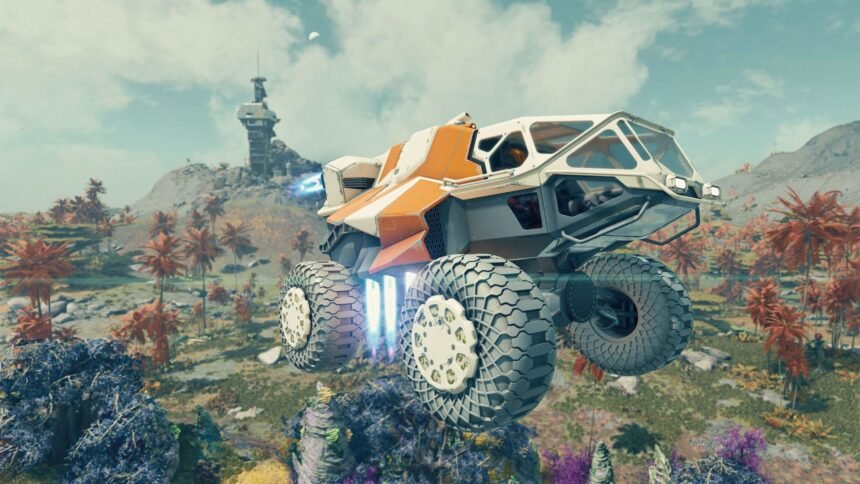
Spare a thought for poor Starfield, circa 2023. It racked up millions of players (though sales remain a mystery) and strong reviews, but saw momentum quickly turn against it. Don’t get me wrong – leaving aside all the other incredible releases that year, it was too easy to lob metaphorical bricks at Bethesda for the various technical issues, lack of quality of life features, and, of course, the story.
While there was a sense that the development team was truly attempting something different and grandiose, attempting to recreate the vastness of space, emptiness and all, the biggest problem is how it effectively fractured Bethesda’s built-in audience. Those who “got it” could vibe with the exploration, the mood, and the sheer scale of it all. Others wanted something more akin to Skyrim or, at the very least, Fallout, which it became very clear this was not.
Updates came and went. Shattered Space gave even the most dedicated fans second-hand embarrassment (and that’s despite having some really good dungeons). Then there was the great emptiness of 2025, where Bethesda promised big things, and ultimately kept its head down to work on the future. Well, the future is now, and the now is Free Lanes. So is Starfield “fixed” so to speak?
Not exactly, and really, you should have seen that response coming when Todd Howard himself said not to call it Starfield 2.0. Todd Howard not talking a game up through the stratosphere? A cold day for sure.
But he’s not wrong. Free Lanes is a massive pass at all the different systems and mechanics within Starfield, expanding on them in ways that befit the originally hyped up space-faring fantasy. It’s not so much about giving players something to do as offering more experiences in this vast universe. Because while space can be boring and empty, that doesn’t necessarily mean that Bethesda’s take has to be the same.
That’s best reflected in Cruise Mode, which more facilitates the self-titled Free Lanes themselves. Before, players would endure a loading screen to travel from planet to planet, even those within the same system. Then another loading screen to land on said planet, and another to leave. And while everyone focused on the loading screens – for good reason, because so many in quick succession really hurt the pacing – it was really the lack of stuff to do in space that really grinded many players’ gears. It’s not about getting lucky and finding something, be it an NPC or a space battle – it was more than life in space just felt non-existent.
Cruise Mode addresses that immediately by allowing you to travel, manually, between planets in a star system. Right away, your ship isn’t just some box that gets you from point A to point B – it’s now a second home. Get up, stretch your virtual legs, talk to some crew members, and maybe go and improve your ship with the new X-Tech. Or reroll perks on your Legendary weapons while working towards the new Rank 4s.
That space itself has new points of interest that can feed into that gameplay loop, which is all the more incredible. Maybe you’ll find a quaint bit of wreckage one second and engage in a dog fight against ships in another. Sometimes those dogfights will pull you out of Cruise Mode, forcing a scramble. Then there are the new Incursions added via the Terran Armada DLC, which provide another noteworthy activity to grind out (and earn some new weapons).
Of course, Bethesda didn’t stop there. It addressed one of the biggest complaints with Starfield by adding more PoI variety on its planets. Granted, this is one of those features where I would scoff and assume that it added, say, a dozen or so. However, based on feedback from the community, the variety has shot up. One player on Reddit, who would usually encounter the same point of interest pre-update, played for three hours straight, going through 30 unique types without ever encountering the same one twice. And that’s even after attempting to force them to appear. It doesn’t necessarily mean all of them are brand new – just that on top of the additions, you’re less likely to find the same PoI as quickly.
Because these locations – and dungeons – can provide X-Tech, you’re more incentivized than ever to explore random planets. There’s a constantly rewarding gameplay loop that also feeds into the main purpose of Starfield – to explore, both in space and on planets. The best part is that you’re not just juicing those Legendaries for no reason, as new enemy modifiers are in place for those who want more spice to their encounters. Sure, you could always increase enemy health and damage, but this kind of ARPG-level of buffs to otherwise familiar threats is a better way to make combat feel fresh.
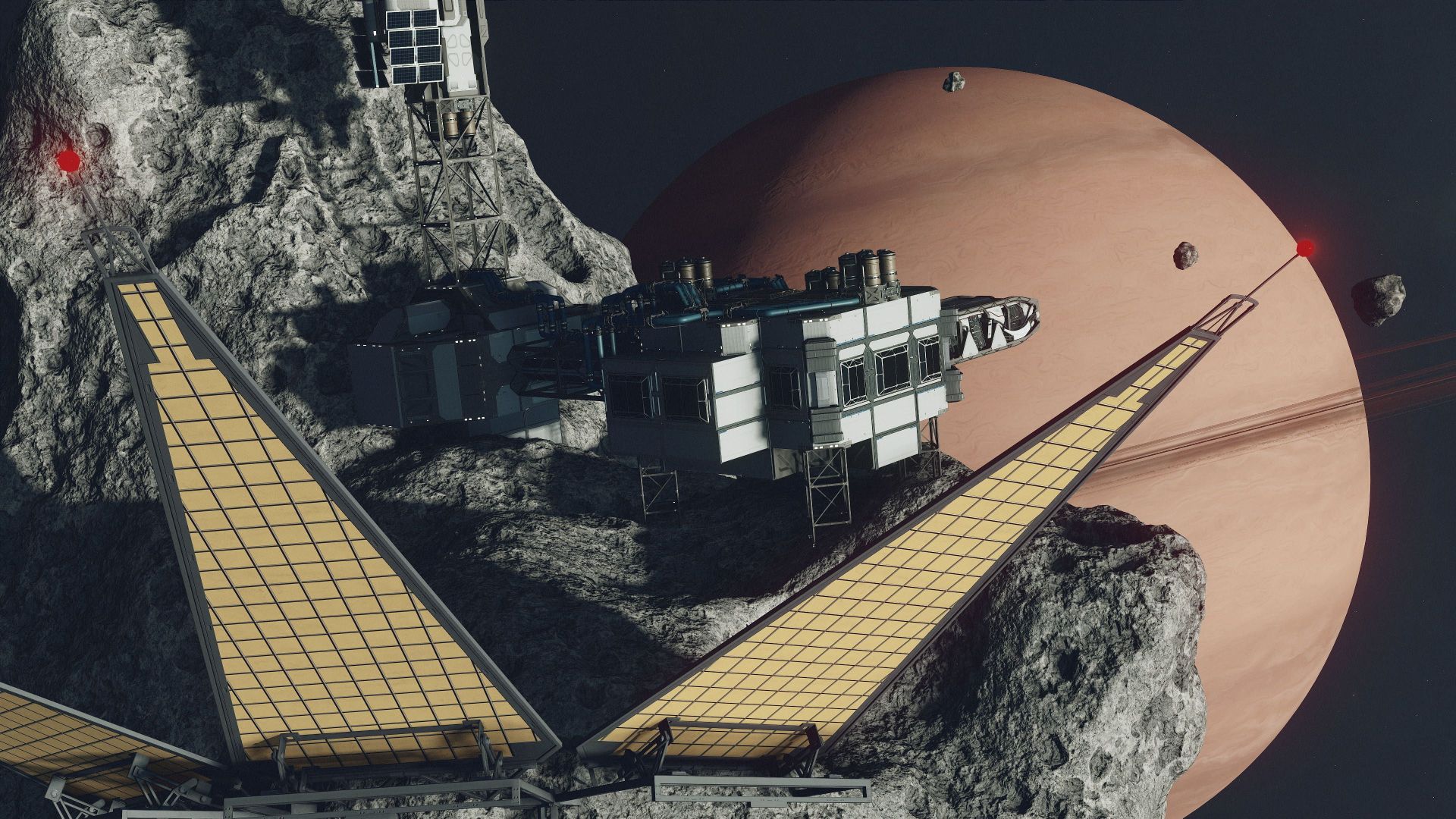
Then you have the new ship modules, updates to outposts that allow for quickly plopping down a habitat module, fully furnished, and a shared storage for all your bases, a database so you can actually track down different resources and keep tabs on your outposts – the list goes on. If you’ve amassed tons of Credits, great news – you can now buy an asteroid base. That’s not even getting into all the non-DLC quests or Anchor Point Station, where you can find them (and various new characters).
So it’s less that Free Lanes – and by extension, Terran Armada – have “fixed” Starfield so much as leaned much further into Bethesda’s vision for the game. It already had this massive universe that players could explore – there was just very little reason to do so after a point, besides taking in the atmosphere. With these changes, it’s certainly catering to those who already poured dozens of hours into the game, giving them new stuff to play with while also fixing glaring issues like the loot from Expert and Master level locks, or bugs with various quests.
I think it goes even further, though, addressing a problem that even new players noticed at a mid-way point – namely, a drive. Because for all the hundreds of planets that you could explore, spaceships to build, abandoned locations to clear out, and quests to complete, being driven to really delve deeper into this sandbox, appreciating its nuances and joys, became difficult.
Free Lanes isn’t so much a giant leap for Starfield, so much as dozens upon dozens of significant little steps. And quite frankly, that’s what this game needed. More complexity that ties into what’s already there. More depth. More reasons to get out and see what the universe has to offer. Something to sink your teeth into beyond all the surface-level trifles and grinds.
That’s probably why Bethesda didn’t agree with the 2.0 label (even if it’s not shy to call this the best version of the game yet). As lead creative producer Tim Lamb notes, “There’s a narrative baked into what that label would mean.” Instead, the team examined “several systems where we had interest or had heard things from the community, and we tried to level up a number of them.” As such, a “number of systems have been made incrementally better,” there’s a “ton of content,” and there are “things that the team is excited about.”
Will those “things” make Starfield as vaunted as Skyrim or even Oblivion? No one can say at this point, but if No Man’s Sky, Cyberpunk 2077, The Division 2, and many more have taught us anything, it’s that fantastic experiences are often built brick by bloody brick. Here’s hoping for several more of the nice kind for Bethesda.
Note: The views expressed in this article are those of the author and do not necessarily represent the views of, and should not be attributed to, GamingBolt as an organization.