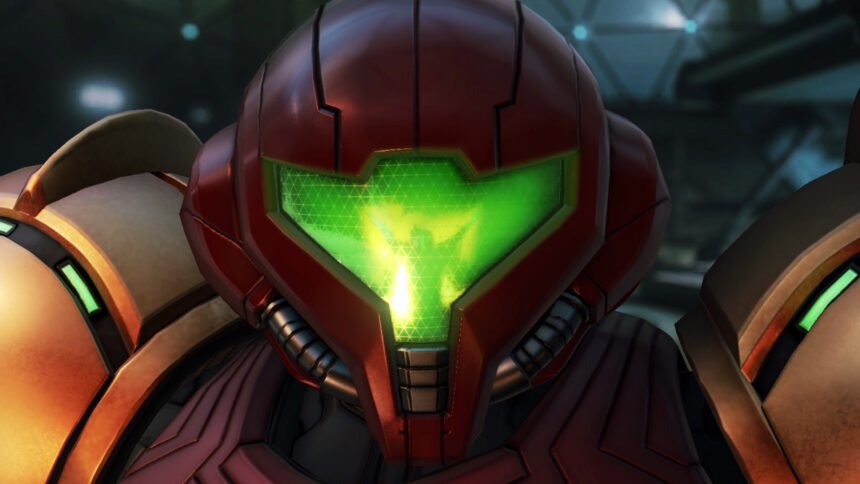
Metroid Prime 4: Beyond isn’t just a long-awaited sequel, but a clear shift from Metroid Prime 3: Corruption’s design philosophy. From structure and pacing, to the flow of combat, exploration, and discovery, Beyond modernises Corruption’s formula in numerous significant ways. Here, we’ll outline 15 ways which Samus’ latest mission expands upon her last.
Return to Isolation Over Scale
Metroid Prime 3: Corruption pushed Samus into the heart of an intergalactic battle; conflict filled with Federation soldiers, squad-based objectives, and endless comms chatter. Metroid Prime 4: Beyond pivots sharply in the opposite direction, restoring explorative isolation where Samus is left to interpret threats across a hostile planet largely without backup. This shift isn’t just tonal, but a redefinition of pace and progression – now, Samus is more exposed than reinforced.
Hypermode Replaced by New Combat Identity
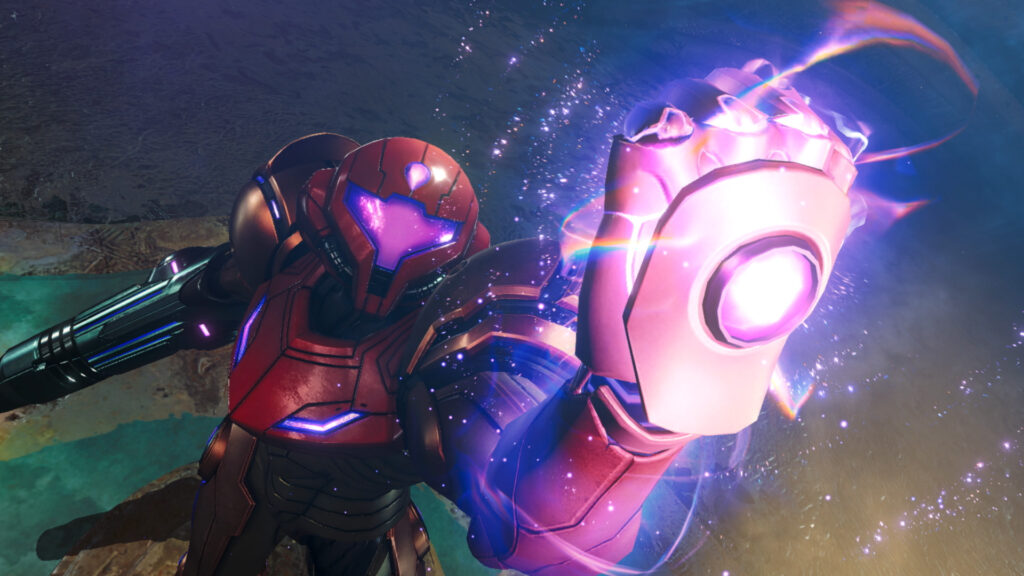
Phazon Hypermode was the defining combat mechanic in Metroid Prime 3, giving Samus devastating attack capability via a rising corruption meter. Metroid Prime 4: Beyond, instead, abandons this framework altogether by introducing psychic and telekinetic ability. It’s a shift towards interplay, mobility, and fluidity, relying on reading the environment rather than keeping an eye on depleting resources. It’s a cleaner, perhaps fairer, system, more in-line with modern action game design. You’ll master a new toolset rather than base Samus’ strength on self-destruction.
New Psychic-Driven Puzzle Design
Beyond’s psychic ability redefines combat, but Samus’ newfound telekinesis influences Metroid Prime 4’s puzzle design too: lifting objects, redirecting energy beams, shifting orbs of light to power ancient machinery, are all ways to manipulate the environment with mental control. These mechanics weave into traversal and progression, whereas Metroid Prime 3’s puzzle-led progression was built around traditional tools: scanning terminals, using the grapple lasso, and timed platforming challenges – purposeful at the time but lacking modern-day tactility.
Risk Versus Reward Mechanics
Based on current information, Beyond’s psychic-imbued combat and traversal don’t introduce any health-draining properties. Here, it seems the intention is to encourage you to express yourself through Samus’ arsenal and moveset, allowing for higher control without survival mechanics. With its identity built around Hypermode, Corruption saw Samus’ power come with the risk of death. Without this loop, Beyond eschews risk versus reward, and could feel less punishing overall.
No Permanent Corruption and the Absence of Self-Destruct
In Prime 3: Corruption, over-using Hypermode risked triggering Corrupt Hypermode, a state where failing to vent forced an instant game over. It was a dramatic punishment which sat at the heart of Prime 3’s risk-reward tension. Beyond, so far, has no comparison – its new abilities and systems aren’t tied to any punishment. So, the psychic abilities are reframed as tools instead of hazards. There doesn’t appear to be any looming threat in their overuse either, meaning you’ll feel empowered rather than on edge.
Vehicle Traversal
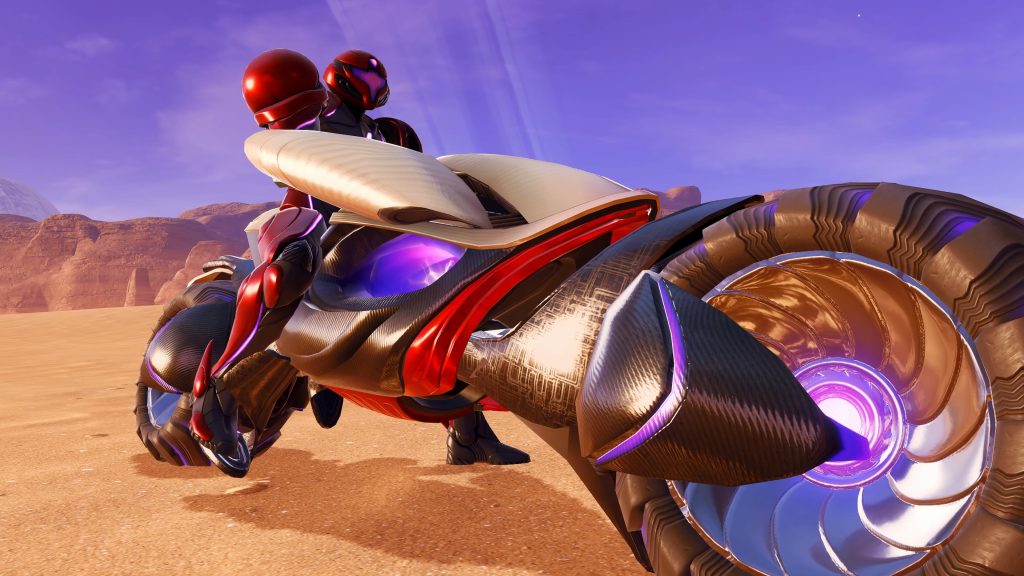
Beyond introduces Samus to the Vi-O-La bike, a high-speed two-wheeler allowing Samus to tear across Viewros’ vast desert plains while stitching its numerous biomes together quickly. In fact, the Vi-O-La is summonable wherever you have room to accelerate, perhaps changing how you’ll think about momentum throughout exploration. In contrast, Metroid Prime 3 stuck to foot-based traversal, relying on elevators, doors, and other region linking devices. 3 was more deliberate in its room-to-room exploration, while 4 – with its rideable vehicle – injects a newfound dynamism.
Cross-Generational Performance and Controls
Beyond launches across both Nintendo Switch and Switch 2, with a substantial difference between the two. The more powerful hardware can hit framerates of 120fps in performance mode, supporting Samus’ newfound fluidity and speed. Corruption, instead, launched exclusively to the Nintendo Wii, locking into its performance limitations, motion-based controls, and aiming. Beyond’s technical ambitions are realised by modern systems and is scalable across devices, something that’s apparently hindering Corruption’s re-release to current-gen.
Joy-Con Mouse Mode Versus Pointer Aim
On Switch 2, Beyond supports a Joy-Con mouse mode, letting you place a single Joy-Con flat to use as a precision pointer for aiming and scanning. Corruption used the Wii’s infrared pointing for its aiming system – responsive but lacking the near-mouse accuracy of Beyond on the Switch 2. The difference illustrates a progression in sensory controlling, still tactile but now more functional and user-friendly.
Control Fluidity and Movement Speed
In Beyond, you’ll be in command of a far more agile Samus than in Corruption. Her tighter manoeuvring, smoothing transitions, and quick weapon drawing blend seamlessly with psychic-enabled verticality. Corruption will feel slower and more deliberate in comparison, partly due to motion input and the relatively sluggish system activation – Hypermode or Grapple interactions don’t have the snap which Samus executes in Beyond.
Companion Dynamics
Throughout Beyond, you’ll encounter stranded Galactic Federation Troopers scattered across Viewros. Rescuing them can open up shortcuts, grant upgrades, and present assistance during combat encounters. By comparison, narratively, Corruption places Samus as part of a larger assault team but, during moment-to-moment gameplay, solo exploration and mission-based structure dominates. Beyond makes rescuing troopers integral to narrative progression rather than being the backdrop for a wider, overarching setting.
Narrative Tone and Character Interaction
Corruption delivered its narrative through mission briefings, near-neverending dialogue, and voice-acted cutscenes – sequences that framed Samus as part of an organised military push. In contrast, Beyond’s narrative tone appears more grounded through incidental interactions with rescued troopers and environmental storytelling. It’s gameplay that’s quieter and more observational – still isolationist, but at a pace you’ll be able to measure yourself.
Mission Structure and Progression
Prime 3 structures much of its campaign around linear missions – briefings, clear objectives, and inter-planetary assignments. You’ll be guided throughout each region by a tight task list. Beyond appears more free-form, adopting a “wide linear” approach to structure. Progression here is tied to exploration, investigation, and discovery as much as it is about completing objectives – its loop demands you revisit locations, unlocking and expanding influence through ability and equipment upgrades.
Graphical Fidelity and Visual Effects
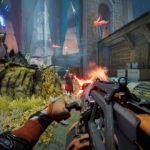
Metroid Prime 4: Beyond makes immediate use of modern hardware, with richer detail, dense environments, advanced lighting, and particle physics. Even on Switch, the visual polish is notable, while the Switch 2 elevates fidelity and performance further. Metroid Prime 3 landed on the Nintendo Wii, and while impressive at the time, is bound by lower resolutions, simpler textures, shallow shading and light. The difference isn’t subtle – it points to Prime 4 appearing a technical showcase for the still-new Switch 2 platform. There’s no evidence suggesting this was a goal pursued with Prime 3.
Scanning and Visor Integration
Beyond has the scanning loop, but weaves it more tightly into the game’s new psychic interactions and environmental manipulation. Beyond’s visor is more deeply embedded into its gameplay via its relative simplicity compared to Corruption, where switching through a radial menu presented different scanning modes for combat, investigation, or x-ray vision. Visor functionality is solid in both entries, but Beyond compartmentalises its purpose – streamlining its function for more specific use.
Ship Command Mechanic Removed
Metroid Prime 3: Corruption allowed you to summon and control Samus’ gunship remotely, using the Command Visor to manoeuvre the ship, unlock new routes, and fast travel. Beyond, however, appears to keep the gunship strictly as a narrative anchor, focusing instead on biome traversal rather than interplanetary movement. At present, there is no Command Visor equivalent announced, making traversal entirely grounded in the world.