Earlier this year, we got to revisit Metal Gear Solid V: The Phantom Pain during our coverage of Delta: Snake Eater. And while it was always fun to dive back into that particular chapter of Big Boss’ elaborate life, it took us back to a time when Konami and Kojima Productions had something quite special on their hands. It reminded us of an engine that made the game look and feel better than a significant portion of games even today.
We’re talking about the Fox engine, made with the ambition of being the best engine in the world, and coming pretty close to that goal. But things have been quiet for this fine addition to modern gaming in the years since. With Konami choosing Unreal for development on its current projects, what has happened to the Fox Engine?
Was it a bad move for Konami to abandon one of its best performers? Did the Fox Engine really fall out of favor, or were there more practical concerns at play? Join us as we take a look at a story whose ending could have, and perhaps should have, been a lot happier.
Built With Ambition
The Fox Engine’s lifespan is a showcase of how ambitious Konami was in the years after Metal Gear Solid IV. In an effort to make development across platforms faster and more seamless, Kojima and his team began working on it, intending to use it to reduce the studio’s single-platform dependence while also achieving better visual fidelity and performance in the bargain.
The Fox Engine always had its work cut out for it. But its early previews, where Kojima was clever enough to divest it from the then-upcoming MGSV, showed that it was achieving a favorable response, a sort of affirmation of its capabilities. Even the demo of the engine showcased at E3 2011 was noteworthy for its effectiveness at presenting an immersive take on Metal Gear’s jungle environments.
Of course, an engine built with the vision to be the best one in the world was not going to restrict itself to a single title of franchise. The Fox Engine, despite being named after a significant presence in Metal Gear Solid, would first make an appearance in the 2014 iteration of Pro Evo Soccer.
It also came at a time when proprietary engines seemed to be quite popular with studios, with MT Framework and Luminous engines putting up quite a good fight. The Fox engine was Konami’s way of levelling the playing field, a tool that would allow it to compete with the industry’s best, and perhaps even inch ahead of them in the process. It wasn’t just about MGSV. It was about a whole other bunch of projects that would follow it.
As expected, it did perform as it was intended to. It not only ran well on the PS4, Xbox One, and PC with performance at 60fps and excellent visual parity, but it also delivered excellent results on the awfully underpowered PS3 and Xbox 360. It brought almost photorealistic graphics to the table, with gamers even challenged to identify between two images of a staff room at Konami, one of them having been rendered by the engine.
It could also render huge outdoor spaces with aplomb, and bring excellent lighting options to the table in addition to facilitating dynamic weather and day/night systems. Stealth mechanics were also handled quite well, making it a very versatile presence in the gaming industry at the time. It also made things easy for developers, showcasing its utility across the supply chain of a video game’s life. It proved itself quite well, earning its reputation after stellar showings with the PES and Metal Gear franchises.
Heck, there were even plans to make the engine accessible to a wide range of individuals, something that MGS5 modders would have deeply appreciated. But of course, things never really went according to plan, and it’s now time to sail into melancholy waters as the Fox Engine’s descent into obscurity begins here.
The Price of Dreams
The Fox engine was built as the result of a dream to create the world’s best gaming engine. But dreams like that come with a hefty price tag. An engine that performed as well as it did required huge initial investments into R&D, while maintaining the engine and sustaining its utility in an ever-changing landscape of gaming hardware would require constant upkeep, along with the manpower required for the job.
Add in new consoles and the possibility of other studios working with the engine and potentially requiring support on it, and you begin to see just how staggeringly expensive it could be to maintain a proprietary engine and keep it relevant enough to be profitable in modern gaming. However, with Kojima Productions at its side, Konami might have been able to stand by its own creation and perhaps even see it achieve true greatness over the years.
But the studio’s well-documented differences with Kojima would see the director and a lot of his former team at Kojima Productions make an exit from the company. It’s here that the Fox engine hit its first hurdle, as a lot of the staff who had now left the company were the ones with the expertise for its upkeep. In their absence, ensuring it remained viable would have been quite an expensive affair for Konami.

While things weren’t as bad in the short term, as the exit of folks who understand an engine doesn’t necessarily mean it immediately loses ground, the dissolution of the Kojima Productions team was the first domino to fall for the Fox engine. Its role in the immediate aftermath of Kojima’s exit is a showcase of that drop in momentum, as it would go on to power almost seven years of Pro Evolution Soccer titles with little to nothing else on its plate.
While that does not diminish the prestige that comes with being the life force behind a franchise like PES, it does show how the focus of an engine that was once meant to power a multitude of projects has now been narrowed down, signalled for the tech. But shouldn’t the results it managed from that franchise have been a catalyst for its update to work with current-gen machines? It did give PES some excellent lookers over the years, along with facilitating derivative tech like Fluidity, which was a great indicator that it could handle animation-heavy sport titles alongside stealth-action ones. The engine was certainly versatile and would have been a valuable tool in Konami’s arsenal had the studio chosen to stick with it.
Alas, that wasn’t where this story goes. But why would a studio choose to leave something it invested so much into behind? Did the fallout with Kojima Productions leave a bad taste in Konami’s mouth? Or was it perhaps something more banal?
Unreal Numbers
There are two important titles that answer this question, both of which use Unreal instead of Fox to power the experiences they offer. The first one is eFootball 2022, which not only swapped out Fox in favor of Unreal during its development, but was a reboot of the PES franchise. That was always going to be a scary bet, and it’s a significant one because it showcased how the Fox engine had certainly fallen out of favor at this point.

But is that the engine’s fault? It was solid tech that churned out reliable results. So why would Konami make such a big bet on Unreal? That’s easy. It was just easier to build out a new experience on the Unreal engine instead of attempting to usher Fox into the current-gen era. The latter would require hiring new experts to work on ageing internal tech, while the former would likely bring talent already familiar with it to the table.
And yet, Konami’s teams were made to work with new tech and a new live-service model on top of a new animation system. The burden of high expectations and the need to craft for the current generation of consoles drove Konami to switch away from an engine that had delivered consistent, reliable results. The results were a title with sloppy animations, horrendous facial models, and bugs, which resulted in the reboot getting a lot of backlash.
It’s rather ironic that the switch to a “modern” engine brought those problems along. But it was a fall Konami had to take, and the studio has since lived and learned from the experience. The second title that’s important is Konami’s Unreal-powered remake of Snake Eater, an experience that brings a second irony to light.
The franchise that birthed the Fox engine has now moved to Unreal and even managed to be a great experience overall. The visual polish was welcome, but the quality of life changes that Konami implemented ushered the game into a modern avatar that’s going to see it continue to be one of modern gaming’s finest titles and a feather in Kojima and his team’s cap, even as his journey has taken him in another direction.
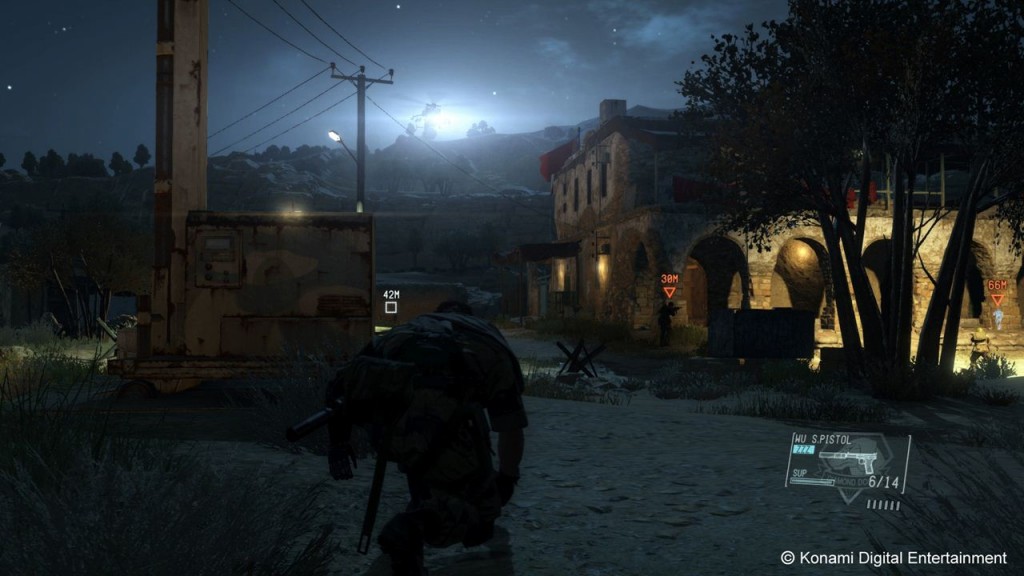
The Fox engine was the last ember of a once-flourishing relationship, and might have been behind some great next-gen experiences like a spiritual successor to Metal Gear Solid, more crisp sports titles, and perhaps even a Silent Hill title fully realized with its extensive skill set. It’s a great example of incredible tech simply pushed into obscurity by more cost-effective and convenient options.
The Fox engine didn’t lose to spite or negative emotions stemming from the circumstances of its creator’s departure from Konami. It simply fell victim to entropy, unable to withstand the test of time in an ever-evolving industry. Unfortunately, it’s now collecting dust, and with its use case more or less finished, Konami can make it open source. Perhaps I am dreaming?
But it does live on in its own way, with Kojima Productions moving on, and with Guerrilla Games, the Decima engine is now carrying the torch for what a very talented team of individuals can achieve when they work towards a daring dream. The engine that started it all will remain a fond memory and a testament to true talent.
Note: The views expressed in this article are those of the author and do not necessarily represent the views of, and should not be attributed to, GamingBolt as an organization.