2026 will go down as one of the best years in gaming, and that’s without even counting Grand Theft Auto 6. However, for every gem, hidden or otherwise, that deserves your attention, hundreds of other titles exist that aren’t worth the trouble. And among that bunch are some truly abysmal offerings that serve as little more than black holes for your time, energy and faith in gaming.
So naturally, we’ve scanned that dreg heap to pick the ten worst games of the year in no particular order. Let’s start with perhaps the most surprising of the bunch…
Sonic Frontiers: Definitive Edition (Switch 2)
“Hold on,” you’re doubtless typing upon seeing this, probably followed shortly after by “How dare you” and “If you bring up Sonic ’06, so help me.” And honestly, that reaction is justified. When Sonic Frontiers launched in 2022, it signaled a new beginning for everyone’s favorite Blue Blur, selling millions of copies despite some good but not spectacular reviews. Sonic Team continued supporting it with new content, ending on a mostly high note with The Final Horizon.
So what’s the problem with the Definitive Edition? Well, it’s actually the Nintendo Switch 2 version, and despite the console’s increased power, it’s barely improved over the Switch 1 release. It runs better, sure, but still suffers from some pretty terrible pop-in and poor image quality. Loading times are somehow longer than on the Switch 1 and, worst of all, original owners can’t upgrade…which feels pointless anyway since all the included content is free. Sonic Frontiers: Definitive Edition doesn’t sink to the level of the franchise’s worst entries, but the disservice that the developer has done to it with this port is all the more damning.
The 9th Charnel
A Steam description that doesn’t really tell you what the game is about while promising a “rich, narrative experience”? Six playable characters with their own “unique backstory and motivations”? So-called “realistic graphics” despite every screenshot indicating otherwise? The 9th Charnel may as well be playing Minesweeper with all these red flags.
Between the sheer number of AI problems, the lack of polish, the awful cutscenes, how terrible it feels to control, and so much more, it’s not worth the asking price simply because it’s not scary. Which is a shame considering it’s all the work of a solo developer, but there’s very little redeeming about it.
Stupid Never Dies
Stupid Never Dies concept of a post-apocalyptic world with a supernatural pecking order, where the protagonist, an undead named Davy, lies at the bottom, is intriguing.
Alas, the actual plot is something far less interesting and surprisingly creepy. The core gameplay loop involves mindless runs through a roguelike dungeon, and while the art style evokes a bit of Suda51, it does very little to capture that inherent charm and campiness. To make matters worse, the combat is a slog, and the fact that it goes on and on, seemingly without end, feels tiring and yet, sadly, fitting for an existence like Davy’s.
Spellcasters Chronicles
Few things made us do a double-take in 2026, but Quantic Dream working on a free-to-play, 3v3 multiplayer title is certainly up there. The developer is known for single-player, narrative-focused titles, and there’s been no word on its next big game, Star Wars Eclipse, for five years. No one expected, nor wanted, whatever Spellcasters Chronicles was offering.
Between questionable balancing and matchmaking, it felt like yet another multiplayer title in a saturated market with little to no chance of surviving long-term. Early access proved that immediately, with only 888 peak concurrent players on launch day. Less than four months later, Quantic Dream finally called it, and the rest is history. The icing on this awful cake? Spellcasters Chronicles was reportedly in development for eight years, and its failure resulted in significant layoffs.
Copa City
From the outset, Copa City is no Football Manager. While the latter is all about building a worthy team, the focus here is business. Sort of. Having a stadium is only the first step in what’s meant to be an exercise in marketing, zoning, sponsorship and, of all things, gate routes.
Unfortunately, the lackluster amount of sponsored teams and straightforward gameplay hobbles it from the start. Even if a September update addressed the lack of tutorials, bugs and missing features ensure Copa City isn’t worth the price.
Park Ranger Simulator
Not to be confused with the recently released Ranger’s Path: National Park Simulator, Park Ranger Simulator promises a massive open world – 20 square km, if you can believe it – and 50 different missions to recreate the park ranger experience. An economy to purchase vehicles and weapons of all things is odd, but maybe it would have surprised players.
Nope. Bugs galore, poorly designed missions, and awful vehicle controls are just the start. Looking awful seemed a given, but Park Ranger Simulator is also poorly optimized with extensive pop-in. The fact that this mess demands what it does in the Recommended PC requirements is just the last straw in what’s ultimately one of the worst simulators ever made.
Code Violet
The PS5 exclusive that everyone forgot, and not because it launched at the start of the year. Code Violet from TeamKill Media – best known for the downright awful Quantum Error – had the gall to throw in dinosaurs, desperately trying to cater to some Dino Crisis fan, is more insulting than anything else.
And sure enough, critics tore it apart for its terrible presentation, characters, story, and gameplay, aside from the myriad of technical issues. All this for $50 and no Steam release, which actually turned out beneficial in the end. There was never any hope it would rise above this year’s worst games, but the fact that it barely even registered in the public’s mind says it all.
Mirrors of Deception: The Silver Peaks Secret
The concept of Mirrors of Deception: The Silver Peaks Secret certainly excites more than its overlong name. It essentially consists of 140 hidden object puzzles, but the twist is that they’re scattered among clutter of other items. When you see it firsthand, it’s clear that something about the whole affair looks…off.
Obviously, there have been accusations of generative AI, but they seem to go beyond the art. Even if you ignore how that affects the narrative (which isn’t anything to write home about), the gameplay feels incredibly repetitive, even with ten different modes to choose from. As cliché as it sounds, it’s ironic that a game about clutter puzzles could turn into such a mess.
Highguard
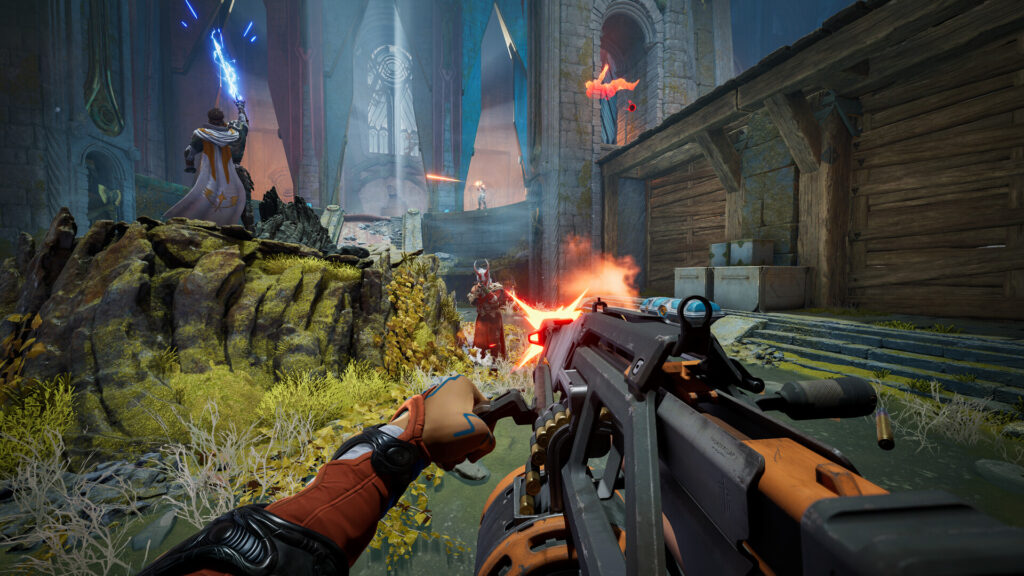
After all the hate piled on it last year, it’s impressive how Highguard managed to turn out simultaneously duller and more confusing at launch.
That’s partly thanks to the sheer number of mechanics and tropes that it tossed into a blender. Hero shooter-like characters, Rainbow Six Siege-like bomb-planting, massive maps and loot more befitting of a battle royale title, mining for crying out loud – it was all here, rarely feeling cohesive or enjoyable, despite some solid gameplay.
Optimization is another shortcoming, and even after Wildlight Entertainment added new content and improvements, Highguard’s fate was sealed. You’d think in an industry where live-service multiplayer titles failed left and right would have more people reading the room. But even if it was released in better market conditions, there’s very little redeeming about the gameplay.
Tokyo Scramble
“This again?” you might think after seeing another awful survival horror game focused on dinosaurs, but Tokyo Scramble is different. For starters, it’s a Nintendo Switch 2 exclusive and is bafflingly developed by Binary Haze Interactive, best known for publishing Ender Lilies and Ender Magnolia.
To say Tokyo Scramble has nothing in common with those games in terms of quality would vastly undersell its awfulness. The lack of polish is apparent from minute one, and despite some interesting ideas, nothing ever really coalesces into a satisfying experience (especially the narrative). The Switch 2 certainly doesn’t lack for terrible games, but Tokyo Scramble is honestly a new low.