After forty years, the Dragon Quest series has grown from a handwritten idea from Yuji Hori at Chunsoft penciled down onto publisher Enix company office paper into a global franchise, and one of gaming’s most iconic IPs.
How do you celebrate that history? You could go moment by moment, carving out knowledge and archival pieces for every minute portion of the franchise, but when you have a series this large, how do you make such an exhibit truly exhaustive of every nook and cranny of the series? Which is why Dragon Quest: The Dive took a different approach, and it used VR to achieve that.
This celebration of four decades of this massive franchise is split into three distinct sections. Starting first in the third and final area, this is the most traditional aspect of the exhibition for those wanting a pure look at franchise history. Encased in glass with a strict no-photography policy, were original design documents unearthed from vaults now on rare display. Handwritten, the original proposal lists almost all of the initial game’s very small team, which even at this early stage includes Akira Toriyama’s name as a designer of characters and monsters. Many of his initial sketches for the Slime and every monster were on display, as were entire dungeon maps and large tables that showed the specific stat increases of every level as the team sought to find balance.
Even musical notation for the main theme has been preserved and displayed. It’s a small space only focused on the first game – there are no documents for any other title in the series, but it’s such a fascinating look into the often-logical, nerdy necessities of programming and design in these early days of gaming.
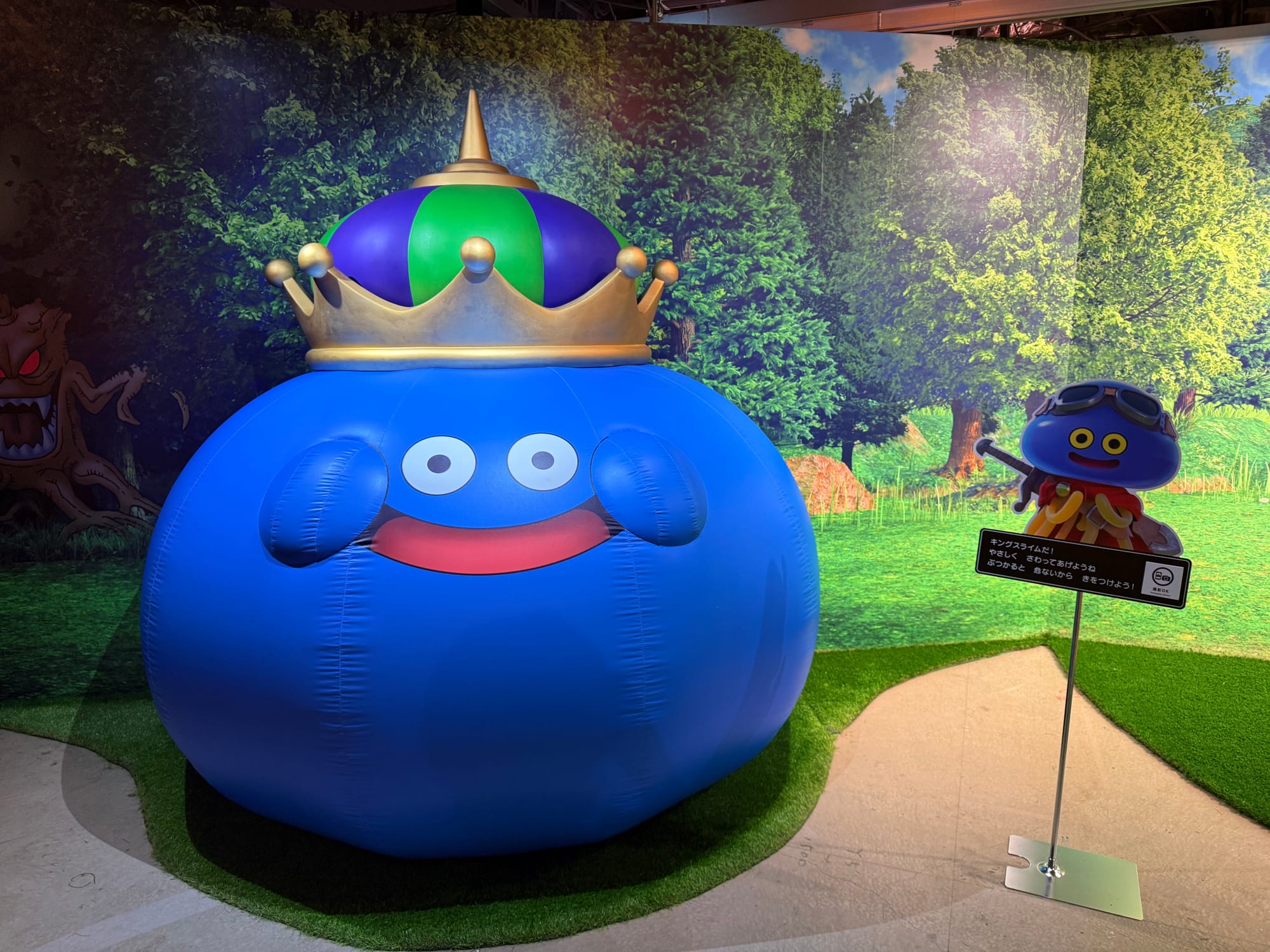
The second area focuses primarily on the mainline titles for the series, starting with statues that offer life-size recreations of recognizable creatures and scenes that you can enter and take photos as the hero. Inflatable slimes can be squished and hugged, while stone golems and a knight aberrant stand menacingly. If you ever wondered what a creature in these games might feel like to the touch, there was an experience where you could touch a slime, or place your hand on the surprisingly warm surface of a rock bomb. Other areas scanned you to find out your kin monster or sprite – I was one of the many bunny girls from Dragon Quest’s history.
While certainly colorful with enough to engage audiences of all ages, it’s not something that will educate you if you’re already tuned up on the series. Aside from a neat visual of the original designs of Dragon Quest XII’s protagonist, likely the last to be designed by Toriyama after his sudden passing in 2024, much of this was designed to evoke memories or emotions more than educate. Screenshots and quotes from every mainline title to point and reminisce, and displays to bring scenes to life.
What it does achieve by taking this approach is capturing the experience of being a Dragon Quest fan and bringing that to the space, rather than dryly recapping history that those fans already know. It’s a space that demands you to feel what 40 years of this series were like to live through, using this concept as the design philosophy driving this exhibit, rather than a more typical recap of documents and dates. Celebrate the fans, in that sense.
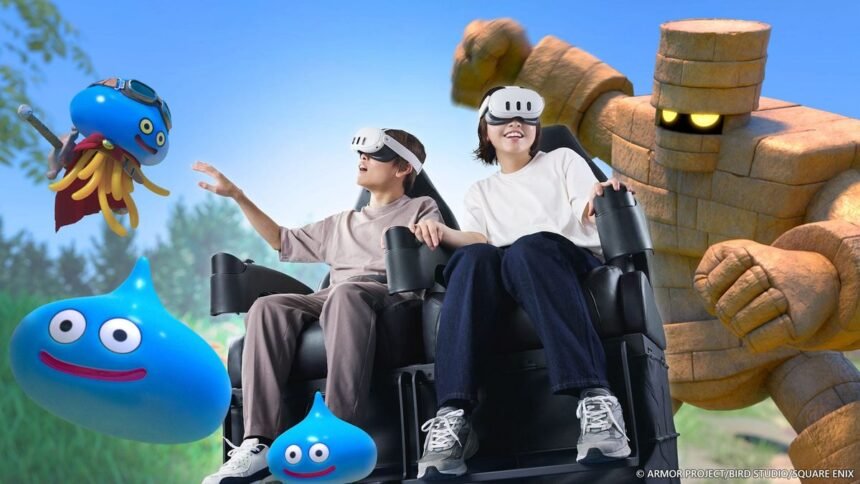
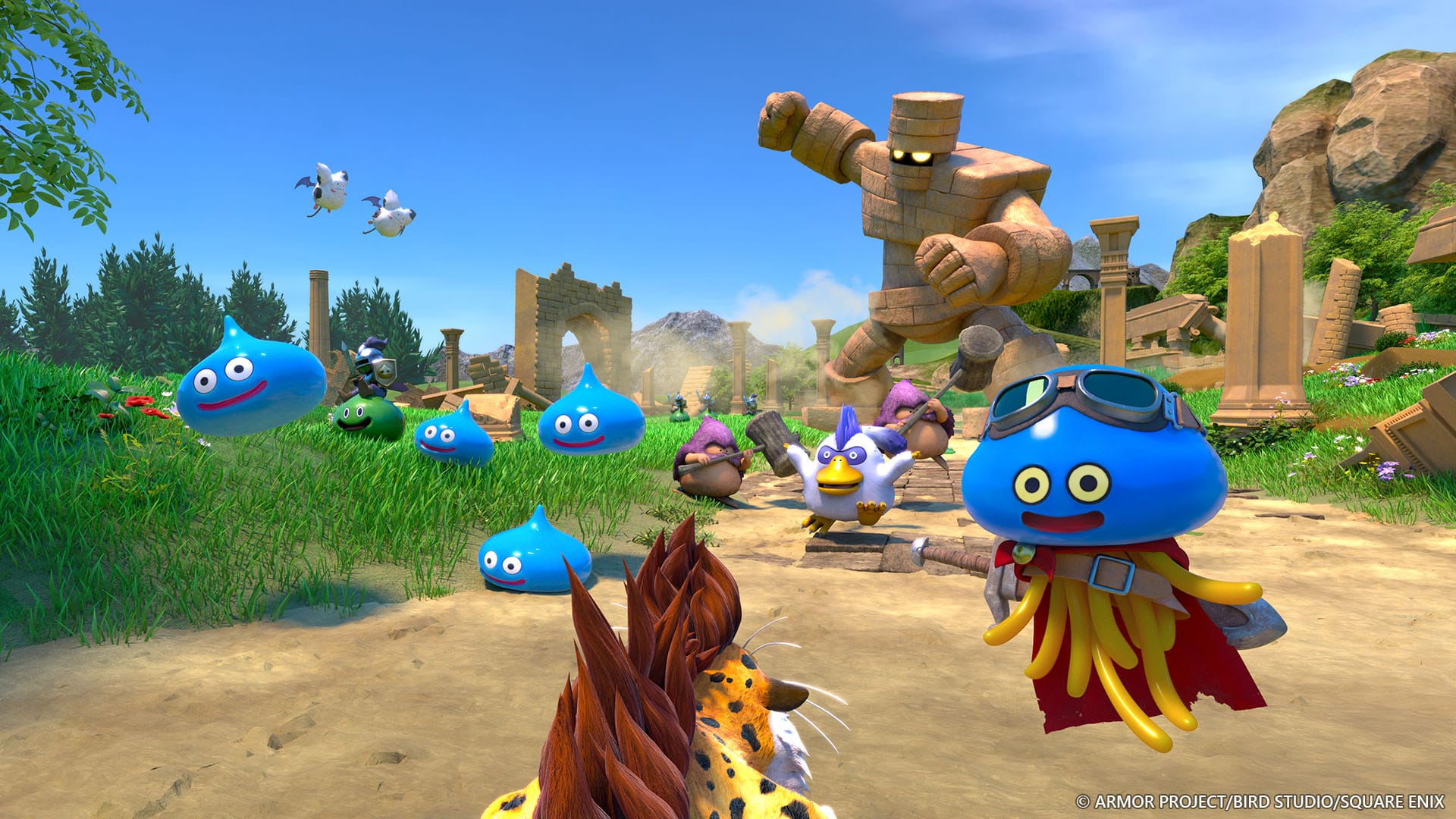
Which is where the VR aspect of Dragon Quest: The Dive comes into play. Rather than an introductory movie or series recap, this is a 5-minute VR attraction that speeds through locales while placing you in the role of the hero assisting a healslime with naive hopes of saving the world named Homita and a killer panther.
We climb aboard the killer panther and, at first, the adventure is pretty run-of-the-mill. Alongside Homita and his wooden sword, we wander through the woods until Treefaces, stone goblins and more attack. That’s when things go far off plan, as we run and bound away till we have to jump from cliffs and ride upon a giant Hades Condor as recognizable creatures rush past and attack and we simply do everything we can to survive. Even that doesn’t go as we had hoped, however, as we are tossed into fast-paced river rapids and continue to be tossed and turned till we even find ourselves in an underground dungeon, where the most threatening creatures appear.
Here we are pitted face to face with an Estark, a lord of the Underworld against pits of fire and smoke. All seems lost, until the wooden sword begins to resonate inside you. That resonance transforms it into a mighty hero’s sword that slices down the creature and saves you all.
The entire attraction is on-rails and non-interactive, essentially an immersive video pre-rendered and displayed on Quest 3 headsets provided to all audiences. Immersion for the experience comes from not just the fact this video places you directly inside the world of Dragon Quest, but also from how the exhibition itself leads you into feeling a direct part of this world even as you are prevented from playing an active role.
By stepping into the exhibition, you get an introduction video from your new Slime friend that leaves you acquainted. Following that, you step into the exhibition room and not only are you required to put on your headset, but also securely strap yourself into a 4DX-like chair that jolts you around with every duck and weave of your brief journey. Far from a minor jolt, this is intensive in ways more reminiscent of an immersive rollercoaster from a theme park than a temporary attraction, and certainly not for the faint of heart when drops into ravines can feel near-blend and incredibly steep in this setup.
Not that this isn’t entertaining, but it could prove too much for audiences less familiar with the medium.
It’s certainly the highlight of the exhibition, but also a very different approach to what has become a growing trend in Japanese showcases as they seek new ways to integrate modern technologies into the traditional retrospective. During an exhibition for the beloved manga and anime franchise Ghost in the Shell, centered on its many made-for-TV and theatrical adaptations, the exhibition used AR glasses not to transport people into the world of the series, but to enhance what already exists in the show to provide context through audio and video that simply can’t be printed on a piece of paper alongside static displays. Between the two exhibitions, whether by creating a virtual overlay to the real-world show or whisking audiences away into the world itself, the purpose of this is to provide a new dimension that can’t be offered without the use of additional technology.
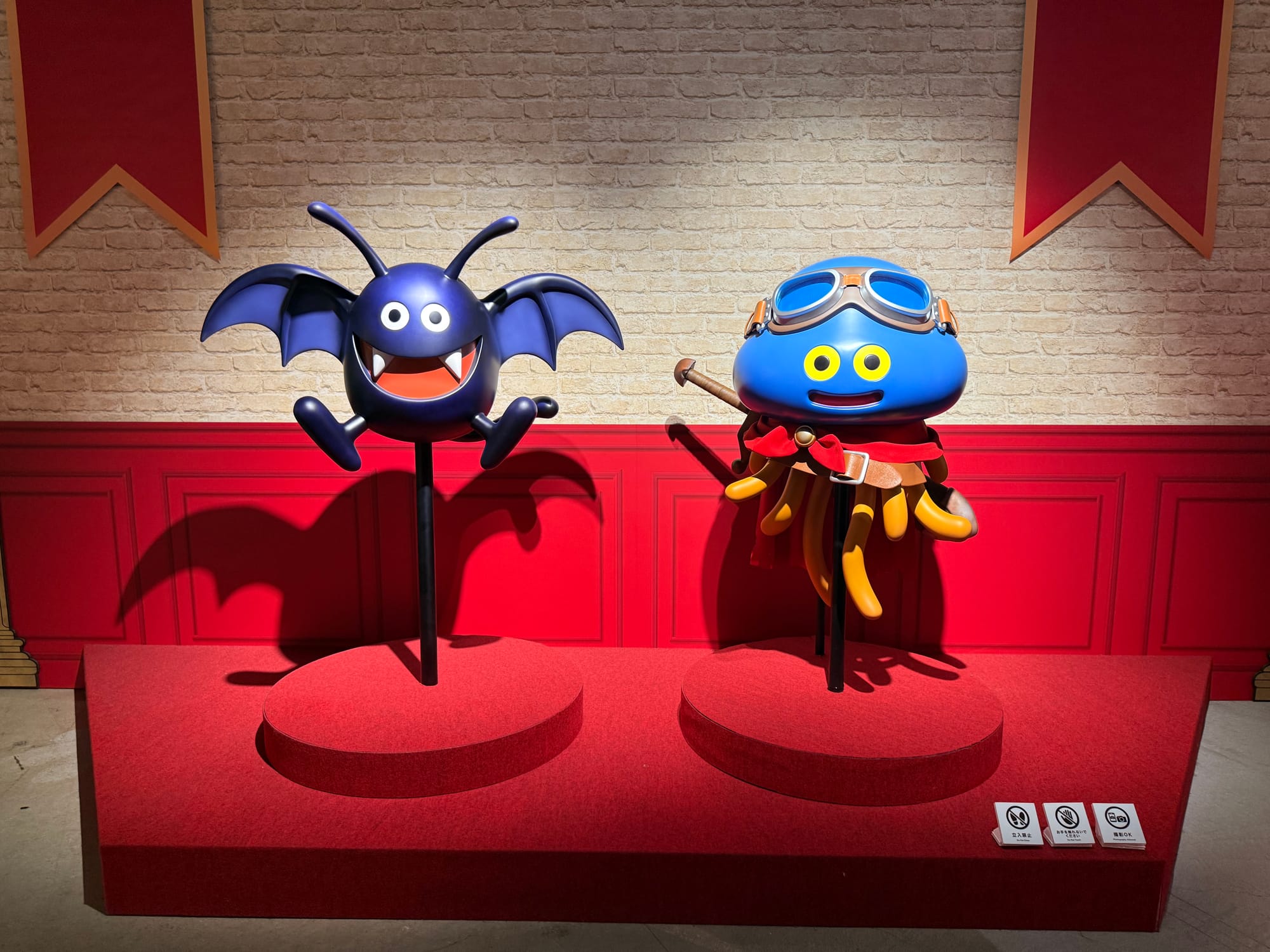
In Dragon Quest: The Dive, the approach has flaws. While the VR ride itself is truly a full-body excursion that does integrate well into the exhibition – the following room with statues is placed in a manner that maintains the illusion of stepping into the world from the VR ride and translates it to a slow transition back to reality. Only, once the transition has ended, there is very little left of the exhibition, which can feel disappointing considering the high cost of entry. Tickets start at 4,400 yen per person when standard exhibitions of this caliber for other franchises typically cost half this price. It begins to feel like the VR ride is the point of the experience, not merely an enhancement, and at that point the question of whether such a high price for a 5-minute experience is justified begins to arise.
Especially when, if we were to compare it to VR attractions of similar length, the price similarly can feel steep. Just a few minutes away on the train from the exhibition’s location in Tokyo’s Harajuku area is Shinjuku, where the Kabukicho Tower plays host to numerous VR attractions based on IP like Evangelion for just a quarter of the price (and with more interactivity). Places like Immersive Journey and Tyffonium exist. Monster Hunter Bridge, which was a fully interactive AR experience at the 2025 World Expo in Osaka before that event’s closure, will move to Nijigen no Mori theme park in 2027. Also present at the theme park? Dragon Quest Island, a full themed area complete with interactive attractions, accessible starting from a similar price to this exhibition.
For the brief runtime of the VR attraction part of Dragon Quest: The Dive, I truly felt immersed in the world of Dragon Quest in a way that the series has genuinely never achieved virtually before. Offered in other formats, this attraction is a must-try experience for anyone interested. While in theory this could complement a more voluminous exhibition, the lackluster offerings elsewhere in this showcase feel lacking for what should be an anniversary celebration for one of the biggest gaming franchises in Japan. Rather than enhancing the exhibit, like AR did for Ghost in the Shell, it exposes how lacking the rest of the showcase is, making this feel like an (expensive) paid test run for this ride’s possible installation elsewhere at a later date.
Which I hope can be done! But compared to how immersive technology has been able to enhance exhibitions in Japan in recent months, this is a case where, for all its individual merits, it can’t justify the price of admission.