
Unseen Diplomacy 2 makes excellent use of roomscale play that’s let down by a finicky inventory system and a few unpolished details.
Unseen Diplomacy 2’s big party trick is “Environmental Redirection,” a roomscale design system that has players physically walking around their real-world space while the game subtly changes the environment around them. The result is that the player feels as if they’re moving through a massive continuous level without requiring a massive real-world play space. And it (mostly) works.
After setting up a roomscale boundary in-game, and once the game confirmed this boundary to be large enough to suit, I spent the next few days jumping into and out of underground bunkers, maximum-security mansions, and bases of insidious villains across the globe without ever leaving my home office.
What is it?: A unique roomscale espionage game with fun gadgets and full-body immersion.
Platforms: Meta Quest, Steam
Release Date: March 16, 2026
Developer: Triangular Pixels
Publisher: Triangular Pixels
Price: $18.99
Unseen Diplomacy 2 gameplay clips captured by UploadVR
Design and Mechanics
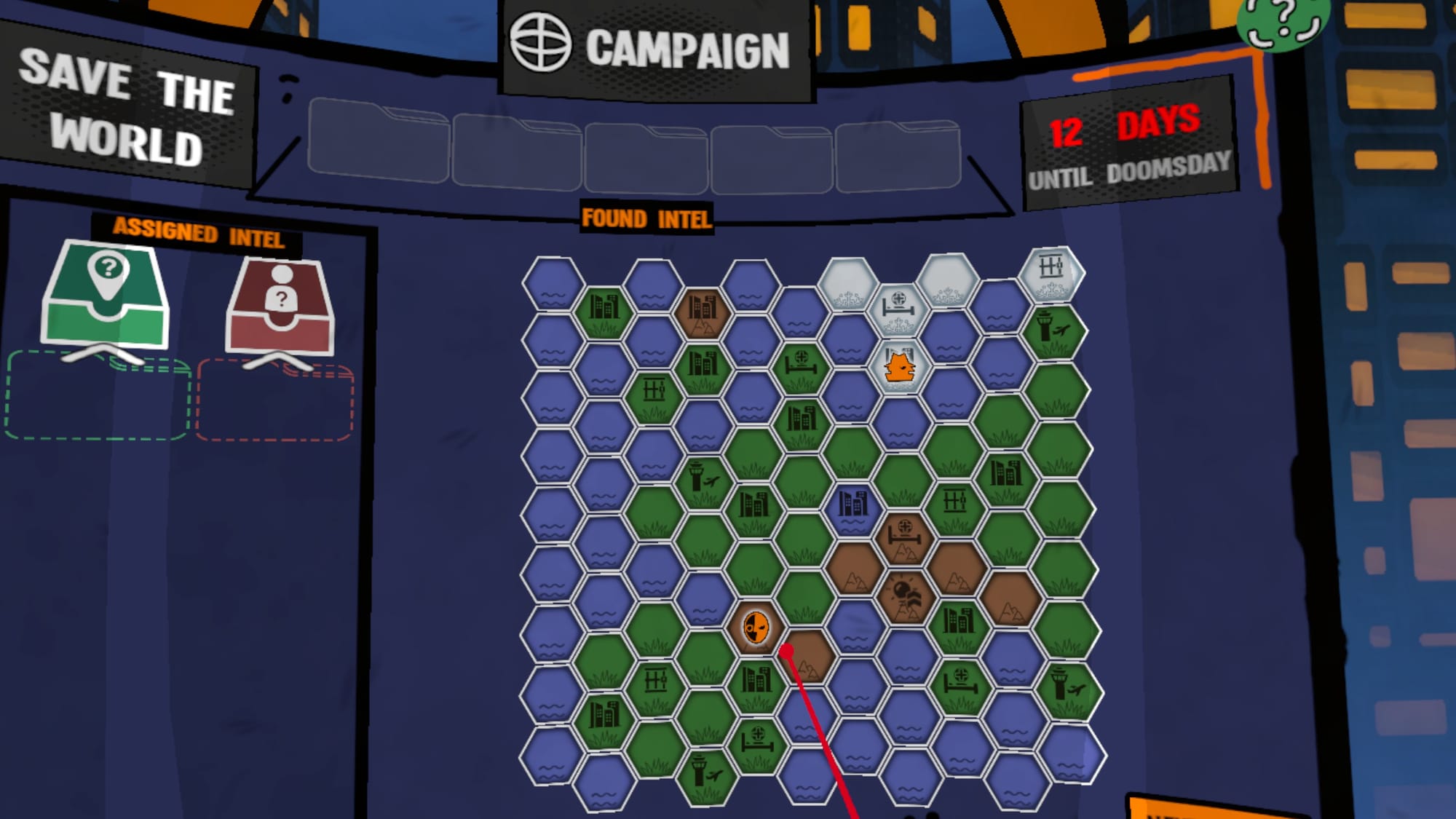
Unseen Diplomacy 2’s game field is presented as a honeycomb map, where players select individual missions involving espionage, infiltration, and other covert ops. In one stage you might be tasked with finding a stolen artifact from an ancient civilization, while another might have you hacking a terminal to disable a super-villain’s nano-bots.
The game’s overall objective is multifaceted; you’ll need to clear individual missions to acquire intel, then use that intel to uncover the location of the game’s final showdown. Reach that space before the countdown timer reaches “Zero Days Until Armageddon” and you earn your chance to save the world.
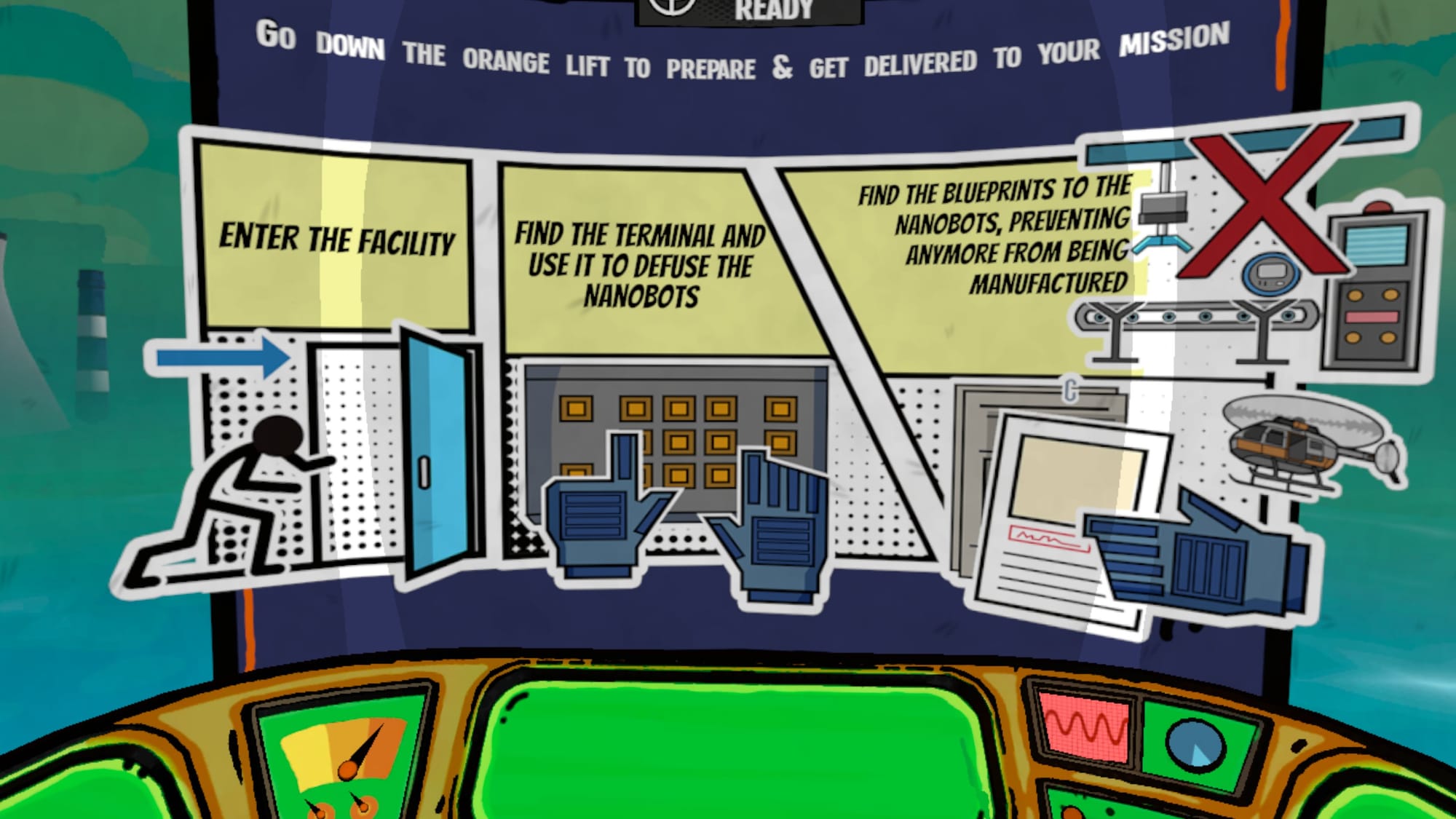
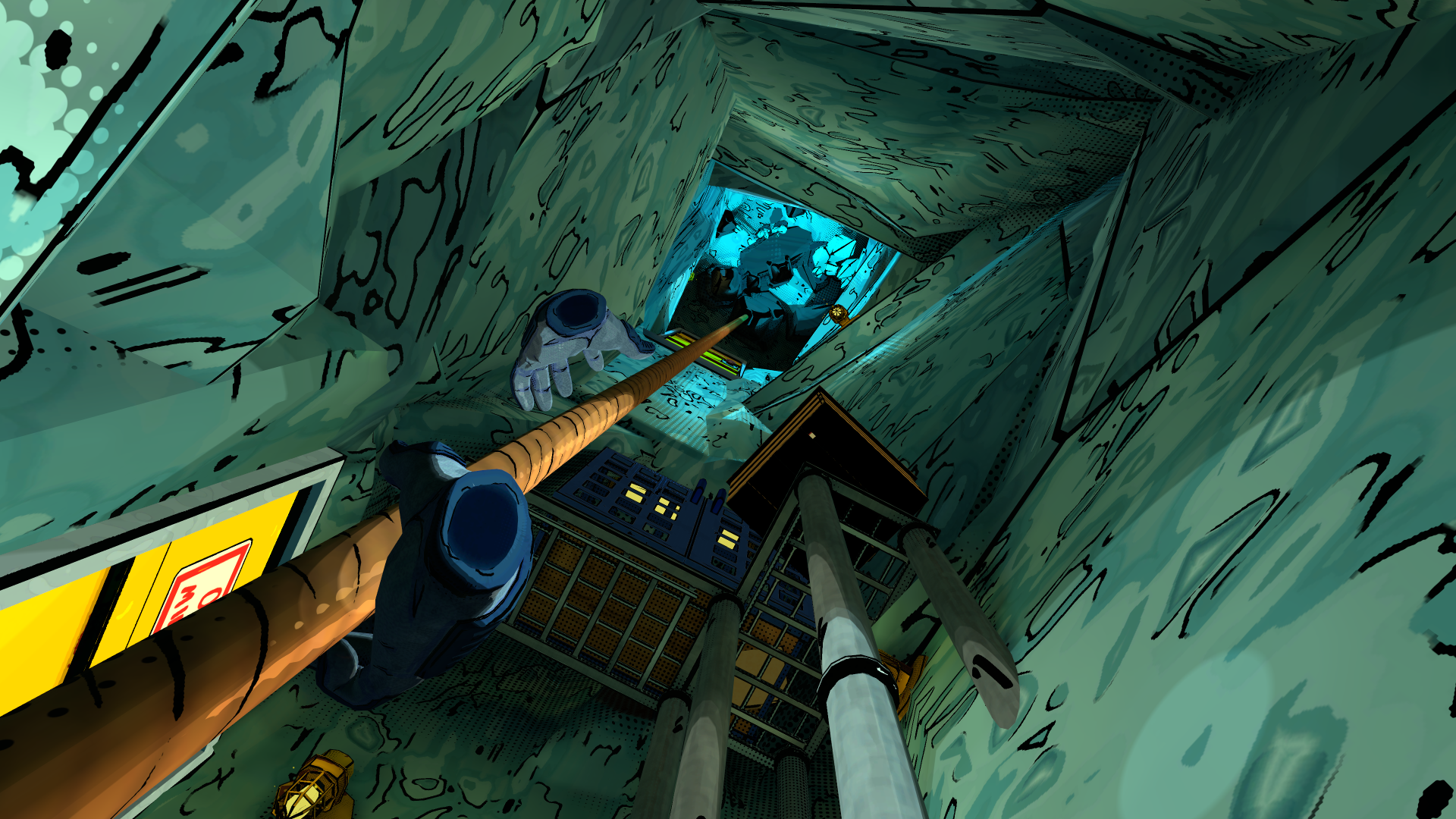
Traversing these stages demands constant physical movement, and this physicality is the core of Unseen Diplomacy 2’s gameplay. You’ll duck through crawlspaces, sidle along narrow ledges, squeeze into hiding spots, and scamper up and down ladders and ropes. At the same time, you’re sneaking past cameras and patrol bots, hacking security systems, and avoiding deadly traps such as spinning saw blades and swinging axes.
It’s worth noting that the game doesn’t strictly require roomscale play, nor excessive physical movements. There are plenty of accessibility and comfort options, such as thumbstick movement, snap-turning, button-based crouching, and even seated play. These alternative controls work reasonably well, but they also introduce a level of jank that makes the experience noticeably more tedious.
Your espionage is aided through a suite of gadgets and tools. Screwdrivers allow you to unscrew grates to access vents, or open panels to remove batteries from the security system. Wire cutters allow you to snip cables and shut down electrical systems. A blow dart helps you disable enemy patrol bots and cameras. And there’s plenty more.
Visually, Unseen Diplomacy 2 uses a bold, comic-inspired art style that will remind older gamers of the cel-shaded games of the early 2000s (XIII and Jet Set Radio). Thick, black outlines, flat colors, and exaggerated designs fit well, bringing vibrancy and life to the game’s heightened Cold-War world of secret agents and cartoonish spies.
Audio design is strong, with a soundtrack throwing back to that same Cold-War era. Horns swoon in spy motif, sneaky twangs tip-toe in your ears, while crunchy analog tech clicks, whirrs, and rattles.
The intriguing game design, interesting roomscale controls, and pleasing audio-visuals combine so that, at its best, Unseen Diplomacy 2 feels like a perfect spy fantasy. You’re not just playing a game, you’re physically sneaking, ducking and working your way through a stealthy adventure, gathering intel to save the world from certain annihilation. There’s a real thrill in that, especially early on, when each new mission feels like a fresh test of your spatial awareness, wit, and dexterity.
Diplomatic Faux Pas
The longer you play, the more the cracks begin to show. Most egregious is a general lack of polish that manifests in ways that are hard to ignore. While the core tech of Unseen Diplomacy 2, its environmental redirection and procedurally generated mission spaces, is extremely cool and works as advertised, and while movement itself feels engaging and fun, several systems layered on top of that foundation don’t always work.
The inventory system is a constant source of frustration. Tools are awkwardly mounted to your chest, wrist, and shoulders, and retrieving or storing them often feels imprecise. In theory, this physicality enhances immersion. In practice, I dropped my screwdriver more often than I used it.
Simple actions can feel clumsy while others are outright broken. Wire cutters jitter in midair, while your main offensive tool, a blow dart gun, often fails to fire for no discernible reason. And these aren’t just occasional hiccups. The problems happen frequently enough to really disrupt the flow of play.
Halfway through my first mission, it was very clear that a more traditional inventory system would have been far more effective (especially considering the inventory tools are generally pretty fun to use, when they work).
Hacking terminals can also feel tedious. These mini-games play out like the classic game Pong or Breakout, where you must bounce a ball to eliminate blocks. It’s an interesting idea that falls a bit flat, since we have to physically interact with the buttons on the terminal to move our paddle, which can be finicky.
Unseen Diplomacy 2 gameplay clips captured by UploadVR
And then there are the more unforgivable game-breaking issues. In the few days I spent playtesting, there were several instances where levels extended beyond my established roomscale boundary in ways that the system simply could not reconcile. In a few instances this left me unable to physically progress through the mission, soft-locking me so that I had to fully reset. This is especially frustrating in a game built around immersion. When the illusion breaks, it’s hard to justify climbing back in.
Mission design also can become overly familiar, with much of the experience boiling down to squeezing through tight spaces, searching drawers or panels, retrieving some object or another, and then moving on through the uncanny environment. The structure doesn’t evolve enough, so that what begins as a novel experience gradually begins to feel like a series of procedurally generated chores.
This impression wouldn’t be quite so unfortunate, if only the game’s other systems worked perfectly. If the inventory system was better, if the environmental interaction was more polished and direct, I’d be happy to spend far more time in the game’s neat environments, be they repetitive or not.
Unseen Diplomacy 2 features full roomscale play, plus accessibility and comfort options such as thumbstick movement, snap-turning, button-based crouching, and seated play.
Unseen Diplomacy 2 – Final Verdict
All things considered, there’s something undeniably clever about Unseen Diplomacy 2. When it all comes together, when a mission is particularly interesting and the gadgets all work and the procedurally-generated levels don’t back us into a corner, it delivers a kind of immersion that few games can match.
But the delivery of those moments is inconsistent. The lack of polish in key systems makes it difficult to fully recommend in its current state. With a couple of patches, who knows? As it stands, Unseen Diplomacy 2 is a fun diversion, one that’s just a step or two away from being truly great.
Unseen Diplomacy 2 is available now on Meta Quest and Steam.

UploadVR uses a 5-Star rating system for our game reviews – you can read a breakdown of each star rating in our review guidelines.