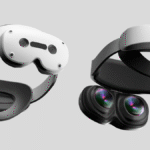
Snapchat maker Snap announced it’s formed a new business dedicated to its upcoming AR glasses.
The News
Called Specs Inc, the wholly-owned subsidiary within Snap is said to allow for “greater operational focus and alignment” ahead of the public launch of its latest AR glasses coming later this year.
In addition to operating its AR efforts directly under the new brand, Snap says Specs Inc will also allow for “new partnerships and capital flexibility,” including the potential for minority investment.
In September, Snap CEO Evan Spiegel noted in an open letter that the company is heading into a make-or-break “crucible moment” in 2026, characterizing Specs as an integral part of the company’s future.
“This moment isn’t just about survival. It’s about proving that a different way of building technology, one that deepens friendships and inspires creativity, can succeed in a world that often rewards the opposite,” Spiegel said.
While the company hasn’t shown of its next-gen Specs yet, the company touts the device’s built-in AI, something that “uses its understanding of you and your world to help get things done on your behalf while protecting and respecting your privacy.”
Snap further notes that it’s “building a computer that we hope you’ll use less, because it does more for you.”
My Take
Snap (or rather, Specs) is set to release its sixth-gen Spectacles this year, although this is the first pair of AR glasses the company is ostensibly hoping to pitch directly to the public, and not just developers and educational institutions.
Info is still thin surrounding Spec Inc’s launch plans for the devices, although forming a new legal entity for its AR business right beforehand could mean a few things.
For now, it doesn’t appear Snap is “spinning out” Spectacles proper; Snap hasn’t announced new leadership, leading me to believe that it’s more of a play to not only attract more targeted investment in the AR efforts, but also insulate the company from potential failure.

It’s all fairly opaque at this point, although the move does allow investors to more clearly choose between supporting the company’s traditional ad business, or investing it the future of AR.
However you slice it though, AR hardware development is capital intensive, and Snap’s pockets aren’t as deep as its direct competitors, including Meta, Apple, Google, and Microsoft.
While Snap confirmed it spent $3 billion over the course of 11 years creating its AR platform, that’s notably less than what Meta typically spends in a single quarter on its XR Reality Labs division.
It’s also risky. The very real flipside is that Specs Inc could go bankrupt. Maybe it’s too early. Maybe it underdelivers in comparison to competitors. Maybe it’s too expensive out of the gate for consumers, and really only appeals to enterprise. Maybe it isn’t too expensive, but the world heads into its sixth once-in-a-generation economic meltdown.
Simply put, there are a lot of ‘maybes’ right now. And given the new legal separation, Snap still has the option to survive relatively unscathed if it goes belly up, and lives to find another existential pivot.